
5 Mastery Tactics: Inflatable Park Wind Resistance

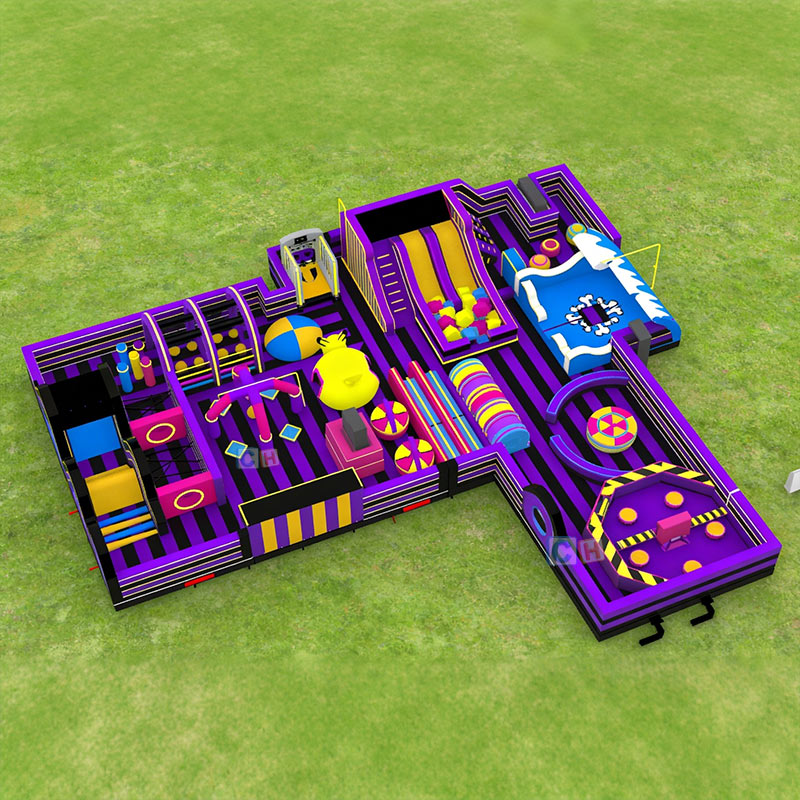
5 mastery tactics: Inflatable park wind resistance
Slash blow-over risks with these 5 mastery tactics for Inflatable Park Wind Resistance. Secure your rental fleet with CH Inflatable expert tips. Buy now!
Running a successful rental business or a massive commercial indoor inflatable park isn’t just about the "fun factor." It’s actually about keeping your assets on the ground when mother nature decides to act up. If you are a B2B rental owner or event planner, you already know that unpredictable weather is your biggest enemy.
Look, mastering Inflatable Park Wind Resistance is the literal line between a profitable weekend and a total liability nightmare. I’ve seen dozens of operators ignore the basics, only to watch their investment fly away like a kite.
At CH Inflatable, we bring 17 years of manufacturing grit to the table. We’ve shipped thousands of units to the US, Germany, Spain, and beyond. We’ve seen how these giants behave in the real world, and honestly, even a "heavy" slide becomes a dangerous sail if you don’t anchor it right.
Understanding the physics of inflatable park wind resistance
To get a handle on Inflatable Park Wind Resistance, you have to respect the "Sail Effect." Large slides or obstacle courses have massive vertical surfaces that catch crosswinds. In our shop, we talk about the "Blow-over Threshold"—that’s the point where wind lift beats your anchoring. It’s physics, and it’s heart-stopping when it happens.
Material thickness is your first line of defense. While we use 0.55mm 1300D PVC for standard units, we always push for 0.9mm 1300D PVC for massive setups like an inflatable theme park. The extra deadweight helps keep the unit grounded naturally before the wind even hits it.
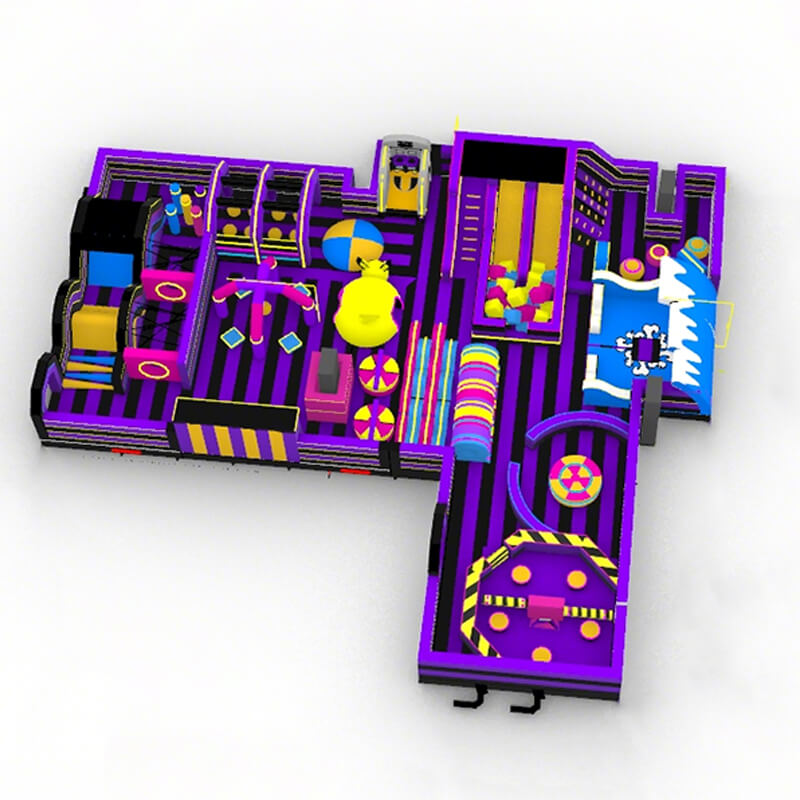
Safety shouldn't be a guessing game. The European CE EN14960 standard is the bible here. It dictates exactly how strong seams need to be and what wind speeds are acceptable. If you’re flying blind without these specs, you're playing with fire. For a deeper dive into how wind affects different structures, check out this guide on Evaluating the wind resistance of inflatable advertising tents.
Tactic 1: Precision ballast weight calculation
Here’s the kicker: most rental guys just throw a couple of sandbags on the corners and call it a day. That is a recipe for disaster. You need a real Ballast Weight Calculation based on the height and square footage of your unit. Localized gusts don't care about your "best guess."
The bottom line is that your water barrels or blocks should exceed the theoretical lift force by a 2:1 safety factor. If the math says you need 100kg of resistance, you better have 200kg. Uniform distribution is also key. Putting one huge weight on a single corner doesn't help—it just creates a pivot point for the unit to flip over.
| Component Type | Standard Material | CH Inflatable "Mastery" Upgrade |
|---|---|---|
| D-Rings | Galvanized Steel | Marine-Grade Stainless Steel |
| Webbing | Nylon Strips | High-Tenacity Seatbelt Webbing |
| PVC Density | 1000D / 0.45mm | 1300D / 0.55mm or 0.9mm |
| Zippers | Generic Plastic | Certified YKK Brand |
Tactic 2: Advanced anchoring point reinforcement
What's more, a heavy weight is useless if it rips the D-ring right off the PVC. Enhancing your Inflatable Park Wind Resistance requires Anchoring Point Reinforcement. We’ve seen cheap units fail because the "stress points" weren't actually reinforced for stress.
We use marine-grade stainless steel D-buckles that won't rust or snap. But the real secret is the High-Tenacity Seatbelt Webbing. We don't use standard nylon because it turns brittle under UV rays. We use automotive-grade material that can handle sudden tension without breaking a sweat.
Tactic 3: Ground penetration with heavy-duty ground stakes
If you're on grass, stakes are your best friend—if you use them right. Using Heavy-Duty Ground Stakes is a pillar of Inflatable Park Wind Resistance. I’ve seen guys hammer them straight down. Wrong. You need to drive them in at a 45-degree angle, tilted away from the inflatable.
This creates maximum friction against the soil. If the ground is soft or wet, you might need stakes longer than 16 inches. On asphalt? Forget stakes. You go strictly back to your calculated ballasts. If you're looking for gear that’s built for these tough environments, check out our 0.9mm Plato PVC Inflatable Theme Park setups for the ultimate durability.
Tactic 4: Structural integrity and air management
A soft inflatable is basically a giant parachute. It catches wind and moves violently. A rigid, fully pressurized unit slices through the wind much better. This is why Inflatable Park Wind Resistance depends heavily on your blowers. We use CE-certified HW blowers to keep internal pressure high and steady.
We also double-stitch every seam and triple-layer the stress points. This prevents "ballooning" and keeps the structure stiff. For more technical data on how air structures handle weather, you can read Can an inflatable building withstand high wind? to see how the big guys do it.
Tactic 5: Real-time safety monitoring
You can't manage what you don't measure. Period. Every commercial operator should carry a handheld anemometer. If it hits 24mph (38km/h), that’s your signal to shut it down. In the industry, we call it "Dead-stacking." You deflate the unit immediately to stop it from becoming airborne.
Also, don't ignore your zippers. We use YKK brand zippers because if a vent pops open, you lose pressure instantly, and your wind resistance goes to zero. Trust me, I've seen it happen, and it isn't pretty.
To better understand Inflatable Park Wind Resistance, this video tutorial is highly recommended:
https://www.youtube.com/watch?v=Yyt5V9RkNEg
Frequently asked questions (FAQ)
How do I calculate the required ballast for an inflatable park in high winds?
You need to factor in the total vertical surface area and multiply it by wind pressure metrics. For EN14960 compliance, each main anchor often needs at least 163kg (360 lbs). Don't guess—do the math.
What is the maximum wind speed for safe commercial inflatable operation?
The hard limit for Inflatable Park Wind Resistance is 24 mph (38 km/h). If gusts hit that marker, evacuations start immediately. No excuses.
Does the material thickness affect wind resistance?
Absolutely. Our 0.9mm 1300D PVC creates a "Base Load" that helps the unit stay grounded. Heavy material is harder to lift, but you still need those anchors.
Conclusion
Protecting your investment isn't an accident; it’s engineering. From Ballast Weight Calculation to using High-Tenacity Seatbelt Webbing, every detail counts. Don't buy cheap gear and hope for the best. Inflatable Park Wind Resistance is what keeps your business alive and your customers safe.
Ready to upgrade your fleet with units built for the real world? Contact CH Inflatable today for customized B2B pricing on the most wind-resistant gear in the game.
Figure 2: Inflatable Park Wind Resistance - Featured Product Detail