
Slash 0.9mm Inflatable Water Slide Repairs: 5 Mastery Steps

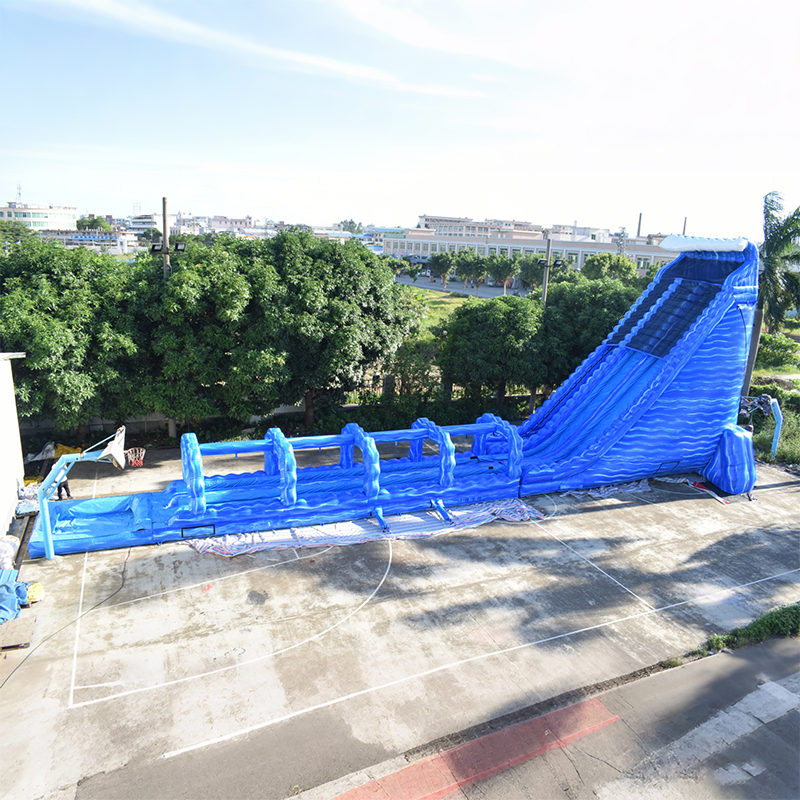
Mastering 0.9mm inflatable water slide repairs: 5 expert steps to save your ROI
Keeping your rental fleet in top-notch shape isn't just a suggestion—it’s pure survival in this business. Every afternoon a unit spends sitting in your warehouse is cash bleeding out of your pocket. While cheap residential toys use thin vinyl, high-end commercial assets live and die by the quality of their 1300D fabric.
Most heavy-duty water slides rely on 0.9mm PVC to handle the constant abuse of sliding kids and scorching sun. Mastering Inflatable Water Slide Repairs ensures your gear stays in the "rental-ready" lane. After 17 years in manufacturing and B2B exports, I’ve seen way too many businesses fail because they ignored simple maintenance.
In this guide, I’m spilling the professional secrets to restoring 1300D fabric. We’re talking about permanent, fast fixes that keep your aquatic slides making money. Let’s get into the nitty-gritty of how you can save your most valuable units.
The real deal behind 0.9mm 1300D PVC durability
Before you grab the glue, you've got to understand the beast you’re working with. Commercial inflatables are basically high-pressure engineering projects disguised as fun. They aren't just big balloons; they are structural assets designed to take a beating.
Why 0.9mm PVC is the gold standard for water parks
You might wonder why industry pro’s obsess over 0.9mm thickness compared to the standard 0.55mm dry units. Here is the kicker: friction. Water slides deal with constant wet-dry cycles and massive rider pressure, requiring extreme puncture resistance.
At CH Inflatable, we stick to SGS and UL-certified materials for our partners in the USA and Europe. Our High quality inflatable pool water slides are built to crush CE EN14960 standards, surviving "high-pressure fatigue" that shreds uncertified vinyl.
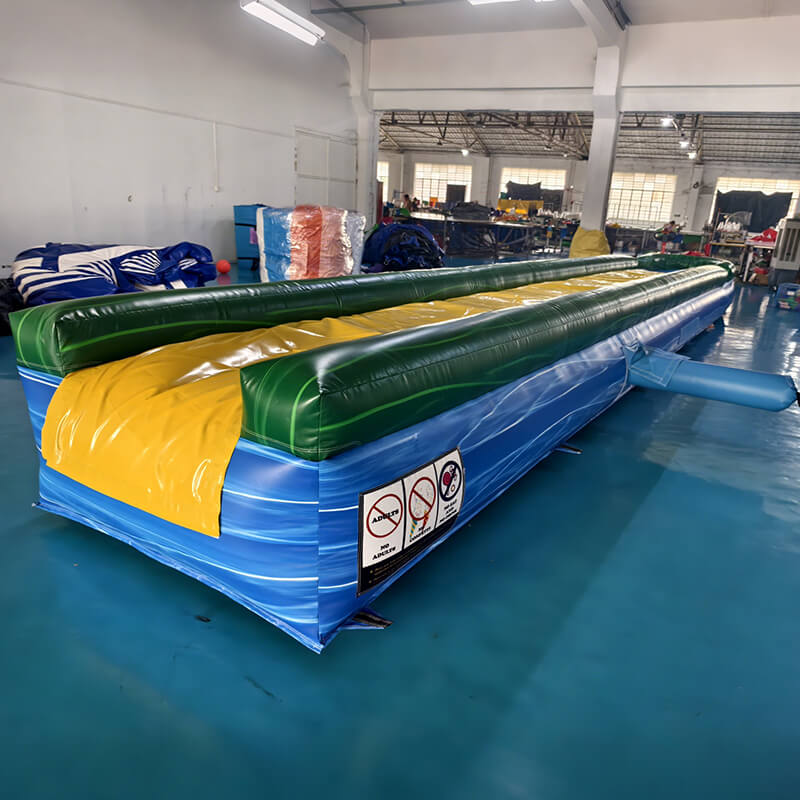
Look, starting with elite-grade material makes Inflatable Water Slide Repairs a rare event rather than a weekly chore. This proactive strategy is exactly how smart operators save thousands in emergency downtime every single year.
Spotting the damage: Scrapes vs structural punctures
I always tell my B2B partners: a pretty patch on a failing seam is a death trap. You have to know the difference between a "bruise" and a "broken bone." Not all vinyl damage is treated the same way.
Surface scrapes from moving dollies are usually cosmetic and won't leak air. But deep punctures mean you’re losing critical internal pressure fast. It’s dangerous for the riders and kills the slide's structural integrity.
Make it a habit to do a visual audit every time gear comes back to the shop. Check the pool transition points—that’s where micro-tears love to hide. Here’s a quick breakdown of what you might encounter out in the field:
| Type of damage | Visual indicator | Urgency level | Recommended fix |
|---|---|---|---|
| Cosmetic abrasion | White scuff marks, no air loss | Low | Liquid PVC or thin patch |
| Puncture hole | Hissing sound, air escaping | Immediate | Double-glue PVC patch |
| Seam separation | Bulging or gaping at stitch line | Critical | Heat welding / Professional re-sew |
| Zipper blowout | Teeth not interlocking | High | YKK zipper replacement |
Step 1: Professional cleaning and prep work
If you skip the prep, your repair will fail. Period. A huge chunk of Inflatable Water Slide Repairs peel off because the operator was too lazy to clean the surface properly before applying the adhesive.
Getting rid of the invisible enemies
In my experience, chlorine and algae are the ultimate glue killers. If you try to stick a patch over invisible chemical residue, it’s going to pop off within 48 hours of use. You need the surface to be surgically clean.
Scrub the puncture area with warm, soapy water and a stiff brush. You’ve got to get all that dried mud and chemical film out of the vinyl pores. Then, rinse it and dry it completely with a microfiber towel.
The trick to chemical degreasing
Soap isn't enough for 1300D material. This heavy vinyl has a protective topcoat that needs a little "bite" for the glue to work. I swear by Methyl Ethyl Ketone (MEK) or high-grade isopropyl alcohol.
Wipe the area down fast with a rag soaked in MEK—and wear gloves, for heaven's sake. This flash-cleans the invisible grease from human hands. For more on the basics, see this How to Repair Inflatable Water Slide - Comprehensive Guide.
Step 2: Precision cutting and the "double-glue" method
Now that it’s clean, don't mess it up with a sloppy patch. Poorly cut patches look amateur and give your high-paying clients a reason to complain. Precision is everything when doing Inflatable Water Slide Repairs.
Forget about square patches
Never, ever cut your patch into a square. Sharp corners catch on wet clothes and friction, leading to immediate peeling. It's a classic rookie mistake I see in "bounce house with slide" combos all the time.
Use your PVC patch kits to cut a perfect circle or oval. The patch should overlap the tear by at least two inches in every direction. This extra surface area is what keeps the 1300D fabric together during high-velocity impacts.
Mastering the "tack-time"
The secret sauce is the "Double-Glue" method. Apply a steady, thin coat of HH-66 vinyl cement to both the patch and the slide. Then, you wait. Don't touch it yet—patience is your best friend here.
Wait 2 to 5 minutes until the glue stops looking wet and feels tacky to the touch. Press it down hard and use a heavy hand roller to squeeze out every single micro-bubble. If you leave air in there, the sun will expand it and ruin the fix.
Step 3: Using heat welding for catastrophic failures
Sometimes liquid glue just won't cut it, especially when a base seam blows out. This is where you have to level up your Inflatable Water Slide Repairs game with some tech innovation. Cold glue can't handle dynamic structural loads forever.
To better understand Inflatable Water Slide Repairs, this video tutorial is highly recommended:
When to bring out the heat gun
For deep seam separations on a pool water slide, you need to fuse the pieces together. Using a hot air welding gun and a pressurized roller actually melts the 0.9mm PVC into a single molecular piece. It’s a permanent bond.
While some people look for basic fixes on sites like Inflatable Water Slide Repair, commercial fleets demand industrial thermal heat. Just be careful—if you're too slow, you'll burn a hole right through your $5,000 unit.
Step 4: Upgrading hardware and stress points
Don't stop at the vinyl. Often, the metal bits and nylon straps are what actually give out first. If a tether point rips, you can't just sew it back like a pair of jeans. You’ve got to rebuild it for safety compliance.
At CH Inflatable, we replace ripped webbing with seatbelt-grade material. And please, swap those rusty O-rings for stainless steel D-buckles. Cheap hardware decays in water, but marine-grade steel stays strong for years.
Also, watch those zippers. Air loss often happens at the deflation points. If a zipper track bursts, replace it with an authentic YKK zipper. They provide the industrial grip needed to keep that internal air where it belongs.
Step 5: The mandatory 24-hour pressure test
You’re not done until you prove the repair holds. Sending a freshly patched slide out to a Saturday party without testing is a recipe for a disaster call. You’ve got to be 100% sure before that slide leaves the warehouse.
The "juice" test for micro-leaks
Inflate the unit and let it stand for 24 hours. If it sags, you’ve got a leak. To find the invisible ones, "juice the slide." Mix dish soap and water in a spray bottle and spray your patch lines.
If you see tiny bubbles growing, your seal isn't airtight. You’ll have to clean the soap off, peel the patch back with a heat gun, and start the process over. It’s annoying, but it’s better than a failing slide in the middle of a customer's event.
Why starting with quality beats doing endless repairs
The best way to handle Inflatable Water Slide Repairs is to buy gear that doesn't break in the first place. I’ve spent nearly two decades building B2B empires, and the truth is simple: Cheap manufacturing is the most expensive thing you can buy.
Our slides use quadruple reinforcement at every high-stress corner. We use 0.9mm 1300D PVC because it’s the only way to guarantee a long lifespan and meet EU TEST requirements. Investing in quality upfront saves you 40% in maintenance costs over the long haul.
Bottom line? Use CE-certified blowers, rust-proof D-buckles, and YKK zippers. These components eliminate the common failure points that plague our competitors’ cheaper models. It's about protecting your ROI, pure and simple.
High quality inflatable pool water slides built to last are your best defense against downtime.
Want to upgrade your fleet and say goodbye to maintenance headaches? Contact CH Inflatable today. We build the most durable 0.9mm 1300D PVC slides on the market. Let's get your rental business secured for the long term!
Frequently Asked Questions
How do you fix a puncture on a 0.9mm PVC water slide?
Clean the area with MEK, cut a round 0.9mm PVC patch, and use the double-glue method with HH-66 cement. Wait for the tack-time and roll it flat to ensure no air bubbles are trapped inside.
Is 0.9mm PVC worth the extra cost over 0.55mm?
Totally. For water-based commercial use, 0.55mm just won't hold up to the friction and weight. The 0.9mm gauge provides the puncture resistance required for high-traffic rental units and safety compliance.
Can I use a hair dryer instead of a heat gun for seam repairs?
No way. A hair dryer doesn't get nearly hot enough to fuse 1300D PVC. You need a professional hot air welding gun to hit the specific temperature needed for a true molecular bond.