Slash 0.9mm Inflatable Aqua Park Maintenance: 5 Mastery Steps

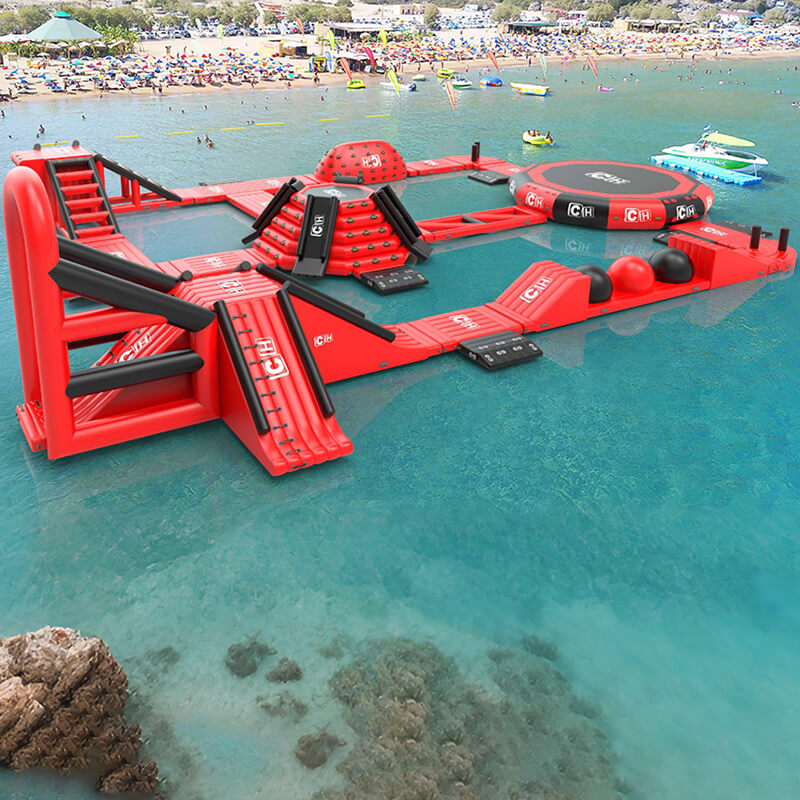
5 simple ways to slash inflatable aqua park maintenance costs
Running a commercial water-based entertainment business is a goldmine, honestly, but let's be real—your profit depends entirely on how long your gear lasts. The secret to a fat bank account isn't just selling tickets; it’s a proactive Inflatable Aqua Park Maintenance routine that keeps you from buying new modules every two seasons.
I’ve talked to operators from Florida to Dubai, and the struggle is constant. Between the scorching UV rays, salty ocean water, and high-volume adult traffic, cheap inflatables just die. That’s why at CH Inflatable, we’ve spent 17 years building commercial-grade units for the B2B rental market in places like Canada and Spain.
In this guide, I’m going to show you how using 0.9mm 1300D PVC and the right hardware can cut your repair bills in half. Inflatable Aqua Park Maintenance isn't just about grabbing a sponge; it's about protecting an investment engineered to handle the grind.
1. Material integrity: why 1300D PVC tensile strength is a game changer
Look, I’ve seen enough rental fleets to know that the base material is your first line of defense. While 0.55mm PVC is fine for a backyard bounce house, a real water park needs heavy-duty stuff. We stick to 0.9mm thickness because it’s the sweet spot for durability.
The real magic is the 1300D PVC tensile strength. This is what keeps the fabric from ripping when four grown men decide to jump on the same spot at once. High-density materials prevent punctures from rings, watches, or random debris floating in the lake.
Check out our Inflatable Obstacle Course on Water to see how we apply this tech to high-traffic modules.
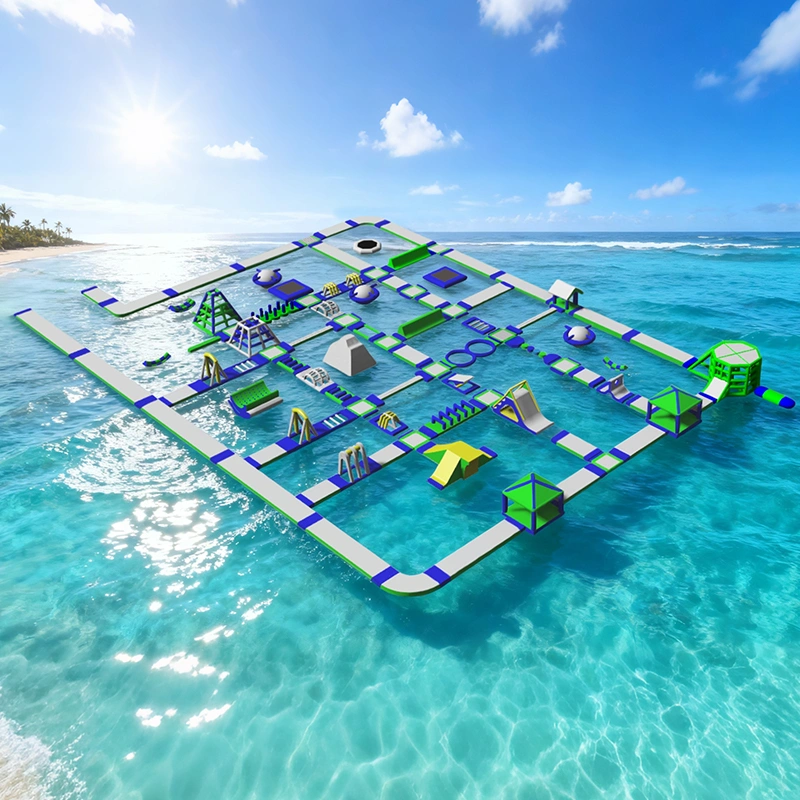
Proper Inflatable Aqua Park Maintenance actually starts with better materials. If you use UL/SGS certified 1300D PVC, you’ll spend way less time patching holes. Plus, it allows for tighter double-line stitching that won't give out under pressure.
Managing heat expansion in the sun
Here’s the kicker: heat is a silent killer. If you’re operating in Australia or the USA, that morning sun will bake your PVC. If you inflate to max PSI at 8 AM, the internal pressure will skyrocket by noon as the air expands.
I always tell my clients: "Don't be the guy who explodes a seam because of thermal expansion." You’ve got to leave a little breathing room. Smart operators release a bit of air manually during the midday peak to prevent "high-pressure fatigue" on the seams.
2. Hardware longevity: stopping stainless D-buckle corrosion
Your anchors are the foundation of everything. One of the biggest headaches in Inflatable Aqua Park Maintenance is seeing cheap metal rust and stain your expensive PVC. Once that rust starts, it eats into the fabric, and you're looking at a major failure.
We solved this by using marine-grade 316 stainless steel for every single D-ring. This stuff is practically bulletproof against saltwater. When you combine this with 316 Stainless D-buckle corrosion resistance, your anchoring points actually outlast the park itself.
| Component | Standard Material | CH Inflatable Standard | Maintenance Benefit |
|---|---|---|---|
| Main Fabric | 0.55mm PVC | 0.9mm 1300D PVC | High puncture resistance |
| Anchoring | Zinc Alloy | 316 Stainless Steel | Zero rust stains |
| Zippers | Generic Brand | Authentic YKK | No teeth seizing |
| Webbing | Standard Nylon | Automotive Grade | Prevents snapping |
For those deploying in deep water, you need to learn "Deadman anchoring." This means using massive submerged weights distributed across reinforced webbing. We use automotive-grade webbing at every stress point because regular nylon just doesn't cut it in the ocean.
3. Survival tips for YKK zipper durability
Zippers are the unsung heroes of fast setup and teardown. But in a beach environment, sand and salt are everywhere. If you don't take care of them, they’ll jam, and you’ll be stuck with a half-inflated module you can't seal.
To ensure YKK zipper durability, you need to be proactive. I’ve seen dozens of zippers ruined because someone forced them while they were full of grit. We use YKK because the teeth are tougher and more resistant to deformation, but they still need a little love.
The pros use silicone-based marine sprays every two weeks. This "Zipper Lubrication" keeps things sliding smoothly. If you're packing up for winter in a place like Poland or Latvia, make sure every module is bone-dry. Mildew is a nightmare to get out of 0.9mm PVC.
If you need some extra tips on general upkeep, 9 Tips For Maintaining Inflatable Water Parks | Bouncia has some decent standard practices to look at.
4. Liability and safety: CE EN14960 compliance
Bottom line is: if it isn't safe, you don't have a business. Your Inflatable Aqua Park Maintenance checks must be focused on structural integrity. We build everything to meet CE EN14960 compliance, which is the gold standard for inflatable safety.
Check your high-traffic zones every week for "seam creep." This is where the threads look like they’re stretching. Because we use double-line stitching and overlapping reinforcements, you’ll usually see signs of wear long before anything actually breaks.
To better understand Inflatable Aqua Park Maintenance, this video tutorial is highly recommended:
https://www.facebook.com/sheffieldcablewaterski/videos/sheffield-aqua-park-inflatable-assault-course/10157508500968747/
Don't forget your blowers. We only supply CE-certified HW blowers. A bad blower doesn't just cut your park's life short; it’s a fire hazard. Make sure your tubes aren't kinked, as balanced airflow stops the PVC from sagging and getting "fatigue spots."
5. Professional cleaning for a better ROI
I’ve seen guys use harsh bleach on their parks—that’s a huge mistake. It stripped the UV coating right off. For Inflatable Aqua Park Maintenance, keep it simple: pH-neutral soap and fresh water. That’s all you need for 90% of the dirt.
If your park is in a lake, you're going to get algae. This "biofilm" makes the obstacles slippery and honestly looks gross to customers. A mid-season scrub can boost your park's visual appeal and resale value by 20% easily.
Pro tip: assign your crew to do "Tideline scrubbing" with soft brushes once a week. This stops the organic gunk from permanently staining the 0.9mm PVC layers. It’s a lot easier than trying to scrub off six months of grime at the end of the year.
Wanna see what a clean, professional setup looks like? Take a look at Splash-N-Dash | Inflatable Water Park for some inspiration on presentation standards.
Frequently asked questions (FAQ)
How to prevent salt water corrosion on inflatable park D-rings?
Rinse them with fresh water after every use. Since we use 316 stainless steel as our default, you're already ahead of the game. If you're leaving them out for months at a time, a quick coat of lanolin spray on the metal acts as a perfect saltwater barrier.
What is the best way to clean 0.9mm PVC water obstacles?
Use a soft-bristle brush and mild soap. Avoid ammonia and bleach like the plague. If it’s really nasty, look for specialized marine PVC cleaners that won't mess with the UV inhibitors. Our Commercial floating inflatable obstacle course is designed with smooth transitions specifically to make these wash-downs faster.
Closing thoughts
Doing Inflatable Aqua Park Maintenance the right way is what separates the guys who quit after a year from the ones who dominate the market. Quality gear from the start makes your life a million times easier. When you have 1300D PVC, YKK hardware, and 316 steel, you're building a business that lasts.
Ready to upgrade your rental fleet with world-class, commercial-grade equipment?
Contact CH Inflatable Today for a Custom Quote!