5 Proven Tactics: Mastery of Inflatable Aqua Park Buoyancy

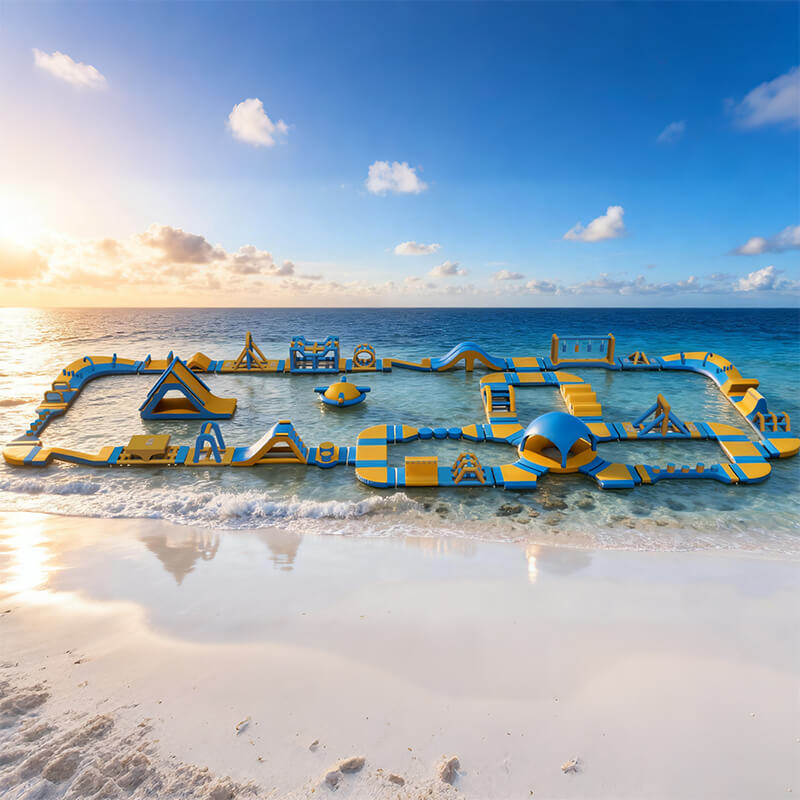
5 proven tactics: Mastery of inflatable aqua park buoyancy
Locking in the perfect Inflatable Aqua Park Buoyancy is often the difference between a high-traffic summer hit and a costly logistical nightmare. For rental business owners and B2B wholesalers, this isn't about looking pretty on Instagram. It’s about engineering.
Look, most operators get distracted by the flash of a "giant inflatable slide." But the real physics—the stuff that keeps your cash flow floating—lives under the water line. If you misjudge water displacement or settle for weak materials, your modules will sag, creating safety gaps that scare off families.
Over my years in the game, I’ve seen countless organizers across the USA, Canada, and the EU get burned by subpar gear that loses its lift by August. Bottom line: understanding material integrity is your secret weapon for long-term survival. Let’s dive into the five tactics that separate the pros from the amateurs.
1. Material physics: Why 0.9mm 1300D PVC is the gold standard
The foundation of consistent Inflatable Aqua Park Buoyancy starts with the "skin" of your product. Here’s the kicker: many newbies try to use standard bounce house fabric for marine environments. That’s a recipe for disaster.
For a dry land slide, 0.55mm 1300D PVC works fine. But for a commercial-grade water lek, we strictly stick to professional 0.9mm 1300D PVC. This thickness provides the essential "hoop stress" required to hold high-pressure air without stretching like a balloon.
I always tell my guys from Canada to Colombia that skimping on micrometer thickness is a gamble with your ROI. 0.9mm is the absolute minimum for true commercial buoyancy. It stops the product from sitting low in the water, which would otherwise ruin the user experience.
What's more, the chemical makeup matters. We use UV-resistant coatings with UL/SGS certification to ensure the PVC doesn’t become porous in the sun. If your material degrades in the heat of Dubai or Spain, your Inflatable Aqua Park Buoyancy vanishes overnight.
2. Engineering stability with stainless D-buckle systems
A floating park is only as stable as its anchor points. If your modules shift aggressively with every wave, your Inflatable Aqua Park Buoyancy becomes erratic. This causes "hydro-locking" issues where the park might actually submerge during high winds.
Our proprietary Stainless D-Buckle Stability system is built to fight this. We upgraded all anchoring points to heavy-duty stainless steel. They’re rustproof, waterproof, and designed for salt-heavy environments like Peru or coastal Florida.
To give you a better idea of how these materials compare in the field, check out this breakdown:
| Feature | Standard Grade | Professional Grade (Our Spec) |
|---|---|---|
| Material Thickness | 0.55mm - 0.7mm | 0.9mm 1300D PVC |
| Anchor System | Galvanized Iron | Stainless D-Buckle Stability |
| Seam Method | Standard Stitching | High-Pressure Airtight Seams |
| Operational Lift | Sags under heavy load | Constant Inflatable Aqua Park Buoyancy |
By spreading the vertical and horizontal tension through reinforced D-rings, we stop the "taco effect." That’s where the center of your inflatable dips below the water line under the weight of several adults.
3. The science of high-pressure airtight seams
To master Inflatable Aqua Park Buoyancy, micro-leaks simply cannot exist. Standard sewing practices used for land inflatables won't cut it here. You need thermal overlap welding that merges two sheets into one solid unit.
We use High-Pressure Airtight Seams with double-line reinforcement on every corner. This is what we call "heat-welding over-spec." It ensures the internal air chamber remains rock-solid whether it’s 6 AM or the peak of a busy afternoon shift.
Take a look at our High quality Inflatable Aqua Park for Adults. These massive modules are engineered to take the impact of thirty people jumping at once without losing a single PSI of pressure.
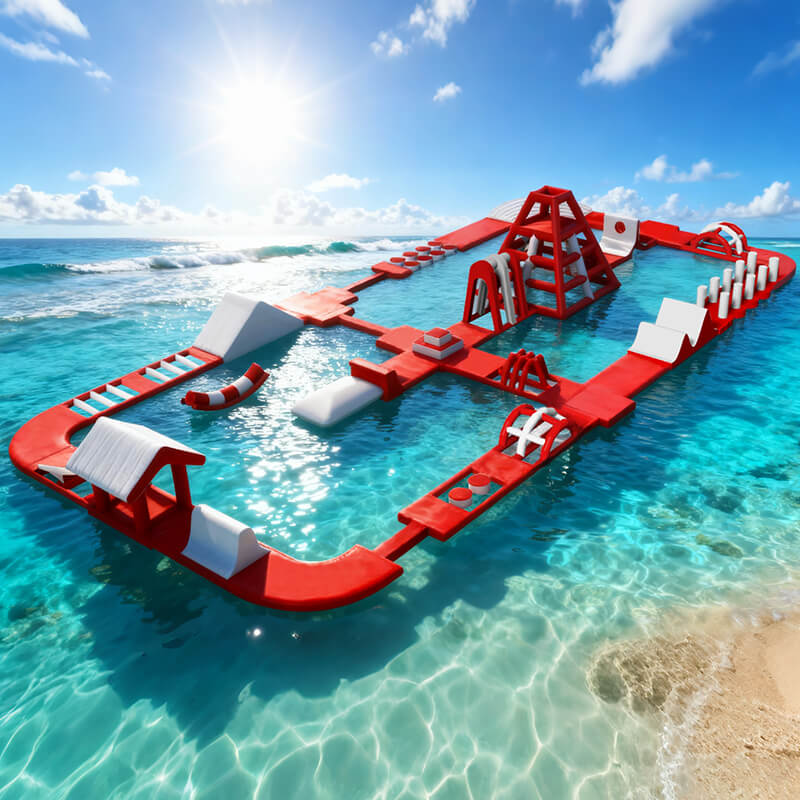
If your seams are weak, the whole structure deflates slowly. You won't even notice it until the module starts dragging in the water. Precision crimping cycles ensure these bonds cure perfectly for extreme durability.
4. Optimization via HW blower efficiency and pressure testing
Think about it: you can't maintain Inflatable Aqua Park Buoyancy with weak pumps. Rapid inflation and top-tier valves are mandatory for waterfront success. This is why we rely on HW Blower Efficiency units.
These blowers are CE certified, which is a big deal for my clients in Germany, Poland, and Latvia. They push high-volume airflow fast so you can get operational before the crowds arrive. Without high initial pressure, your buoyancy is compromised from the start.
To better understand Inflatable Aqua Park Buoyancy and see these modules in action, this video tutorial is highly recommended:
We also put every unit through a 48-hour pressure test. To be honest, most manufacturers skip this to save time. We don't. We verify compliance with CE EN14960 and EU TEST standards before a single box leaves our warehouse.
5. Professional rigging: Webbing and YKK quality
Rigging is the nervous system of your park. If your connecting straps snap, your modules drift away, creating dangerous gaps. This totally kills your Inflatable Aqua Park Buoyancy control.
We use automotive-grade webbing—essentially seatbelt material—for our rigging. It has massive tear resistance and doesn't rot after being soaked in the sun all day. It’s built to handle "rigging play," which is the slight slack needed for natural wave movement.
Finally, we only use YKK brand zippers for deflation ports. Cheap plastic fasteners deform under the massive internal pressure of an inflated park. YKK stays shut, ensuring your Inflatable Aqua Park Buoyancy remains consistent across all modules.
Whether you're looking at established parks like the Splash-n-Dash Aqua Park | Discover Yosemite National Park or browsing general Inflatable Aqua Park Systems for Waterfronts, the lesson is the same: quality hardware wins every time.
Mastering Inflatable Aqua Park Buoyancy isn't rocket science, but it does require 0.9mm 1300D PVC and High-Pressure Airtight Seams. If you want to boost your ROI and keep your guests safe, partner with someone who actually knows the engineering.
Contact CH Inflatable today for a custom quote on your next project!
High quality Inflatable Aqua Park for Adults
Frequently asked questions (FAQ)
How does material thickness affect inflatable aqua park buoyancy?
Thickness creates the "hoop stress" needed to hold air under pressure. We use 0.9mm PVC because thinner 0.55mm material stretches under load. When it stretches, internal pressure drops and the module loses its buoyant lift, sitting dangerously low in the water.
What role do stainless D-rings play in water park stability?
Our Stainless D-Buckle Stability points secure the park’s center of gravity. By keeping modules from twisting or flipping in the wind, these anchors maintain the perceived buoyancy and physical safety of your patrons.
Why are YKK zippers and HW blowers necessary for water inflatables?
YKK zippers prevent air leaks at deflation points during 8-hour shifts. HW Blower Efficiency units provide the high-volume air needed to reach the intense internal pressure required for maximum Inflatable Aqua Park Buoyancy.