Master Inflatable Wet Dry Slide Conversion: 3 Profit Tips

Master Inflatable Wet Dry Slide Conversion: 3 profit tips
Boost your rental income with Inflatable Wet Dry Slide Conversion. Learn 3 profit tips to use your inventory year-round. Get your quote from CH Inflatable now!
Introduction
Look, if you run a rental business, you know the sting of "dead inventory." It keeps you up at night.
Once the summer heat fades, your expensive water slides usually end up rolled tight in the warehouse. They sit there collecting dust when they should be collecting cash.
Why let your biggest assets sit idle for six months?
The solution is mastering Inflatable Wet Dry Slide Conversion. This isn't just about draining the water and giving it a quick wipe.
It is a strategic approach to inventory. You transform a high-ticket summer water slide into a profitable winter dry slide or ball pit combo.
I have spent 17 years in the manufacturing trenches at CH Inflatable. I’ve seen firsthand that successful rental companies in the US and Europe don't just rent units.
They manage lifecycles.
To make Inflatable Wet Dry Slide Conversion work, you need hardware that can take a beating.
We utilize 0.55mm and 0.9mm 1300D PVC. Why? Because units undergoing frequent reconfiguration face double the stress.
Expert Opinion: "Don't view wet/dry units as a compromise; view them as a 2-for-1 ROI machine. The secret lies in how you manage the friction and the landing area to keep the booking calendar full."
Tip 1: Mastering the mechanics of the detachable pool attachment
The technical heart of any hybrid unit is the modular landing area.
If you can't swap the landing zone efficiently, your labor costs will eat up your profits fast.
Successful Inflatable Wet Dry Slide Conversion relies entirely on speed and safety during the setup.
The role of the detachable pool attachment
Standard industry practice for dual-lane or single-lane slides involves a modular connection system.
You remove the inflated pool used for water landings. Then, you replace it with a dry bumper or stopper.
This detachable pool attachment system must be seamless. No gaps allowed.
If there are gaps, you risk injury or water leakage into areas that shouldn't get wet.
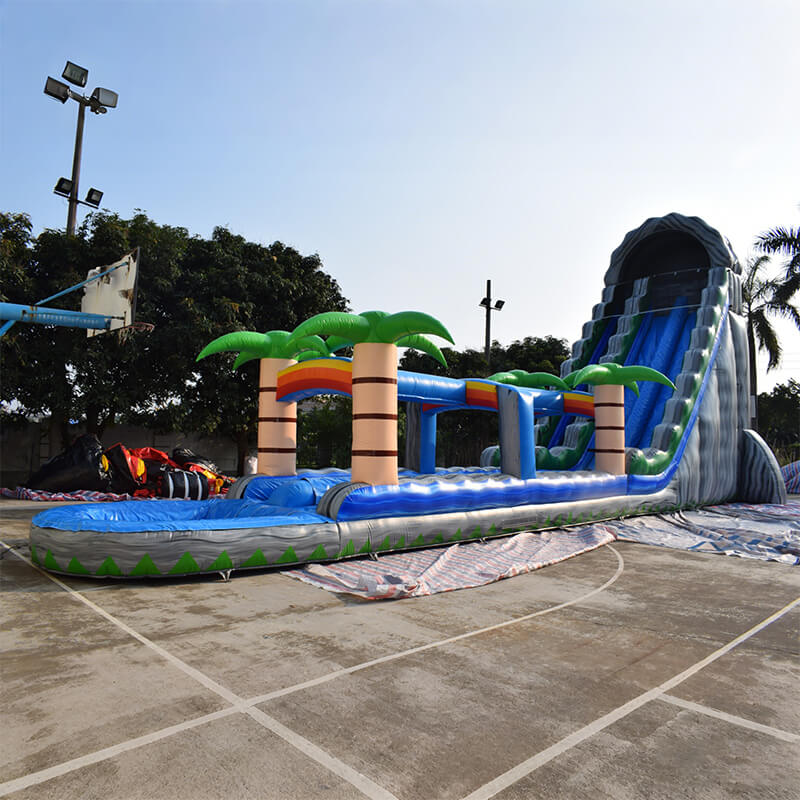
When looking at industry standards, you can see how versatile these setups are. High-end units like the 20ft High Dual Lane Inflatable Water Slide with Pool (wet/dry) demonstrate the massive scale of units that benefit from this modularity.
Ensuring your detachable pool attachment is secured with heavy-duty Velcro and backup D-rings is non-negotiable.
To better visualize the setup and water slide hose routing of a wet/dry unit, this video tutorial is highly recommended:
Water slide hose routing vs. dry setup
Nothing ruins a dry event faster than a tripping hazard.
When performing an Inflatable Wet Dry Slide Conversion, you must handle the plumbing correctly.
Water slide hose routing is critical here.
In wet mode, hoses are often strapped along the spinal arch or side walls. In dry mode, these must be completely removed or tucked safely away.
Leaving empty hoses attached is a massive liability. Kids climbing on a dry unit will pull on loose tethers, and that's a lawsuit waiting to happen.
Tip 2: Material durability and vinyl friction reduction
One of the most common complaints I hear from renters is that dry slides feel "sticky."
People say they are slow compared to their wet counterparts. This is a physics issue, but you can solve it with the right Inflatable Wet Dry Slide Conversion techniques.
Solving the "Sticky Slide" issue (vinyl friction reduction)
Water acts as a natural lubricant. Without it, PVC on skin (or clothing) generates high friction.
This causes "rug burns" or kids getting stuck halfway down using a detachable pool attachment setup.
You need to focus on vinyl friction reduction. In the industry, we often refer to this as the "Slide Slip" treatment.
Smart operators use silicone-based sprays on the slide liner for dry events. This creates a slick surface that mimics the speed of water.
For context on general manufacturing standards, look at providers like Inflatable Dry Slides - Manufacturer of High Quality Inflatables. They emphasize the need for specific liners in dry conditions.
Heavy-duty construction for hybrid use
An Inflatable Wet Dry Slide Conversion puts immense strain on the unit's seams.
At CH Inflatable, we build our units with this hybrid use in mind from day one.
- Velcro Connection Flap Integrity: We use widened Velcro (5-10cm) on the Velcro connection flap. This prevents water leaking into the dry bumper area and keeps it tight during dry use.
- Material Science: We use 0.55mm 1300D PVC for the main body and thicker 0.9mm PVC for pool liners to withstand shoes.
- Hardware: We use YKK Zippers and Stainless Steel D-buckles. Why stainless? Because a rusty buckle from summer will stain the unit for winter.
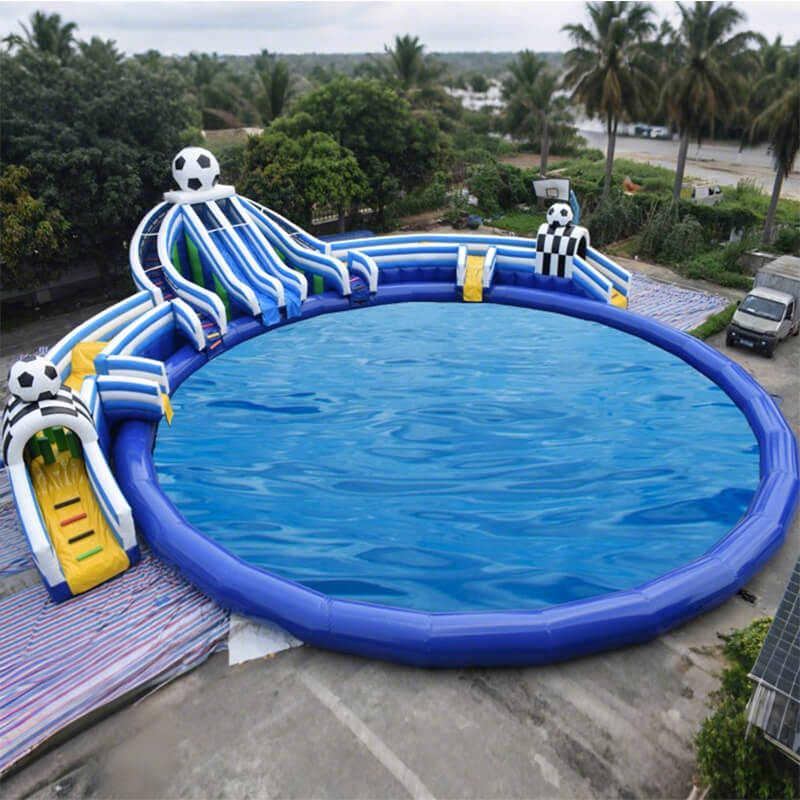
If you need a unit built to withstand these rigorous conversions, Check out the heavy-duty build of our Mobile Water Theme Park with Slide.
Tip 3: Implementing a seasonal rental strategy
The hardware is only half the battle. To truly profit from Inflatable Wet Dry Slide Conversion, you need a smart plan.
Your business needs to adapt to the calendar.
Justifying the investment via year-round booking
A strong seasonal rental strategy dictates how you market the unit. You simply cannot market a "Water Slide" in December.
- Summer: Pitch the unit as a cooling "Inflatable Water Slide" with the pool attached.
- Winter/Indoor: Pitch the same unit as a "Giant Dry Slide" or "Ball Pit Combo" for school gyms and indoor parties.
By mastering Inflatable Wet Dry Slide Conversion, you effectively double your inventory without spending a dime on new units.
The versatility of combo units
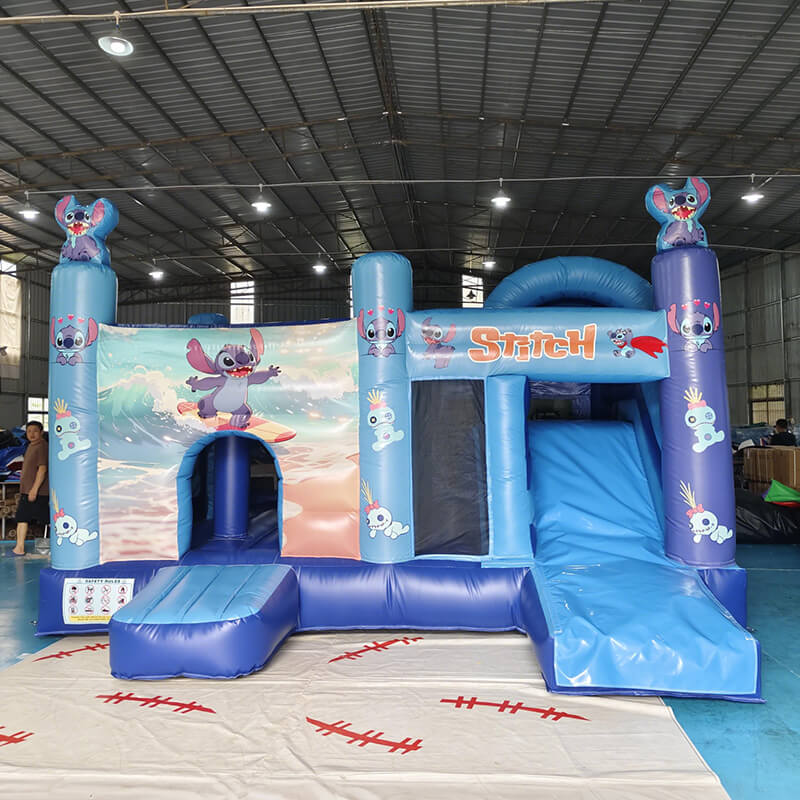
Giant slides are great, but smaller combo units are the easiest to convert.
They fit inside community centers and garages perfectly. If you are strictly doing outdoor rentals, you are leaving 40% of your potential revenue on the table.
Indoor dry combos are the bread and butter of winter revenue. Versatile units allow for quick flip times between Friday and Saturday rentals.
Maintenance protocols for wet vs. dry modes
Inflatable Wet Dry Slide Conversion is not just about assembly; it is about preservation.
If you pack a wet unit away thinking you will use it as a dry slide next week, you will open it to find a mold disaster.
Visualizing the maintenance shift
I've put together a quick breakdown of how your workflow needs to change based on the mode:
| Checkpoint | Wet Mode Protocols | Dry Mode Protocols |
|---|---|---|
| Liner Surface | Requires anti-fungal cleaner. | Needs vinyl friction reduction spray. |
| Hose Management | Secure via water slide hose routing loops. | Remove completely to prevent trips. |
| Anchor Points | Check for mud rot on webbing. | Inspect for dry abrasion/fraying. |
| Connection Area | Ensure detachable pool attachment is sealed. | Check Velcro connection flap for gaps. |
Preventing mold after wet use
Before any Inflatable Wet Dry Slide Conversion to dry mode, the unit much be "Bone Dry."
This is industry slang for zero moisture.
Water seeps into the inner baffles through stitching holes. It's an internal threat.
You must leave the blower running for several hours after draining the water. Open all deflation zipper flaps to allow airflow to circulate through the internal chambers.
Don't cut corners here, or you will regret it.
Safety checks before conversion
Safety standards change based on the mode.
Check your HW Blowers. Ours are CE Certified and water-resistant, but they should be inspected for water ingress before being used in an indoor dry setup.
In a dry setup, electricity is often closer to foot traffic. Always inspect your anchor points.
Frequently Asked Questions (FAQ)
Can any commercial dry slide be converted to wet use safely?
No. An Inflatable Wet Dry Slide Conversion should only be performed on units specifically designed for it. Standard dry slides lack water-sealed seams. If you add water to a "dry-only" slide, water will penetrate the foam steps. This leads to severe mold and structural rot. Always ensure you have rust-proof hardware, like our Stainless D-buckles.
What are the main maintenance differences between wet and dry inflatable setups?
The primary difference is the chemical treatment and friction management. Wet mode requires anti-fungal cleaners and thorough drying time to prevent mildew. Dry mode focuses heavily on vinyl friction reduction. You need to inspect the liner for "friction burns" or melting caused by high-speed dry sliding.
Do I need different blowers for wet and dry modes?
Generally, no, provided the blower is powerful enough. We supply HW brand blowers which are robust for both configurations. However, during an Inflatable Wet Dry Slide Conversion for wet use, blower placement is critical. It must be positioned further away from the misting system to prevent electrical hazards.
Conclusion
Mastering Inflatable Wet Dry Slide Conversion is the hallmark of a professional rental business.
It allows you to maximize your ROI by keeping your inventory active 12 months a year.
By leveraging the mechanical advantage of the detachable pool attachment and ensuring proper material care through vinyl friction reduction, you win.
Adopt a smart seasonal rental strategy, and you can dominate your local market.
At CH Inflatable, we support your growth with commercial-grade units featuring 0.55mm/0.9mm 1300D PVC. Our reinforced seams and rust-proof stainless steel hardware are designed specifically for this dual-purpose use.
Don't let your profits slide away this season. Contact CH Inflatable today for a free catalog and customize your wet/dry inventory!