
Master Inflatable Water Slide Storage: 5 Vital Hacks

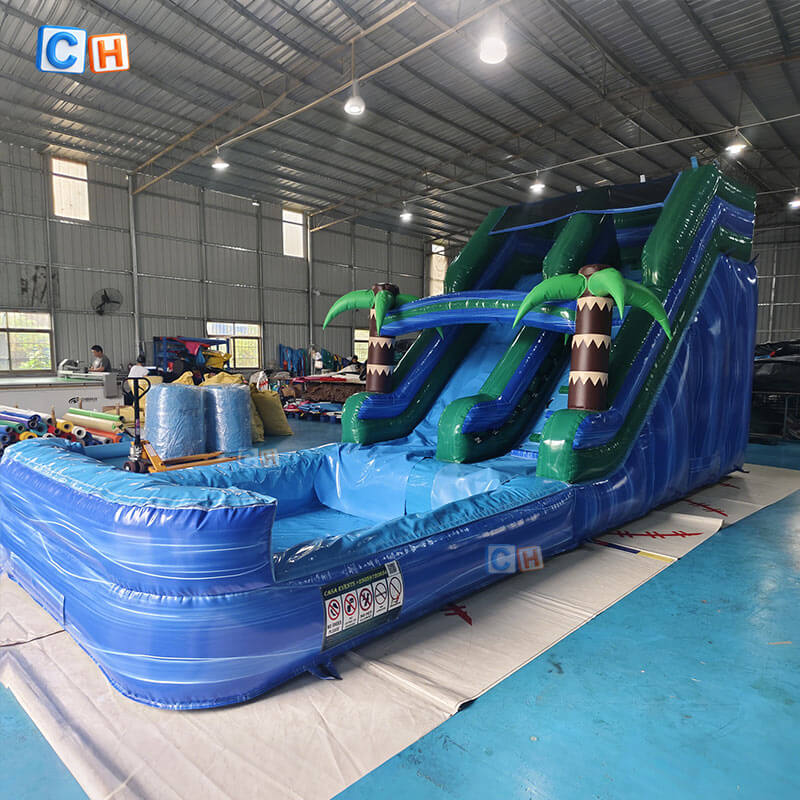
Master inflatable water slide storage: 5 vital hacks
Prevent mold! Discover expert inflatable water slide storage tactics to extend product life and secure your rental ROI using proper PVC care. Read now!
Introduction
For rental business owners, the end of the summer season isn't downtime. It is the critical period that determines next year's profitability.
I’ve spent 17 years in the manufacturing and export side of this industry. And I can tell you one thing for certain: improper storage is the silent killer of ROI.
I have seen way too many entrepreneurs open their warehouse in spring only to find their best assets ruined. Residual moisture, determined rodents, and freezing temps can destroy a commercial unit in months.
There is nothing worse than unrolling a slide to find "mold blooms" or cold cracks in the vinyl. That's money down the drain.
Mastering inflatable water slide storage is not just about tidiness; it is a financial necessity.
You are protecting assets made of high-quality 0.55mm and 0.9mm 1300D PVC. While CH Inflatable builds these units to last over a decade, they still require specific care during the off-season.
1. The anti-mold drying process: foundation of storage
Here involves a simple truth: you cannot store what isn't dry. It sounds obvious, but moisture is the number one enemy of PVC longevity.
If you pack a unit damp, you are essentially incubating a science experiment that will eat your investment alive.
To ensure successful inflatable water slide storage, you must execute a rigorous anti-mold drying process.
Deep cleaning and descaling
Before drying, you have to clean. Over a season, water slides accumulate calcium buildup from hard water and organic debris like wet leaves.
If left on the surface, this organic matter rots and stains the PVC permanently. So, scrub the unit down.
Because CH Inflatable uses heavy-duty 0.55mm PVC, you can scrub vigorously without worrying. Remove all slick "bio-film" that tends to form on the sliding lanes.
Achieving the "bone dry" standard
Once the unit is clean, towel off the standing water. But let's be real, towels aren't enough.
You need to run your HW CE-certified blower for at least 30 minutes after the surface appears dry.
In the industry, we call this the "Stem to Stern" inspection. Walk on the unit (shoes off!) while it inflates to push air into the corners.
Larger, more complex units, such as the Commercial Inflatable Water Castle, have intricate internal structures.
These big guys require extra drying time to ensure those hidden chambers are completely moisture-free.
2. Vinyl preservation techniques during rolling
How you roll a unit for winter is fundamentally different from how you roll it for a weekend delivery. Speed isn't the goal here—preservation is.
Proper vinyl preservation techniques are essential if you want rock-solid inflatable water slide storage.
The "loose roll" vs. "tight roll" debate
For daily rentals, we roll tightly to save space in the van. However, for winter storage, I always argue for a looser roll.
Rolling a unit too tightly for months places constant stress on the seams. It puts unnecessary pressure on the D-buckle reinforcement points.
A slightly looser roll allows the PVC to relax. It reduces the tension on internal baffle stitching, preventing the fabric from stretching out of shape.
Protecting the hardware and zippers
Your unit isn't just PVC; it's hardware too. Before rolling for the season, lubricate your YKK zippers with a non-corrosive wax.
This prevents oxidation seizure. Trust me, you want those zippers to open smoothly in spring.
On top of that, ensure your stainless steel D-buckles are dry. Position them flat so they do not dig into the vinyl layers.
Even high-quality steel can leave pressure marks if pressed against the coating for six months straight.
To better understand visual techniques for inflatable water slide storage, this video tutorial is highly recommended:
https://www.youtube.com/shorts/bH5-xOKdGFg
For a detailed step-by-step guide on basic handling concepts, refer to this guide on How to Roll an Inflatable Water Slide.
3. Climate-controlled warehousing vs. cold storage
Temperature management is a massive factor in how PVC ages. While our materials are tested for endurance, physics still applies.
Ideally, you should aim for climate-controlled warehousing for your inflatable water slide storage.
The risks of freezing temperatures
PVC becomes rigid in the cold. We call this the glass transition temperature. Handling 0.9mm PVC while it is frozen can cause "cold cracking."
Beware of "Cold Shock." This industry slang refers to unrolling a frozen unit before it thaws.
This fractures the protective coating. If you store in a cold shed, leave the unit alone until temperatures rise.
| Risk Factor | Cold Storage (Shed/Container) | Climate-Controlled Warehouse |
|---|---|---|
| PVC Flexibility | Becomes rigid/brittle | Remains pliable |
| Rodent Risk | High (Seeking warmth) | Low (Controlled access) |
| Mold Potential | High (Condensation swings) | Low (Stable humidity) |
| Handling Safety | Do NOT move until thawed | Safe to move anytime |
Managing humidity levels
Even if your unit is dry, the environment might not be. High warehouse humidity causes external mildew to grow on the bag.
Always use wooden or plastic pallets. Never store your inflatables directly on concrete floors.
Concrete "sweats" as temperatures change, which will wick moisture directly into the bottom of your storage bag.
4. Physical protection: containers and barriers
Once the unit is dry and rolled, you must protect it from physical threats. This is a key part of seasonal inventory management.
Rodent proofing your inventory
Mice and rats love PVC. To them, the inside of a rolled-up water slide is a warm, insulated mansion.
They will chew through the layers to build a nest. It happens more often than you think.
Many pros are ditching soft bags for winter storage. They are opting for hard plastic bins (Gaylord boxes) for smaller units.
This creates a hard physical barrier against pests. See what other professionals discuss in this thread: r/Costco on Reddit: Best Storage Options for Croc Water Slide?.
Bagging and tagging
If you use soft bags, ensure they are the original packing bags made of 1300D PVC. Thin tarps are not enough.
Labeling is crucial. Ensure versatile units like the Inflatable Bouncer Castle are clearly labeled on the outside.
You do not want to be unrolling five different units in the freezing cold of early spring just to find the one you need.
5. Warehouse logistics planning for the off-season
Finally, organize your warehouse for efficiency. Efficient inflatable water slide storage requires smart warehouse logistics planning.
Strategic stacking and weight distribution
Here is a rule I live by: Never stack heavy water slides (200kg+) on top of lighter bouncy castles. I see it happen, and it ruins gear.
The weight effectively crushes the foam in the steps. It creates hard, permanent creases in the vinyl of the bottom unit.
Keep your heaviest 0.9mm PVC slides on the bottom level or on their own racking system.
Accessibility and rotation
Plan your layout based on the first anticipated rentals of the next season. Keep your popular spring units near the door.
Avoid "Buried Treasure" scenarios. This is when high-demand units are stuck behind wall-to-wall storage of giant slides.
This forces you to move heavy inventory unnecessarily, increasing the risk of damage and back injuries.
Frequently Asked Questions (FAQ)
How long must a slide dry before packing?
It depends on humidity. Typically, after wiping down, the blower should run for at least 30-45 minutes. For proper inflatable water slide storage over winter, ensure internal baffles are moisture-free.
Can I store PVC inflatables in below-freezing temperatures?
Yes, commercially graded 1300D PVC can withstand cold. However, climate-controlled warehousing is safer. If stored cold, do not move the unit unti it thaws to room temperature.
What is the best rolling method for long-term storage?
A "cigar roll" is standard. But for long-term inflatable water slide storage, keep it looser. Use protective webbing straps—like car seat belt material—rather than ropes to prevent cutting into the fabric.
Bottom line
Proper inflatable water slide storage is the difference between a unit that lasts 3 years and one that lasts 10.
By following strict anti-mold drying processes and actively protecting against pests, you secure your investment for the long haul.
At CH Inflatable, we understand the rental industry. That is why we use premium 0.55mm-0.9mm 1300D PVC and reinforced stitching.
Don't let the off-season eat into your profits. Ready to expand your rental fleet with durable inflatables built for longevity?
Contact CH Inflatable today for a quote on our custom commercial slides and castles!
Image by: Nathan J Hilton
https://www.pexels.com/@nathanjhilton