
Profit-Boosting Inflatable Park Water Solutions for Commercial Rental Businesses

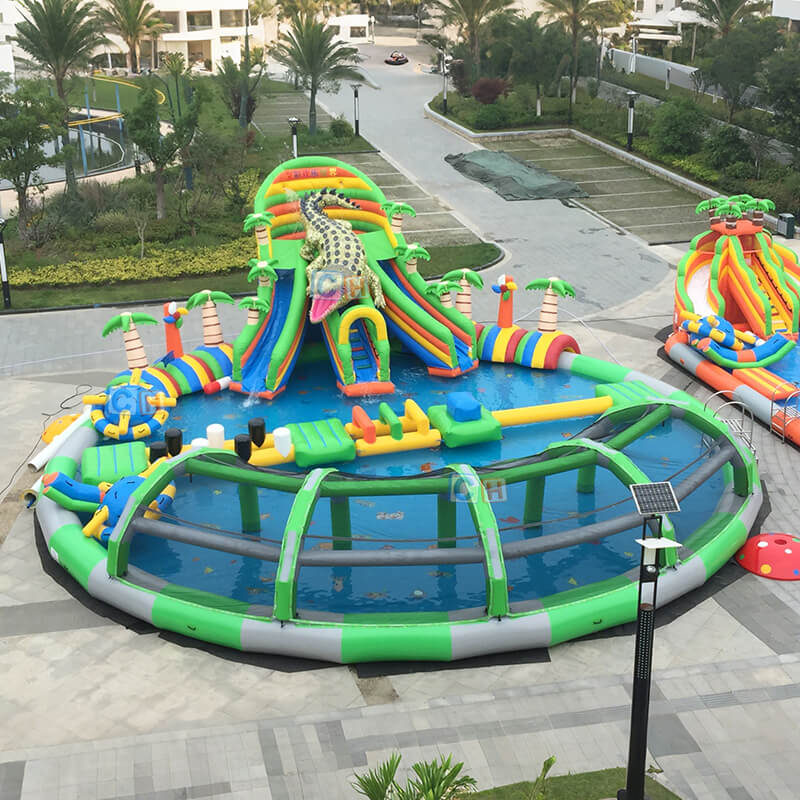
Look, in the commercial amusement industry, maximizing ROI while keeping overhead low is the ultimate balancing act. For rental businesses, resort operators, and event promoters, traditional fixed water parks are a massive capital sink. You're looking at permanent real estate, grueling permitting processes, and construction timelines that'll bleed your budget dry before you even open the doors. Enter the commercial inflatable park water solution. Here's the deal: it's a high-yield, mobile, and scalable alternative that turns any open space or natural water body into an adrenaline-fueled aquatic attraction within hours. By ditching the need for permanent infrastructure, operators can drastically slash that initial capital expenditure while unlocking the flexibility to chase seasonal demand and high-foot-traffic events across diverse locations.
But let's get one thing straight: not all aquatic inflatables are engineered for the relentless wear of B2B commercial rentals. Underestimating the structural demands of daily, high-throughput public use leads to catastrophic seam failures, liability nightmares, and brand-damaging downtime. In the shop, we see it all the time. This comprehensive industrial guide is designed for visionary operators who demand uncompromising quality, rigorous safety compliance, and peak throughput. We're dissecting the exact material engineering, anchoring physics, and capacity economics required to turn a commercial inflatable water park into a profit-generating powerhouse. From thickened PVC tarpaulin specs to CE-EN14960 certifications and rapid deployment logistics, this is your definitive blueprint for selecting, deploying, and monetizing heavy-duty inflatable park water systems.
Table of Contents
- 👉 The Economics of Commercial Inflatable Park Water Attractions
- 👉 Industrial-Grade Material Engineering & Durability Physics
- 👉 Uncompromising Safety Standards & Aquatic Compliance
- 👉 Rapid Deployment & Operational Logistics
- 👉 Custom Branding & Modular Park Expansion
- 👉 Commercial-Grade Inflatable Park Water Models: Specs & Capacities
- 👉 Industrial FAQ: Inflatable Park Water Operations & Engineering
The Economics of Commercial Inflatable Park Water Attractions
Shifting from Fixed-Asset CapEx to Mobile OpEx
The traditional model of aquatic entertainment relies on fixed-asset Capital Expenditure (CapEx). It ties operators to massive upfront investments in land excavation, concrete pouring, filtration infrastructure, and permanent plumbing. This model doesn't just strangle cash flow; it kills your operational agility. By transitioning to a commercial inflatable park water system, smart operators shift this financial burden from fixed CapEx to a highly flexible Operational Expenditure (OpEx) model. The initial purchase price of a commercial-grade inflatable park is a fraction of a permanent installation, instantly slashing the break-even point. Instead of waiting years to see a return on a multi-million dollar fixed facility, rental businesses can achieve full ROI within a single summer season. Because these parks are mobile, you can follow the revenue. You can deploy the park at a beachfront resort in July, break it down, and relocate it to a suburban shopping mall property promotion in August. This financial leverage transforms the asset from a depreciating static structure into a dynamic, revenue-generating machine that adapts to seasonal demand and high-foot-traffic events across diverse geographic locations without requiring new permits for permanent structures.
Maximizing Throughput & Per-Cycle Profitability
In the commercial amusement sector, revenue is directly tied to throughput velocity. Here's the deal: the economic power of a commercial inflatable park water lies in its ability to handle massive concurrent capacities—ranging from 60 to 90 participants depending on the specific model. By implementing a time-limited session rotation model—typically 90 to 120 minutes per ticketed entry—operators can safely cycle through hundreds of guests per day. Consider a park with an 80-person capacity operating four 90-minute sessions daily; this yields 320 daily participants. At a conservative ticket price of $25 per session, the park generates $8,000 in gross daily revenue. Because the overhead is limited to blower electricity, basic water treatment, and minimal staffing (typically two to three lifeguards and one gate attendant), the profit margin vastly outpaces traditional dry bounce house rentals. Maximizing per-cycle profitability also involves strategic up-selling: offering premium VIP early-access sessions, renting out branded dry-storage lockers, and selling coordinated merchandise. The high throughput, combined with low marginal operational costs, ensures that every minute the park is inflated, it is generating industry-leading EBITDA for the operator.
You've got to understand these financial dynamics if you're going to make it as a modern operator. According to the CAAPA 中国游艺机游乐园协会, the mobile water park sector is experiencing exponential growth across global markets, driven precisely by this favorable ratio of low initial investment to high operational throughput.
Industrial-Grade Material Engineering & Durability Physics
The Anatomy of Thickened PVC Tarpaulin (≥0.9mm)
Let me tell you, the structural integrity of a commercial inflatable park water system hinges entirely on its material composition. Retail-grade inflatables often utilize thin, uncoated nylons that degrade rapidly under UV exposure and chlorinated water. In contrast, industrial B2B aquatic parks demand specialized Thickened PVC Tarpaulin. There's no cutting corners here. While 0.55mm 1300D PVC serves as the baseline for standard dry bounce houses, high-impact commercial aquatic zones require a minimum thickness of ≥0.9mm. This specific thickness is not arbitrary; it represents the critical threshold required to withstand the concentrated kinetic energy of multiple adults jumping, sliding, and climbing simultaneously. The "1300D" refers to the denier—a unit of measurement for the mass density of the internal base fabric fibers. A 1300D high-tenacity polyester core provides exceptional tensile strength, resisting stretching and deformation under heavy loads. This core is then coated on both sides with thick polyvinyl chloride (PVC), which is formulated with anti-UV agents to prevent photodegradation from prolonged sun exposure, anti-mildew chemicals to prevent rotting when stored, and plasticizers that maintain flexibility across extreme temperature fluctuations. This tri-layer construction ensures the material resists punctures from debris, sharp swimwear accessories, and high-impact water landings, guaranteeing a lifespan measured in years, not months.
Seam Technology: Double-Stitching & Reinforced Stress Points
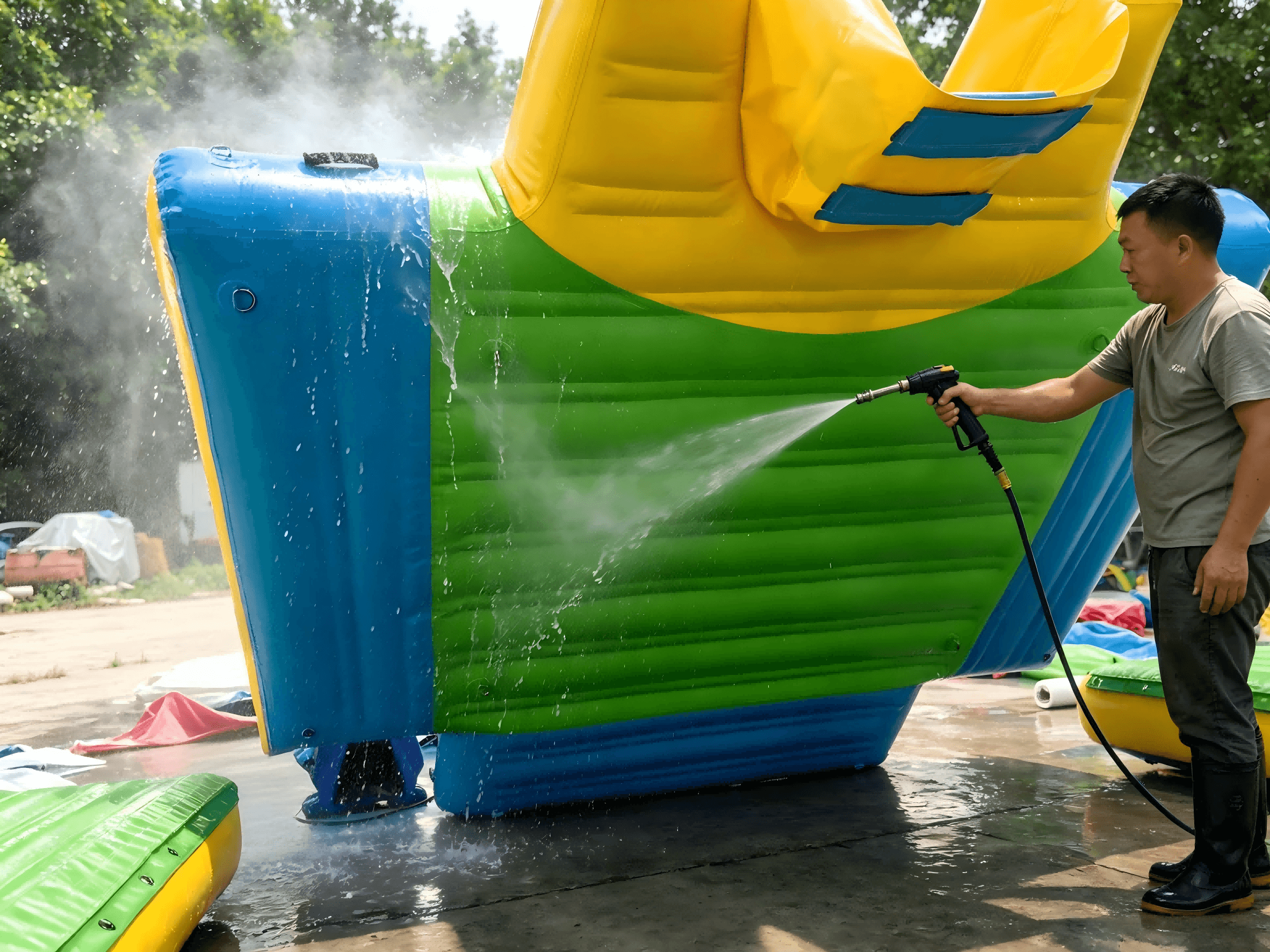
Even the most robust PVC tarpaulin is useless if the seam engineering is flawed. In a high-capacity inflatable park water, the seams endure the highest concentration of stress, especially where panels meet at dynamic transition zones like slide exits and climbing wall bases. To prevent catastrophic seam blowouts under the dynamic load of 80-90 simultaneous users, industrial manufacturing mandates double-line stitching using heavy-duty, rot-resistant nylon thread. The stitching pattern is calculated to distribute shear forces evenly across the seam width. High-stress points feature reinforced corners with additional patching and quadruple-stitched webbing. Internal baffles—the walls that maintain the structural shape of the inflatable—utilize premium YKK zippers encased in protective PVC flaps. These zippers allow operators to adjust internal air pressure between chambers and provide emergency deflation routes, all while ensuring an airtight seal that prevents blowouts during peak occupancy. This meticulous attention to seam physics ensures that the park maintains its structural rigidity and airtight integrity throughout years of relentless commercial operation.
For operators evaluating manufacturing standards, it's essential to partner with suppliers who get these rigorous structural demands. Industry leaders like Jungle Jumps emphasize that commercial-grade manufacturing in the U.S. inflatable market requires strict adherence to these advanced seam and material specifications to withstand daily public use.
Uncompromising Safety Standards & Aquatic Compliance
Decoding CE-EN14960, ROHS, and UL Certifications
In the B2B amusement industry, liability mitigation is just as critical as structural integrity. Look, operating an uncertified inflatable park water system exposes operators to immense legal risk, potential municipal shutdowns, and invalidated insurance policies. This is why rigorous third-party safety compliance is non-negotiable. The CE-EN14960 certification is the internationally recognized European standard governing the safety of inflatable play equipment. Achieving this certification requires passing exhaustive tests for impact attenuation, structural stability under wind load, and entrapment hazards—ensuring that slide exits, climbing gaps, and guardrails are specifically sized to prevent head or limb entrapment. On top of that, ROHS (Restriction of Hazardous Substances) certification guarantees that the PVC material is free from toxic heavy metals like lead and mercury, as well as harmful phthalates. This is vital for aquatic environments where guests have prolonged skin contact, and it ensures environmental compliance for water run-off. Finally, UL certification on the electrical blower components ensures they have passed stringent fire resistance and electrical shock tests. Providing this documentation triad allows operators to seamlessly secure commercial liability insurance, pass local municipality safety inspections, and guarantee property managers that the attraction meets the highest global safety protocols.
Hardware Integrity: HW-Powered Fans & Stainless-Steel Buckles
Continuous inflation physics demand reliable hardware. You can't have your park falling flat. Commercial aquatic parks require a continuous supply of air to maintain structural rigidity, meaning the blowers must operate flawlessly while the park is occupied. HW-powered fans are engineered for this exact 24/7 commercial workload, featuring reverse-tilt safety cages to prevent foreign object ingestion and elevated platforms to prevent water intake during aquatic deployments. Equally important to the inflation system is the anchoring hardware. A inflatable park water attraction experiences significant dynamic loads from both user movement and wind shear. All tie-down points and connection hardware must utilize marine-grade 304 or 316 stainless-steel D-rings and buckles. Unlike standard iron or zinc-alloy hardware that rusts and seizes when exposed to water, stainless-steel hardware ensures zero corrosion, maintaining 100% waterproof integrity and structural holding power even in saline or heavily chlorinated environments. The combination of continuous, safe airflow and corrosion-resistant anchoring hardware forms the backbone of a safe, compliant aquatic operation.
While our giant inflatable water slides offer high-thrill descent, pairing them with a full aquatic park ensures distributed impact load and strict compliance with overall weight distribution standards.
Rapid Deployment & Operational Logistics
Terrain Agnosticism: Land-Based vs. Floating Setups
One of the most compelling operational advantages of a commercial inflatable park water is its terrain agnosticism. Unlike fixed pools, these modular systems can be deployed on diverse surfaces, opening up multiple revenue streams. For land-based setups, such as shopping mall property promotions or grassy park events, the park is deployed directly on the ground using a combination of ground stakes for soil or sandbag ballast systems for concrete and asphalt. The bottom layer of the PVC tarpaulin features extra-thick reinforcement to prevent abrasion against rough terrain. But the true profit potential of these systems is unlocked when deployed as floating islands on natural water bodies like lakes, quarries, or calm sea inlets. Floating deployments bypass the need to construct a permanent basin, turning an unused natural resource into an instant aquatic attraction. The buoyancy of the inflated chambers naturally supports the structure on the water's surface. For marine deployments, anchoring requires submerged dead-weight anchors—often concrete blocks or water-filled drum anchors—connected to the park's stainless-steel D-rings via heavy-duty elastic tether ropes. The elasticity of the tethers is critical, as it allows the park to absorb natural wave oscillation and wind shear without transferring snapping shock-loads to the PVC seams. This terrain flexibility ensures operators can pivot their business model based on seasonal venue availability.
Inflation, Deflation, and Turnaround Times
In the commercial rental space, time is money; every hour spent setting up is an hour of lost revenue. The logistics of deploying a inflatable park water are engineered for rapid turnaround. Upon arriving at the venue, the compact, folded park is rolled out onto the prepared surface. The deployment crew connects the heavy-duty HW blowers to the inflation tubes, securing them with tight strap couplings. Thanks to the high CFM (Cubic Feet per Minute) output of commercial blowers, a massive 20x15 meter park can be fully inflated and structurally rigid in under 30 minutes. During inflation, the crew walks the perimeter, ensuring all anchor points are secured and safety mats are in place. Deflation and packing are equally critical for operational efficiency. The park features rapid-deflation zipper valves that expel air quickly. The remaining air is rolled out using a specific technique—folding the heavy PVC into a tight, manageable cylindrical roll. This rolling technique minimizes the packed volume, reducing shipping costs and maximizing storage space in the transport vehicle. A well-trained crew of four can fully deflate, roll, and load a commercial aquatic park in under 45 minutes, allowing for rapid turnover between multi-day festival sites or weekend private events.
For operators running multi-day festivals, the deployment logistics of these aquatic parks mirror the ease and reliability of our festival-grade inflatable slides, ensuring a seamless operational workflow from start to finish.
Custom Branding & Modular Park Expansion
From Logo Placement to Immersive Theme Animation
In today's competitive event landscape, an inflatable park water has to be more than just an attraction; it must be a high-visibility branding platform. Customization allows B2B operators to significantly increase their return on investment through corporate sponsorships and targeted brand exposure. Advanced manufacturing techniques allow for high-resolution, UV-resistant digital printing directly onto the PVC tarpaulin. This means corporate logos, brand colors, and promotional messaging can be seamlessly integrated into the park's design. For property promotion events at shopping malls, this means the mall's branding can dominate the visual landscape, driving foot traffic to specific stores. Beyond static graphics, tailored webbing upgrades and themed animation elements—such as 3D inflatable palm trees, water-spraying animals, or custom-themed slide canopies—create an immersive customer engagement environment. When a park is highly customized, it transitions from a generic rental item to a premium, bespoke attraction. This level of personalization allows operators to charge higher rental premiums, secure exclusive multi-year corporate contracts, and deliver a memorable visual impact that guarantees repeat business and social media virality for the client.
Modular Scaling for Growing Rental Fleets
The most successful commercial operators don't simply buy a park; they invest in an expandable ecosystem. A modern inflatable park water system is engineered with modularity in mind. Parks are designed with standardized interconnecting loops, Velcro flaps, and reinforced tether points that allow individual modules—such as additional slide units, trampolines, or floating icebergs—to be seamlessly docked together. This modular scaling is a game-changer for growing rental fleets. An operator can start with a medium-capacity core unit for smaller municipal events, and as their business grows, they can invest in expansion modules rather than purchasing an entirely new park. The footprint can be dynamically scaled based on the venue size and the expected attendance. A local community pool might only require the base configuration, while a massive three-day music festival on a lake could necessitate a fully expanded mega-park connecting dozens of modules. This flexible, scalable approach protects the initial capital investment while ensuring the business can accommodate larger, more lucrative contracts as its market presence expands.
Expand your modular aquatic setup by integrating tropical themed elements like our giant coconut tree slide, creating a cohesive and visually stunning oasis that appeals to all demographics.
Commercial-Grade Inflatable Park Water Models: Specs & Capacities
Model 1: Giant Inflatable Water Park (CH-WP015)
Look at the CH-WP015. This is a sprawling, high-capacity aquatic fortress designed to dominate any large-scale event or resort setting. Spanning an impressive 20 by 15 meters, this inflatable park water system accommodates up to 90 simultaneous users, making it a throughput powerhouse. It features a dynamic layout of high-speed slides, climbing walls, and splash zones, all constructed from thickened PVC tarpaulin to withstand relentless commercial use. Ideal for property promotions and major park activities, this park turns any space into a massive revenue-generating hub.
| Specification | Detail |
|---|---|
| Model | CH-WP015 |
| Size | L20*W15m / L65.61xW49.21ft |
| Weight | Commercial Grade (Contact for logistics) |
| Capacity | 80-90 peoples |
| Material | Thickened PVC tarpaulin (≥0.9mm) |
| Accessories | Repair kits, Blower |
| Certification | CE-EN14960, ROHS, UL |
| Usage | Shopping Mall / Property promotion events, Park activities |
View Product Details & Pricing ➔
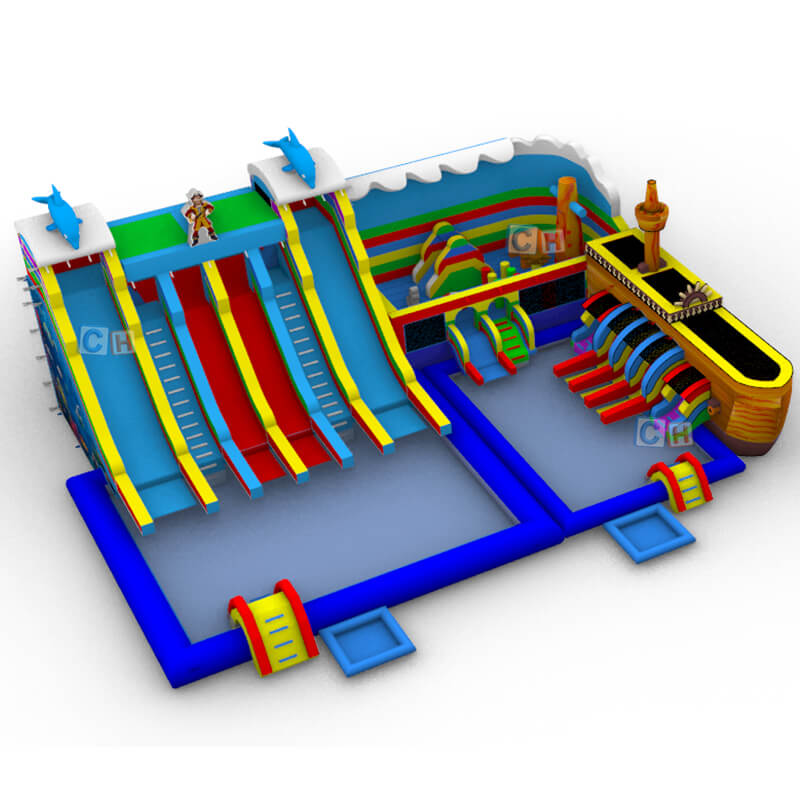
Model 2: Best Inflatable Water Park (CH-WP006)
The CH-WP006 represents the pinnacle of vertical aquatic entertainment. Here's the deal with this unit: towering at 6.5 meters high, this model leverages vertical space to deliver adrenaline-pumping features, including a gravity-defying slide and a challenging climbing wall, alongside a refreshing splash pool. With a capacity of 60-80 users, it is the ultimate multi-activity oasis for resorts and commercial rental businesses looking to maximize thrill-per-square-meter. Its robust construction and CE-certified components guarantee a worry-free, long-lasting investment that drives repeat business. You buy this once, and it pays for itself.
| Specification | Detail |
|---|---|
| Model | CH-WP006 |
| Size | L19.6*W17*H6.5m / L64.30xW55.77xH21.31ft |
| Weight | Commercial Grade (Contact for logistics) |
| Capacity | 60-80 peoples |
| Material | Thickened PVC tarpaulin (≥0.9mm) |
| Accessories | Repair kits, Blower |
| Certification | CE-EN14960, ROHS, UL |
| Usage | Shopping Mall / Property promotion events, Park activities |
View Product Details & Pricing ➔
Industrial FAQ: Inflatable Park Water Operations & Engineering
How do I prevent tearing and ensure durability for high-traffic commercial rentals?
Can these be installed on natural water bodies like lakes, and how are they anchored?
Is investing in an inflatable water attraction profitable for venues with time-limited sessions?
What are the power and inflation requirements for continuous daily operation?
How is liability managed, and what do the included certifications actually cover?
📚 References & Further Reading
- ✅ Industry Standard: CAAPA 中国游艺机游乐园协会
- ✅ Commercial Manufacturing: Jungle Jumps
- ✅ Related Guide: Inflatable Slides for Festivals Deployment Guide
- ✅ Product Expansion: Giant Coconut Tree Inflatable Water Slide
- ✅ Thrill Add-On: Giant Inflatable Water Slide