
Heavy-Duty Commercial Inflatable Water Park for Rental ROI | CH Inflatables

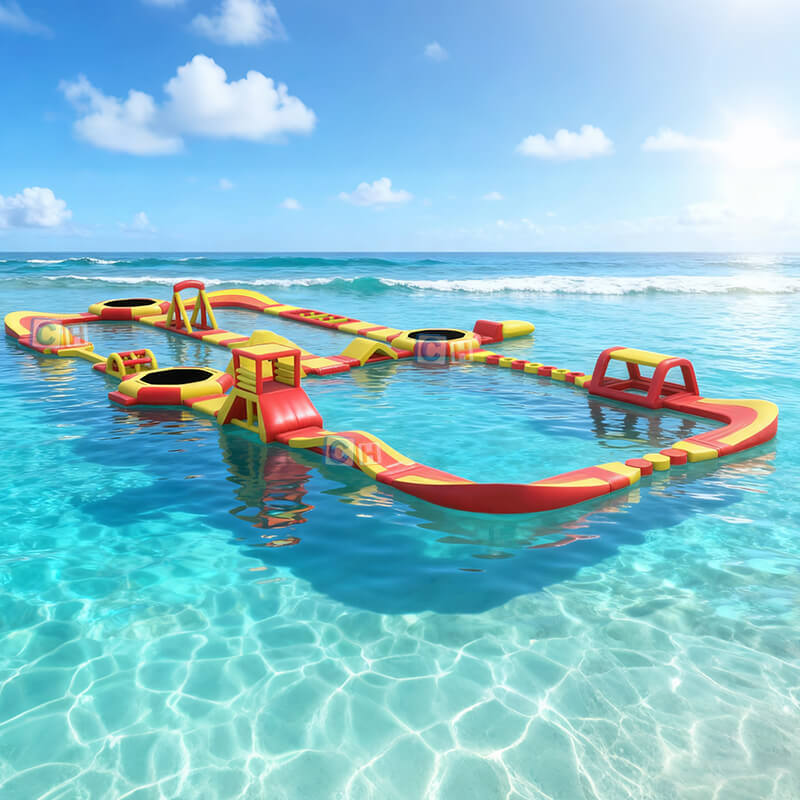
In the competitive world of commercial aquatic entertainment, capturing audience attention and maximizing per-square-foot revenue is paramount. Look, traditional water parks require massive capital expenditure, extensive real estate, and years of construction. Enter the commercial inflatable water park—a high-yield, rapidly deployable, and infinitely scalable alternative that is revolutionizing the rental and resort industry. Whether you are operating a beachfront resort, managing a municipal lake, or running a high-volume event rental company, a floating or mobile water obstacle course offers an unmatched ROI trajectory. By transforming idle shorelines or open parks into vibrant, high-capacity aquatic hubs, operators can recoup their initial investment in as little as one peak season while drawing massive crowds eager for shareable, adrenaline-fueled experiences.
But let's get real—not all aquatic attractions are engineered equal. For B2B buyers, the true cost of an inflatable water park isn't just the purchase price. It's the hidden expenses of downtime, structural failure, and non-compliance with stringent international safety regulations that'll eat your margins alive. This comprehensive industrial guide, crafted by the engineers at CH Inflatables, unpacks the critical specifications, material science, and revenue models behind heavy-duty water parks. From the molecular structure of marine-grade PVC tarpaulin to the exact ROI calculations for a 350-person floating facility, we're giving you the definitive blueprint for evaluating, purchasing, and profiting from a commercial-grade aquatic installation.
Table of Contents
Engineering & Material Science
Marine-Grade PVC Tarpaulin Anatomy
The structural integrity of a commercial inflatable water park relies entirely on the advanced material science behind its construction. Here's the deal: at the industrial level, we mandate the use of heavy-duty 0.9mm (approximately 32 oz) 1300D PVC tarpaulin for all sea-based and high-capacity adult units. To understand why this specific density is crucial, we've got to examine its 3-ply construction. The core of this material consists of a high-tenacity, low-shrinkage polyester scrim weave. This inner grid is the skeleton of the inflatable, providing exceptional tensile strength and tear resistance. It is then sandwiched between two thick layers of polyvinyl chloride (PVC) coating, which are chemically bonded under high heat and pressure.
The outer PVC coatings are engineered with specific plasticizers, UV stabilizers, and anti-alkali agents. This molecular formulation ensures the material does not degrade under intense ultraviolet radiation or suffer from hydrolysis when submerged for extended periods. By comparison, cheaper residential bouncers utilize 0.55mm or 0.6mm PVC with a lower denier (such as 1000D or 840D), which lacks the structural density to withstand the dynamic loads of 350 simultaneous users or the sheer force of ocean wave drag. The 0.9mm threshold is the internationally recognized industry standard for commercial aquatic applications, ensuring that the material will not delaminate, blister, or experience catastrophic seam failure under peak stress loads. Should a minor puncture occur from external debris, the high thread count of the 1300D scrim prevents the tear from propagating, allowing for swift field repairs using inflatable slide emergency kits without compromising the overall park's operational schedule.
Stainless Steel D-Buckle Anchor Systems
When deploying a massive floating structure like the CH-IA004 in an ocean or lake environment, the physics of water drag and wind loads become critical engineering factors. A 70x50 meter structure presents an immense windage area and subsurface profile, acting as a literal sail against water currents. The anchor and connection points are the most highly stressed elements of the entire park. Standard zinc-alloy or iron D-rings used in low-cost inflatables will rapidly oxidize and suffer from galvanic corrosion when exposed to saltwater and oxygen. This metallurgical degradation leads to embrittlement, meaning an anchor point could snap under a sudden load from a wave or a cluster of users, resulting in catastrophic structural failure and severe safety hazards.
To mitigate this, all connection points and anchor D-buckles on CH Inflatables' commercial water parks are upgraded to marine-grade 304 or 316 stainless steel. These alloys contain chromium and nickel, forming a passive oxide layer that makes the metal virtually impervious to the corrosive effects of saltwater and pool chemicals. Look, the D-buckles are not simply sewn into the exterior; they are integrated using automotive-grade webbing that wraps completely around the internal structural tubes. This load-distribution methodology ensures that the shear forces exerted on a single D-buckle are dispersed across a wider surface area of the PVC, preventing the anchor from ripping out of the fabric under extreme hydrodynamic pressure. This redundancy is what allows a commercial park to remain securely tethered to seabed anchors or mooring blocks, season after season.
Safety Standards & Compliance
CE, EN14960, and ISO Certifications
Let's be blunt—for B2B operators, securing liability insurance, obtaining municipal operating permits, and passing health and safety inspections are impossible without rigorous, verifiable product certifications. Compliance is not a feature; it is a fundamental operational necessity. CH Inflatables subjects its manufacturing processes and final products to a stringent matrix of global certification standards. Our sea-based water parks comply with CE-EN 25649, which is the specific European norm governing floating leisure equipment, including inflatable items used on or in water. This standard meticulously dictates impact attenuation requirements, the elimination of entrapment hazards (ensuring finger and head traps are engineered out of the design), and the safe angles of slide transitions. For our land-based and shallow-water mobile parks, compliance with CE-EN 14960 is mandatory. EN 14960 governs the safety of inflatable play equipment, mandating specific wall heights, anchor point quantities, and structural deflation safety protocols.
On top of that, our materials are ROHS certified, guaranteeing that hazardous substances like lead and phthalates are strictly eliminated from the PVC formulation—a critical requirement for parks catering to kids and families. Our electrical components meet UL standards for safety. Beyond product-specific certifications, our manufacturing facilities operate under the rigorous quality management protocols of ISO 9001, ensuring consistent production tolerances and material traceability. Finally, our equipment meets the stringent independent testing and inspection criteria recognized by PIPA, providing an additional layer of third-party validation that gives B2B buyers total confidence in their procurement.
Ventilation & HW Blower Compliance
Commercial aquatic inflatables rely on constant-air systems rather than sealed-air (balloon-style) structures. A constant-air system is a crucial safety feature. If a slide surface or a bouncer platform suffers a sudden puncture, the continuous influx of air from the blowers keeps the structure inflated long enough for operators to safely evacuate users, preventing the structure from collapsing and trapping people underwater or under heavy PVC folds. The engineering of this continuous airflow is highly specific. Too much internal pressure can stress the seams to the breaking point, while too little pressure results in a sagging, unstable surface that increases the risk of ankle injuries and structural entanglement.
This is exactly why the integration of CE-certified HW (High Volume) blowers is paramount. These blowers are engineered to provide the precise cubic-feet-per-minute (CFM) airflow required to maintain optimal internal pressure against the dynamic loads of jumping users and environmental wind forces. And look, operating high-amperage electrical blowers in close proximity to water introduces significant electrocution risks. Our systems require the use of backflow preventers and specific electrical isolation transformers, ensuring that no electrical fault can travel from the blower motor into the inflatable structure or the surrounding water. Adherence to these strict ventilation and electrical compliance standards is what differentiates a professionally engineered inflatable water park from a hazardous toy.
Maximizing Rental ROI & Business Applications
Revenue Modeling for High-Capacity Parks
Let's talk numbers. The financial justification for investing in a heavy-duty inflatable water park is driven by its exceptional throughput-to-footprint ratio. Let's examine the revenue modeling for our flagship model, the CH-IA004, which accommodates 350 people simultaneously. Consider a beachside resort or a commercial water park operating a 90-minute session model. If the operator charges a conservative $30 per session, and runs just 3 rotations per day, the gross daily revenue potential is staggering: 350 users x $30 x 3 sessions = $31,500 per day. Even if we account for off-peak days operating at 50% capacity, the weekly gross revenue remains substantial.
Unlike traditional fixed amusement rides that demand permanent real estate, massive civil engineering projects, and years of permitting, an inflatable water park can be deployed in a matter of days. The initial capital expenditure, while significant for a commercial-grade 70x50 meter structure, is a fraction of the cost of a concrete aquatic center. When you factor in the low overhead—no permanent real estate taxes, reduced lifeguard-to-swimmer ratios due to shallow water landing zones, and the ability to winterize and store the park off-season—the ROI trajectory is exceptionally steep. Most of our B2B partners report recouping their entire initial investment within a single 90-day peak summer season, with subsequent years representing near-pure profit.
Target Markets & Turnkey Solutions
The versatility of a commercial inflatable water park extends far beyond traditional beach resorts. Trading companies and event advertising planners are increasingly utilizing these structures as high-impact marketing platforms and temporary event spaces. Shopping mall property promoters use land-based mobile water theme parks to revitalize underutilized parking lots or plaza spaces during the summer, instantly boosting foot traffic and creating massive organic social media impressions. The vibrant colors, towering slides, and interactive splash zones act as their own marketing engine, generating word-of-mouth promotion that drastically reduces customer acquisition costs.
For rental companies, a water park represents a turnkey solution that can be easily cross-promoted with existing inventory. By offering a comprehensive event package that includes a water-based attraction alongside dry-side amusements, operators can increase their per-client billing significantly. Here are a few ways operators are maximizing their packages:
- ✅ Cross-Promotional Rentals: Upsell corporate family fun days by pairing an aquatic obstacle course with a Lego inflatable castle combo slide for younger demographics.
- ✅ Team-Building Packages: Integrate dry-side options like a construction team inflatable fun city for corporate team-building activities.
- ✅ Brand-Forward Events: This modular, brand-friendly approach allows operators to offer bespoke, turnkey solutions tailored precisely to the client's demographic, maximizing marketing impact and customer engagement.
Setup, Mobility & Maintenance
Anchoring & Inflation Dynamics
The deployment methodology of an inflatable water park varies significantly depending on whether the operator is setting up a land-based model like the CH-WP002 or a floating sea-based model like the CH-IA004. For land-based setups in parks or shopping mall promenades, anchoring relies on heavy-duty ground stakes driven into soil, or the strategic placement of sandbags and water ballasts on concrete surfaces. The inflation process for a land-based 35x35 meter park is relatively straightforward, requiring the simultaneous operation of multiple HW blowers to achieve operational pressure within 20 to 30 minutes.
Conversely, sea-based or deep-water lake deployments require a highly calculated anchoring system to combat wind shear and water currents. Floating parks cannot simply be tethered to the shore. Here is the standard rigging process we use in the shop:
- ⚙️ Seabed Mooring: Utilize concrete mooring blocks, helix screw anchors, or specialized water anchors positioned strategically on the seabed or lake floor.
- ⚙️ Tidal Line Management: Calculate the length of the anchor lines to account for water depth and tidal fluctuations, ensuring the park remains securely within its designated perimeter.
- ⚙️ Beachside Inflation: Inflate the individual modules on a beach or a large dock.
- ⚙️ Assembly & Tethering: Float the modules out, connect them via the stainless steel D-ring anchor systems, and tether them to the pre-laid mooring lines.
This step-by-step industrial process, while requiring heavy equipment and specialized rigging, ensures the park remains entirely stable even in moderate coastal swells.
Repair & Longevity Protocols
To maximize the lifespan of a commercial inflatable water park and protect the operator's ROI, a rigorous preventative maintenance schedule is mandatory. In the shop, we drill this into our clients: after each deployment in a marine environment, the PVC tarpaulin must be thoroughly rinsed with fresh water to remove saltwater residue, which can accelerate the degradation of the material's UV protectants and cause crystallization that leads to chafing. Before deflating and packing the units, the surfaces must be completely dried to prevent the growth of mold and mildew, which can compromise the structural integrity of the internal polyester scrim and cause unpleasant odors.
Each unit is supplied with professional repair kits, containing patches of the exact 0.9mm PVC tarpaulin and high-strength contact cement. For minor punctures, field repairs can be executed in under an hour by cleaning the area, applying the adhesive, and allowing it to cure. For larger tears along seam lines, it is highly recommended to return the unit to the manufacturer or a certified repair facility to ensure the structural load distribution is fully restored. Additionally, applying specialized UV protectant sprays designed for marine PVC at the start and midpoint of the season will significantly prolong the vibrancy of the colors and prevent the material from becoming brittle under the summer sun. Stick to these industrial repair and longevity protocols, and a well-maintained commercial park can easily endure 5 to 7 years of heavy seasonal operation.
Featured Commercial Inflatable Water Park Models
Below are the exact industrial specifications for our top-tier B2B aquatic solutions, engineered for heavy-use commercial environments. These models represent the pinnacle of current aquatic engineering, combining high-capacity throughput with marine-grade durability.
Heavy-Duty Inflatable Sea Water Park for Adults
Transform any shoreline into a hub of excitement with this massive floating playground. Featuring a dynamic mix of towering slides, challenging climbing walls, and interactive splash zones, the CH-IA004 is designed to attract crowds. Its vibrant colors and modular configuration make it the ultimate aquatic adventure for tourists and locals alike, significantly boosting the visual appeal and revenue of any waterfront resort or commercial rental business. Engineered to withstand the harsh marine environment, this park features upgraded stainless steel D-buckles that are waterproof, rust-proof, and corrosion-resistant, ensuring your equipment remains secure season after season.
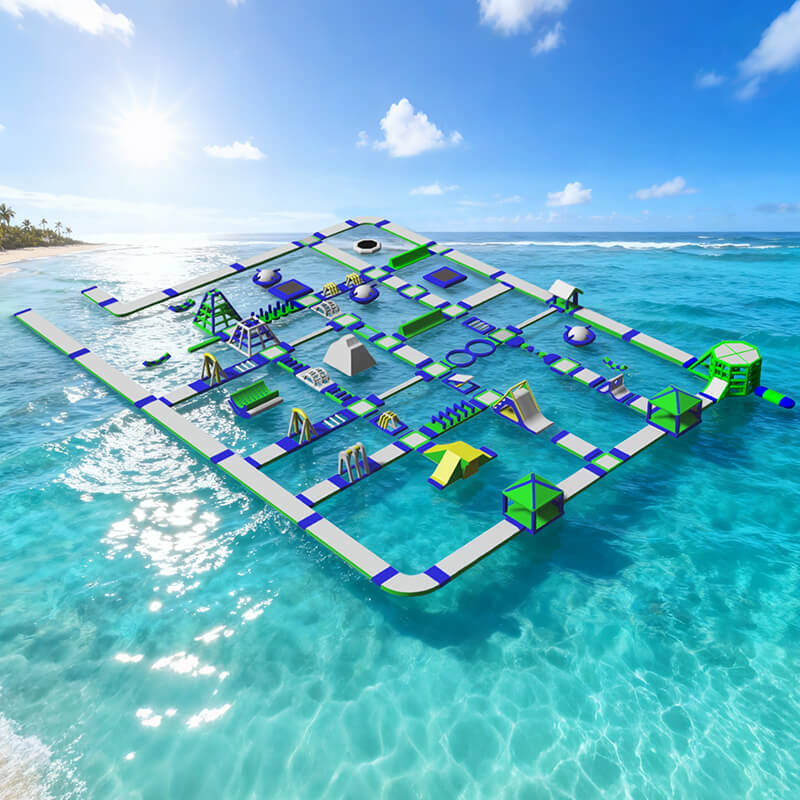
| Brand Name | CH Inflatables |
| Model | CH-IA004 |
| Size | L70*W50m/L229.65xW164.04ft |
| Weight | Depends on the actual situation |
| Capacity | 350 peoples |
| Material | PVC |
| Accessories | Repair kits、Blower |
| Certification | CE-EN 25649、ROHS、UL |
| Usage | Rental companies, Trading companies, Event advertising planners |
View Product Details & Pricing ➔
Mobile Inflatable Water Theme Park
Our Mobile Inflatable Water Theme Park dazzles with bright panels, dynamic water-slide tunnels, and interactive splash zones—perfect for festivals, fairs, and family events, instantly boosting foot traffic and revenue. Crafted from thickened PVC tarpaulin, this structure features double-line stitching, reinforced corners, and YKK zippers, ensuring durability, safety, and regulatory compliance in every setup. Equipped with high-flow slide systems, splash pads, and inflatable castles, the park delivers endless aquatic fun, encouraging repeat visits and word-of-mouth promotion for event organizers and property promoters.
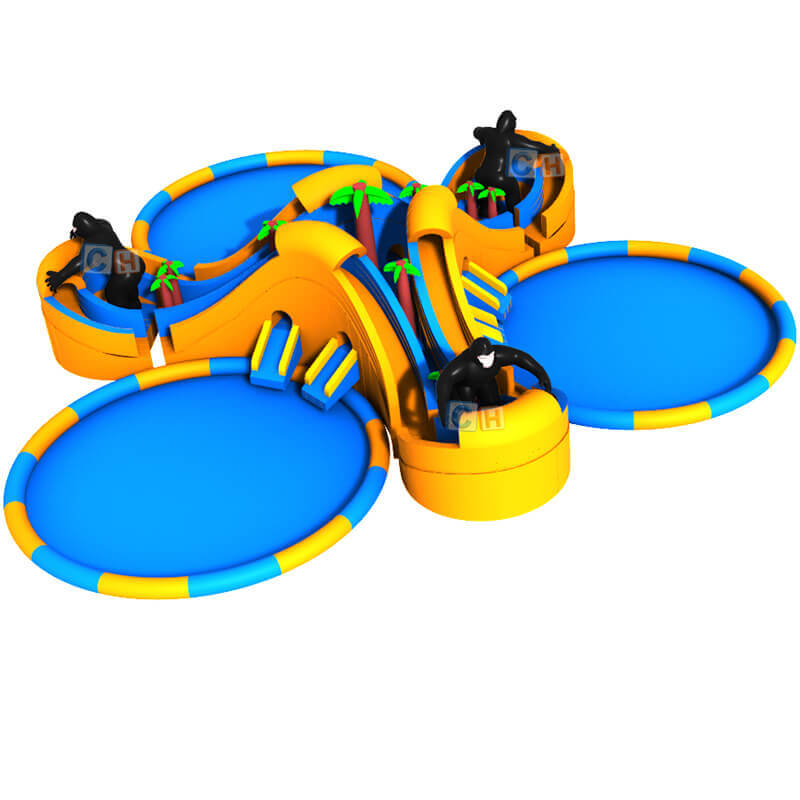
| Brand Name | CH Inflatables |
| Model | CH-WP002 |
| Size | L35*W35m/L114.82xW114.82ft |
| Weight | Depends on the actual situation |
| Capacity | 250-300 peoples |
| Material | Thickened PVC tarpaulin (≥0.9mm) |
| Accessories | Repair kits、Blower |
| Certification | CE-EN14960、ROHS、UL |
| Usage | Shopping Mall/property promotion events, park activities |
View Product Details & Pricing ➔
Industrial Expert FAQ: Inflatable Water Park Operations
How does a commercial inflatable water park withstand saltwater and heavy rental use without tearing or rusting?
Are your inflatable water parks certified for commercial operation and large crowds?
Is investing in a floating water park profitable for event planners and rental companies?
📚 References & Further Reading
- Industry Standard: ISO - International Organization for Standardization
- Safety Inspection: PIPA - Inflatable Play Inspections
- Internal Guide: Inflatable Slide Emergency Kits & Repair Protocols
- Related Product: Lego Inflatable Castle Combo Slide
- Related Product: Construction Team Inflatable Fun City