
Commercial Inflatable Park Water: Boost Rental Revenue with CE-Certified Durability

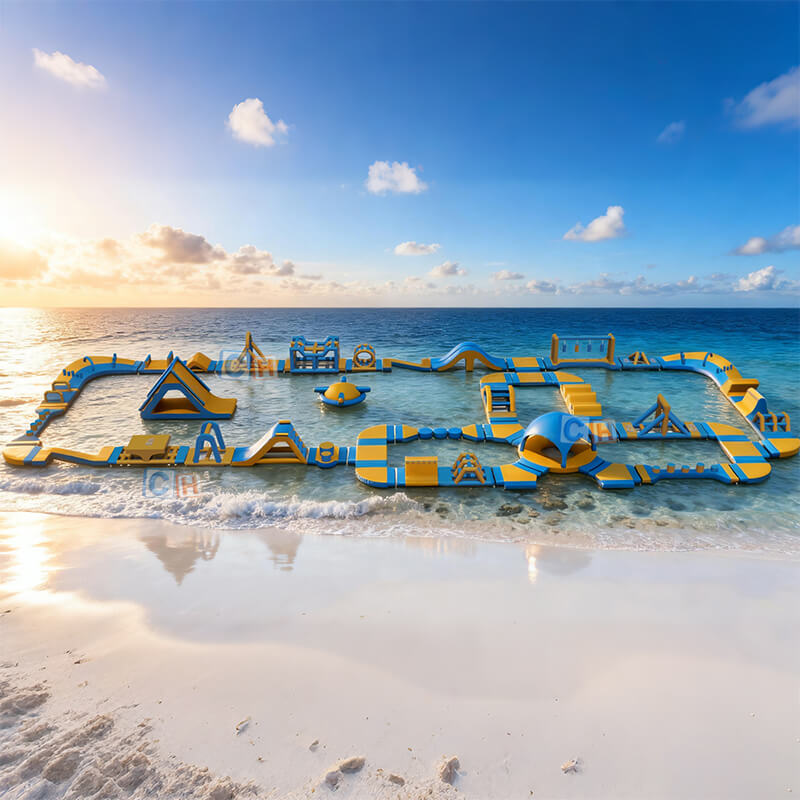
Look, the commercial event rental industry is shifting fast toward interactive aquatic attractions, and right at the front of this pack is the commercial inflatable park water system. Consumer demand for high-energy, immersive entertainment is surging. Traditional bounce houses and dry slides? They just don't cut it anymore if you want to capture market share or command those premium rental rates. Event organizers, water park operators, and property promotion managers are pivoting hard to scalable, multi-zone water parks because the return on investment (ROI) is absolutely unparalleled. By integrating complex features like high-velocity slides, obstacle tunnels, and high-pressure water sprayers, these modular floating structures turn any lake, pool, or open waterfront into a lucrative, high-throughput entertainment hub. This whole paradigm shift is driven by the tangible revenue bumps operators see when they actually integrate aquatic elements into their portfolios. Water-based recreation has a universal appeal, especially during peak seasons.
But here's the deal: entering the commercial aquatic inflatable market requires a lot more than just buying the biggest structure you can find. B2B buyers have to navigate complex material specifications, international safety certifications, and structural engineering nuances. You need zero liability and maximum longevity. A poorly manufactured unit can lead to catastrophic failure, massive liability, and irreparable damage to your brand reputation. Conversely, a properly engineered, CE-certified, thickened PVC tarpaulin park ensures years of profitable, tear-resistant operation. In the shop, we see what works and what fails. This comprehensive industrial guide breaks down everything rental businesses and commercial property developers need to know—from advanced material science and structural reinforcement mechanics to strategic deployment logistics and international compliance. We're empowering you to make a data-driven investment that dominates your regional rental market.
Table of Contents
The Engineering Behind Commercial Inflatable Park Water Systems
To truly understand the value proposition of a commercial aquatic inflatable, you have to look past the vibrant colors and dynamic shapes. You need to delve into the rigorous industrial engineering that makes these massive structures viable in harsh environments. A commercial inflatable park water system takes a beating—continuous kinetic stress, hydrostatic pressure, and chemical exposure. Engineering these structures requires a meticulous approach to load distribution, material tensile strength, and aerodynamic stability. The architecture of these parks isn't just inflated fabric; it's a complex network of tensioned membranes designed to safely support the dynamic loads of up to 100 individuals at once, all while getting battered by waves, wind, and aggressive recreational use. Through advanced computational modeling and decades of empirical field data, manufacturers have perfected the geometry required to keep these aquatic platforms stable, buoyant, and entirely safe for high-throughput commercial deployment.
Material Science: Why ≥0.9mm PVC Tarpaulin is Non-Negotiable
The foundational element of any commercial grade aquatic inflatable is the structural fabric. In the realm of B2B rentals, using thickened PVC (Polyvinyl Chloride) tarpaulin measuring at least ≥0.9mm is an absolute, non-negotiable requirement. This isn't just a marketing bullet point; it's an engineering necessity dictated by the abrasive and chemically hostile nature of aquatic environments. When you deploy these in commercial pools, the fabric is constantly exposed to high levels of chlorine and industrial algaecides. That stuff rapidly degrades inferior, retail-grade nylon or thin Oxford cloth. Same goes for lakefront deployments—you're dealing with abrasive sand, rocky lake beds, and biological contaminants. Thickened PVC tarpaulin provides an impermeable, highly abrasion-resistant shell that resists puncturing and chemical breakdown.
What's more, this commercial fabric is typically constructed with a robust base layer, like a 0.55mm 1300D (Denier) high-tenacity polyester yarn grid, coated on both sides with liquid PVC. This multilayer approach gives the material immense tear resistance and tensile strength. The denier count refers to the thickness of the individual fibers within the weave. A 1300D weave ensures that even if the outer PVC coating gets deeply scratched by sharp objects, the internal structural grid stays intact, preventing catastrophic tearing or rapid air loss. Also, commercial PVC undergoes specialized UV stabilization treatments. Prolonged exposure to solar radiation severely degrades polymer structures, making them brittle and faded. The UV inhibitors integrated into ≥0.9mm PVC tarpaulin neutralize these photodegradation effects, ensuring the inflatable park water system maintains its structural integrity and vibrant aesthetic appeal over thousands of hours of direct summer sunlight.
Structural Integrity: Seams, Zippers, and D-Rings
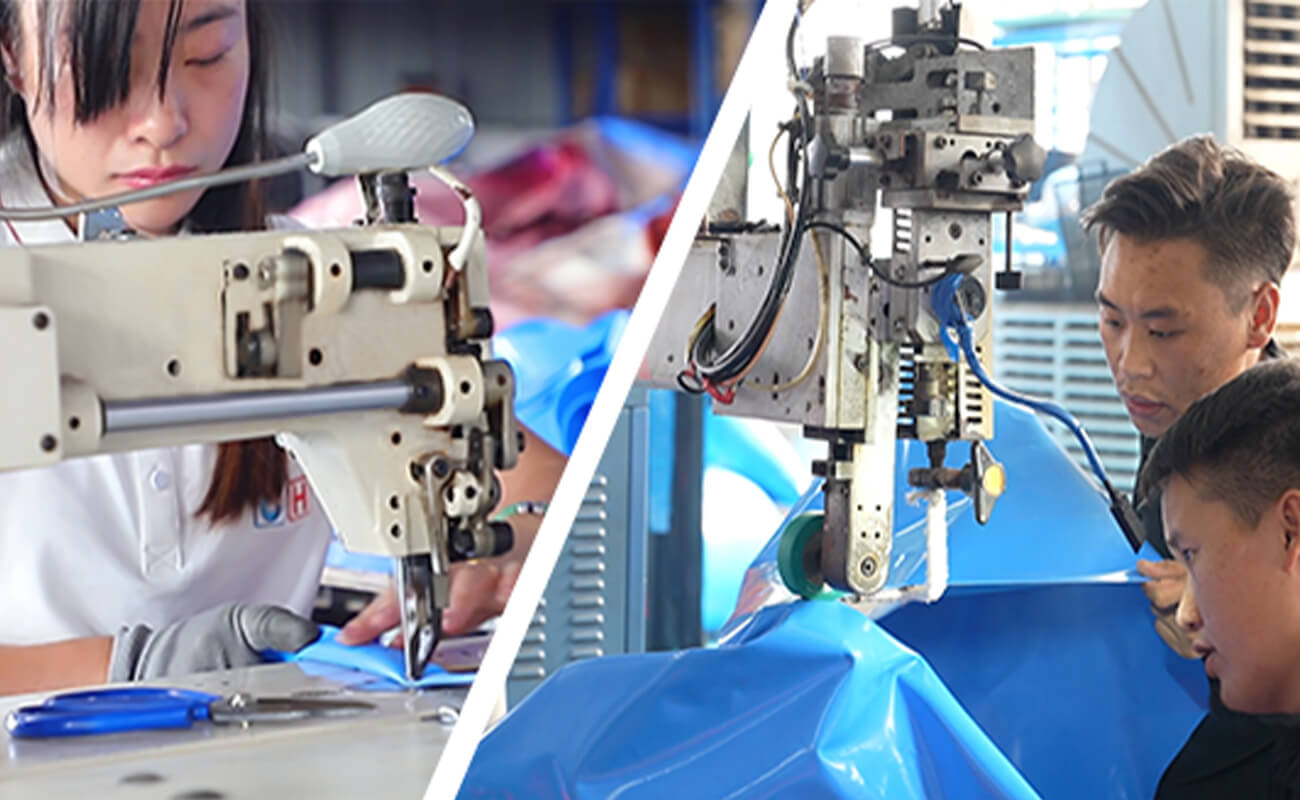
The strength of an inflatable park water structure is inherently limited by the strength of its weakest point. In inflatable engineering, those weak points are typically the seams, connection points, and pressure valves. A common point of failure in inferior products is the tearing of the fabric around high-tension joints. To mitigate this, CH Inflatables utilizes advanced manufacturing techniques, including high-frequency thermal welding combined with double or triple-stitched seams. This dual-method approach fuses the PVC layers at a molecular level while physically binding them with heavy-duty, rot-proof threading. The result? The seam itself becomes structurally stronger than the surrounding fabric.
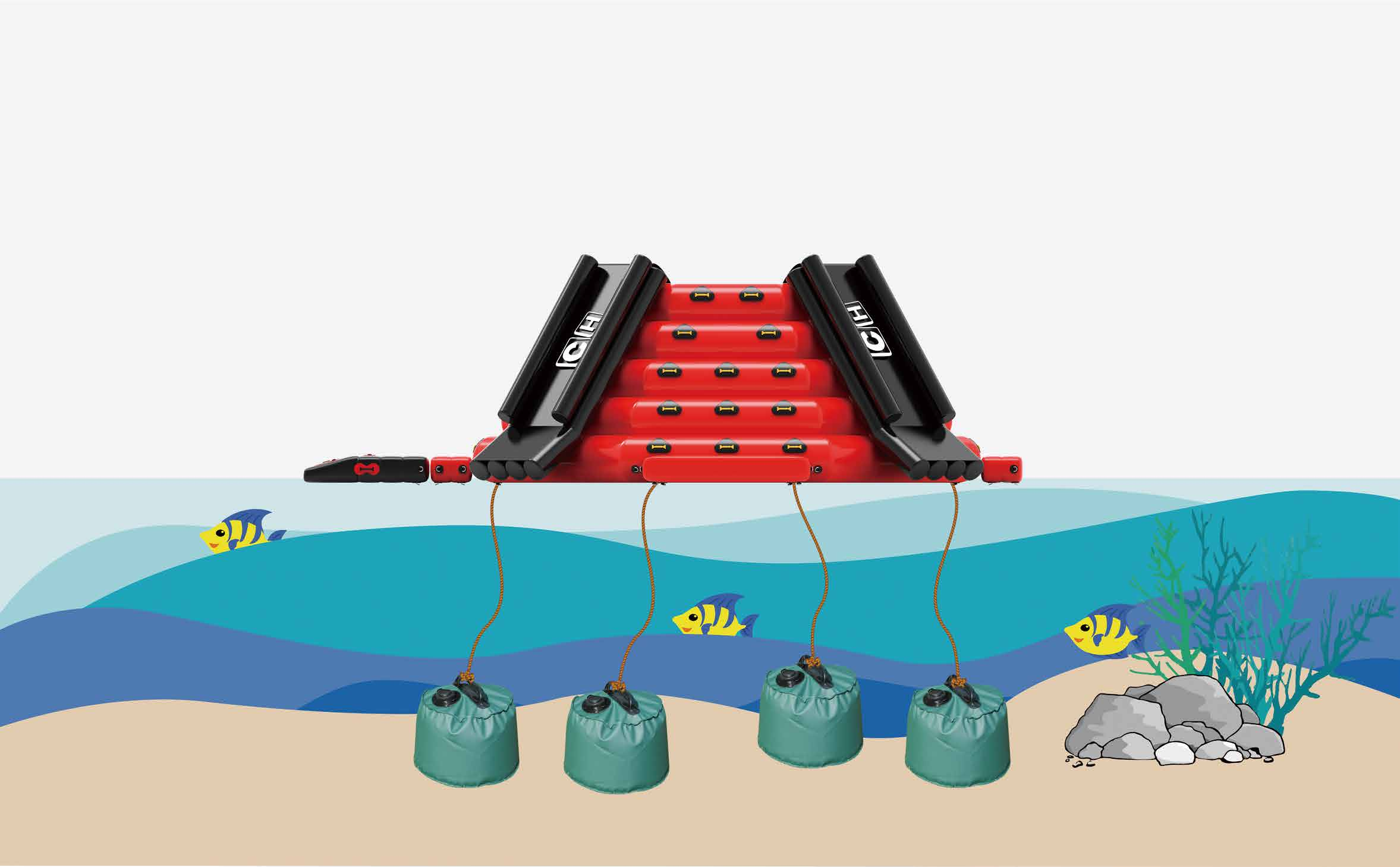
Equally critical are the connection mechanisms and anchoring systems. Modular designs heavily rely on heavy-duty YKK zippers to interlock various slides, pools, and obstacle courses. But standard zippers would instantly fail under the shearing forces generated by dozens of jumping occupants. That's why industrial-grade zippers are paired with stainless-steel buckles and automotive-grade webbing. These webbed tension straps distribute the localized kinetic stress across a broader surface area of the PVC, preventing concentrated stress fractures at the zipper junctures. To understand the catastrophic consequences of cutting corners on structural stress components, we highly recommend reviewing our technical analysis on inflatable slide zipper failure, which highlights the physics of shear force on fabric joints. Also, all anchoring D-rings are constructed from marine-grade stainless steel. This prevents rust and provides secure mooring points to pool decks or lake beds, ensuring the park remains stationary against water currents and wind.
Maximizing ROI Through Strategic Inflatable Park Water Deployment
For B2B operators, buying a commercial inflatable park water system is a substantial capital expenditure (CapEx). To achieve a rapid amortization of this investment, the deployment strategy has to be optimized for maximum operational efficiency and revenue generation. The beauty of modern modular inflatables lies in their inherent versatility. Unlike permanent, concrete water park installations, an inflatable park is a fluid asset. You can relocate it, reconfigure it, and market it to a wide variety of demographics and event types. Maximizing ROI requires a dual focus: minimizing operational expenses (OpEx)—like labor and setup time—while simultaneously maximizing daily ticket throughput and upselling lucrative corporate packages.
Event Hopping: Optimizing Setup and Teardown Times
The profitability of an event rental company is directly proportional to the velocity of its logistics. If a structure takes four hours to set up and three hours to tear down, your ability to service multiple events in a single weekend is severely bottlenecked. CH Inflatables engineered its commercial aquatic parks specifically to mitigate this logistical friction. By utilizing advanced modular panels that connect via pressure-zip straps and quick-release stainless-steel buckles, an experienced two-person crew can fully deploy a massive 17x14m park in under 15 minutes. You simply unroll the deflated, folded units into the desired configuration, interlock the pressure-zip straps, and activate the included Huawei-certified, CE-approved continuous air blower.
These high-output blowers are engineered to provide massive Cubic Feet per Minute (CFM) airflow while maintaining the optimal static pressure required to keep the park rigid under heavy dynamic loads. Teardown is equally streamlined. Once the air is expelled, heavy-duty industrial rollers are utilized to aggressively compress the air out of the thickened PVC tarpaulin, allowing the massive structure to be tightly folded into manageable dimensions. This rapid deployment capability means a single rental inventory can service a corporate team-building event on Saturday morning, get transported, and then be re-deployed at a municipal festival on Sunday afternoon. This high-frequency event hopping drastically accelerates the return on investment. For a deeper dive into structuring your event logistics for maximum profit, consult our comprehensive guide on profitable obstacle course rental operations.
Targeting Demographics: From Kids Zones to Adult Obstacles
A static attraction eventually loses its appeal, but a modular inflatable park water system can be re-architected to cater to entirely different revenue streams. By strategically selecting and configuring different models—like the highly aggressive CH-WP003 versus the sprawling CH-WP009—operators can target specific demographics to maximize ticket sales. For example, a configuration emphasizing low-profile splash pads, gentle obstacle tunnels, and interactive water sprayers is the perfect draw for family-focused community events, daycares, and church festivals. This configuration emphasizes high volume, bringing in massive quantities of younger children whose parents will also purchase food and beverages on-site.
Alternatively, the same operator can reconfigure the modules to emphasize extreme vertical slides, high-tension trampolines, and brutal climbing walls. This pivot instantly transforms the park into an extreme sports destination, appealing to teenagers, young adults, and corporate team-building exercises. By offering a "session-based" ticketing system rather than an all-day free-roam pass, you can systematically cycle high volumes of visitors through the park. Look, corporate clients are willing to pay premium rates for exclusive, structured obstacle courses that facilitate team competition. By tailoring the physical layout of the park to the specific audience of the day, operators can ensure maximum dwell time, the highest possible ticket yield, and unparalleled brand versatility in their local market.
Safety Protocols and Certification Standards
In the realm of commercial aquatic recreation, safety isn't just a priority; it's the absolute foundation of the business model. The financial and legal liabilities associated with aquatic amusement structures are immense. Consequently, the engineering of a commercial inflatable park water system must adhere strictly to the highest international safety protocols. Risk mitigation requires a comprehensive approach that encompasses the chemical composition of the materials, the electrical safety of the inflation systems, the structural integrity under extreme dynamic load, and the operational guidelines enforced by the on-site staff. Operators must possess an intimate understanding of these standards to legally and safely deploy these structures in public, commercial spaces.
Understanding CE-EN14960 and Global Compliance
When procuring commercial inflatables, B2B buyers must strictly demand verifiable certifications. The cornerstone of inflatable safety in Europe and much of the international market is the CE-EN14960 certification. This rigorous standard dictates the precise requirements for the design, manufacture, and testing of inflatable play equipment. Compliance ensures that the material thickness, structural reinforcement, and anchor points have been mathematically proven to withstand the specified maximum capacities. Also, CE certification guarantees that the materials are free from hazardous, toxic chemicals like lead or specific phthalates, making them entirely safe for prolonged human contact, particularly for children.
Along with CE-EN14960, top-tier manufacturers like CH Inflatables ensure their electrical components—the continuous air blowers—carry ROHS (Restriction of Hazardous Substances) and UL (Underwriters Laboratories) certifications. UL certification is particularly critical for operations in North America, ensuring the electrical motors are safeguarded against fire hazards, short circuits, and water ingress. To guarantee these standards are met, every commercial inflatable park water system must undergo, and pass, a grueling 72-hour continuous stress test before leaving the factory floor. This process inflates the structure to maximum pressure and subjects it to automated mechanical stressors, simulating months of aggressive use to identify any potential manufacturing defects. For more information on global manufacturing standards, we recommend reviewing the official ISO standards and the stringent 欧盟 EN 安全标准 (European EN Safety Standards) databases.
Weather and Wind Considerations for Aquatic Inflatables
The most unpredictable variable in aquatic recreation is the weather. Wind and water currents apply immense kinetic energy to large surface areas, making inflatable structures highly susceptible to being pushed off course or destabilized. The low-profile, broad-base geometry of modern aquatic parks lowers the center of gravity, significantly reducing wind drag. But operational safety protocols must be strictly enforced regarding wind speed limitations. Generally, commercial aquatic inflatables should be immediately evacuated and deflated if sustained winds exceed 15-20 miles per hour. Understanding the specific aerodynamic limits of your equipment is vital; we strongly advise reviewing our detailed analysis on inflatable slide wind ratings to establish precise operational cutoff parameters.
Rain and splashing also present severe slip-and-fall hazards. To combat this, commercial grade aquatic inflatables are manufactured with textured, non-slip surfaces along all walking paths and climbing areas. This high-friction PVC mimics the grip of marine decking, ensuring safe footing even when thoroughly saturated. Also, integrated splash guards and drainage channels are engineered to actively route excess water away from primary traffic zones, preventing the dangerous pooling of water that could obscure obstacles or cause hydroplaning. When you combine these structural safety features with vigilant, certified lifeguard supervision, the risk profile of the aquatic park drops to industry-acceptable minimums.
Flagship Commercial Models & Technical Specifications
To provide a clear, data-driven perspective on the available commercial solutions, we have detailed our flagship aquatic models below. These structures represent the pinnacle of contemporary industrial inflatable design, combining maximum durability with unparalleled user engagement. The following specifications illustrate exactly how these systems are engineered to support high-capacity, continuous commercial deployment in various environments, ranging from local municipal parks to large-scale resort properties.
Model 1: Water Inflatable Park (CH-WP003)
Ultimate Water Adventure
Dive into excitement with CH Inflatable’s Water Inflatable Park—an eye‑catching, vibrant structure perfect for water parks, resorts, and event rentals, drawing crowds and boosting ticket sales. This model is the quintessential modular unit, engineered to provide a balanced mix of high-thrill sliding and interactive splash zones. Supported by 17 years of industry expertise, CH Inflatable integrates HW-approved fans, stainless-steel buckles, and automotive-grade webbing to ensure zero structural risk. The CH-WP003 is the ideal mid-sized solution for operators looking to inject high-energy aquatic entertainment into their existing inventory without requiring an overwhelmingly large aquatic footprint.
Premium Construction
Crafted from 0.55mm 1300D PVC with double‑stitched seams, reinforced corners, and YKK zippers, CE‑certified for safety and durability. This model also features thickened PVC tarpaulin (≥0.9mm) in high-impact zones, ensuring maximum puncture resistance against abrasive environments and guaranteeing a long lifespan.
Exciting Features
Featuring multiple interactive zones and splash‑proof fun, it delivers endless entertainment for all ages while enhancing visitor engagement and revenue per event. Custom logos, themed décor, and tailored animations are fully supported, providing a complete, turnkey marketing solution for every venue.
| Model | CH-WP003 |
| Size | L17*W14*H7m/L55.77xW45.93xH22.96ft |
| Weight | |
| Capacity | 50-80 peoples |
| Material | Thickened PVC tarpaulin (≥0.9mm) |
| Accessories | Repair kits、Blower |
| Certification | CE-EN14960、ROHS、UL |
| Usage | Shopping Mall/property promotion events, park activities |
View Product Details & Pricing ➔
Model 2: Inflatable Water Park for Kids (CH-WP009)
Inflatable Water Park for Kids: Ultimate Splash Zone for Rental Businesses
Beat summer heat with our vibrant Inflatable Water Park for Kids! Perfect for family parties, festivals, and backyard rentals, it features fast slides, obstacle tunnels, and high-pressure water sprayers. Built for commercial use, it guarantees nonstop entertainment while boosting your event’s appeal. This sprawling layout is optimized for younger demographics, maximizing throughput while maintaining exceptionally safe, low-clearance structures.
Durable & Kid-Proof Construction: Crafted from ≥0.9mm PVC fabric (CE-certified) with triple-reinforced seams, this water park withstands rough play and weather. Double-stitched corners and YKK zippers (automotive-grade durability) prevent tears. Stainless steel D-rings and UV-resistant coatings promise years of rentals, minimizing repair costs.
Effortless Setup & Safety-First Design: Includes a Huawei-certified blower (CE approved) for instant inflation. Modular panels attach via pressure-zip straps, setting it up in 15 minutes. Splash guards and non-slip surfaces keep kids safe while maximizing throughput. Heavy-duty rollers make deflation a breeze—ideal for venue-hopping rentals. Every park undergoes 72-hour stress testing to guarantee absolute reliability.
| Brand Name | CH Inflatables |
| Model | CH-WP009 |
| Size | L22*W22m/L72.17xW72.17ft |
| Weight | Depends on the actual situation |
| Capacity | 80-100 peoples |
| Material | Thickened PVC tarpaulin (≥0.9mm) |
| Accessories | Repair kits、Blower |
| Certification | CE-EN14960、ROHS、UL |
| Usage | Shopping Mall/property promotion events, park activities |
View Product Details & Pricing ➔
Deep-Dive Industrial FAQ
Are commercial inflatable water parks durable enough for daily rentals and harsh lake environments?
How can I maximize visitor throughput and revenue beyond a short 2-hour time frame?
What is the exact setup and teardown process, and how many staff members are required?
How do these inflatable water parks handle extreme weather, specifically high winds and heavy rain?
📚 References & Further Reading
- ✅ Industry Standard: ISO | 欧盟 EN 安全标准
- ✅ Related Guide: Profitable Obstacle Course Rental
- ✅ Related Guide: Inflatable Slide Wind Ratings
- ✅ Related Guide: Inflatable Slide Zipper Failure