
Can You Put an Inflatable Water Slide on Concrete? A Safety Guide for Operators

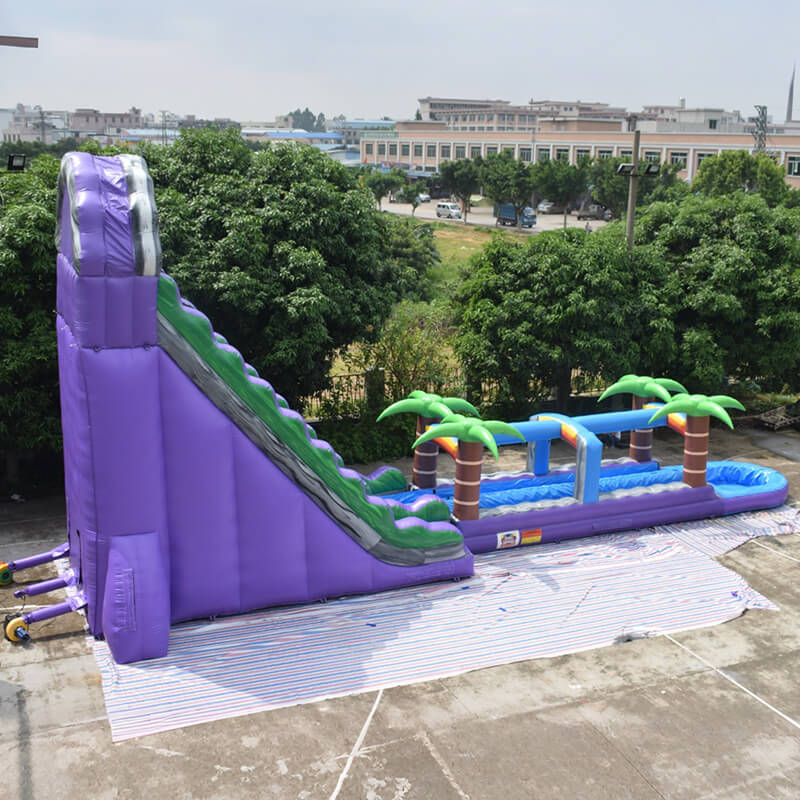
Can You Put an Inflatable Water Slide on Concrete?
One of the most frequent questions we receive from new rental business owners and park operators is whether they can set up an inflatable water slide on a concrete or asphalt surface.
The short answer is yes, but it requires a significantly different approach than setting up on grass. When you remove the ability to use ground stakes, you change the physics of how the inflatable stays in place. After 17 years in this industry, we have seen that the difference between a successful event and a safety incident often comes down to how the equipment is anchored and protected.
1. Surface Protection is Non-Negotiable
Concrete is abrasive. Even a small amount of friction caused by children jumping on a slide can cause "carpet burn" or micro-tears on the underside of your PVC.
Industry practice suggests using a heavy-duty, non-slip ground tarp or specialized foam padding underneath the entire footprint of the inflatable. This serves two purposes: it protects the expensive PVC material from abrasion and provides a slightly softer landing zone for users exiting the slide.
2. The Anchoring Challenge: Weight vs. Stakes
On grass, you use steel stakes. On concrete, you cannot. This is where many operators make mistakes.
If you are setting up on concrete, you must use ballast weights. The amount of weight required is determined by the size of the inflatable and local wind conditions. Generally, for a commercial-grade water slide, you should consult the manufacturer’s manual for the specific "pounds per anchor point" requirement.
- Pro Tip: Never rely on sandbags that are too light. Use heavy-duty water barrels or concrete blocks, and ensure they are positioned so that they cannot tip over or slide.
3. Water Management and Drainage
Water slides on concrete present a unique drainage challenge. Unlike grass, which absorbs runoff, concrete will pool water. If water pools under the slide, it creates a slip hazard for staff and can lead to mold or mildew growth on the underside of the inflatable.
Ensure your setup area has a natural slope or use drainage channels to direct water away from the base of the unit.
How Our Design Team Mitigates These Risks
At our 4,000㎡ factory, we design our inflatable water slides with the understanding that they will be used in diverse environments. We don't just focus on the aesthetics; we focus on the structural integrity of the anchor points.
- Reinforced Attachment Points: We use heavy-duty webbing and reinforced stitching at every anchor point. This is critical when using ballast weights, as the stress is concentrated on these specific loops.
- Customization for Your Site: If you know your primary business model involves concrete setups (such as indoor parks or parking lot events), our design team can suggest specific modifications to the base of the unit to better accommodate weight-based anchoring.
Final Thoughts
Setting up on concrete is perfectly safe, provided you treat the installation with the same level of seriousness as a permanent structure. Always prioritize the manufacturer’s guidelines regarding wind speed and anchoring weight.
If you are looking for equipment that is built to withstand the rigors of commercial use—whether on grass or concrete—our team is here to help. With nearly two decades of experience, we provide the technical support and high-quality manufacturing needed to keep your business running smoothly and safely.
FAQ
1. How much weight do I need to anchor a water slide on concrete?
There is no "one size fits all" answer. It depends on the height and surface area of the slide. Always check the manufacturer’s manual for the specific weight requirements per anchor point. Generally, you should aim for significantly more weight than you think is necessary to account for wind gusts.
2. Can I use duct tape to secure the tarp to the concrete?
Duct tape is generally insufficient for commercial setups. Use heavy-duty, non-slip mats or specialized ground covers that stay in place through their own weight and friction.
3. Does setting up on concrete void my warranty?
Not necessarily, but it depends on the manufacturer. At our company, we design our products for commercial durability. However, if damage occurs because the operator failed to use protective padding or proper ballasting, that is considered improper use. Always follow the setup manual provided.
4. What is the best way to move a heavy water slide on concrete?
Never drag the inflatable. Even with a tarp, dragging can cause friction heat and damage the PVC. Use a heavy-duty dolly or a team of people to lift and position the unit.