
Commercial Indoor Inflatable Bounce House: Maximize Rental ROI Year-Round


Commercial Indoor Inflatable Bounce House: Maximize Rental ROI Year-Round
The Strategic Hook & Dual-TOC Plan
Look, if you're running commercial event rentals or indoor playgrounds, seasonality has always been the primary enemy of profitability. When winter freezes set in or spring rainstorms roll through, your outdoor inflatable inventory just sits idle, bleeding potential revenue and stalling your business momentum. Here's the deal: the strategic integration of a commercial indoor inflatable bounce house into your asset portfolio fundamentally shifts this paradigm. By migrating your operations inside—whether to shopping malls, school gymnasiums, community centers, or dedicated indoor play facilities—you unlock a year-round, weather-independent revenue stream. These specialized, low-ceiling-compliant units are engineered specifically to maximize spatial efficiency while delivering the high-throughput entertainment value required to justify commercial rental pricing. The ability to operate seamlessly during the coldest months of the year ensures that your equipment is continuously generating cash flow rather than sitting in a storage warehouse depreciating in value without yielding returns.
Beyond just dodging the weather, indoor inflatables represent a calculated investment in asset longevity and client retention. In the shop, we see how indoor environments protect your premium PVC tarpaulin structures from UV degradation, abrasive outdoor surfaces, and unpredictable debris. This drastically extends the lifecycle of your inventory. The lack of harsh sunlight keeps the structural vinyl from getting brittle, while skipping the dirt, mud, and grass stains slashes the labor hours you need for post-event cleaning. This comprehensive architectural blueprint serves as your definitive B2B guide to selecting, deploying, and monetizing commercial indoor inflatables. From material science specs to venue integration strategies, we detail exactly how to leverage these compact, high-ROI assets to dominate your local rental market no matter the season. By understanding the specific engineering and logistical nuances of indoor deployments, you position your enterprise to capture premium corporate budgets and secure long-term municipal contracts.
To accommodate both deep-dive readers and quick-reference browsers, this guide utilizes a dual-Table of Contents (TOC) architecture. A full-width static block at the top of the page provides a comprehensive, hierarchical overview of the entire guide, using anchor links mapped directly to specific HTML ID attributes. As you scroll, a conceptual sticky, floating navigation menu activates in the right-hand desktop sidebar or as a bottom-docked accordion on mobile, highlighting the current H2 section being viewed. This ensures seamless navigation back to specific technical sections, like material specs or ROI calculations, without requiring you to scroll back to the top. Below is the foundational static navigation block for this comprehensive guide.
Table of Contents
- 👉 The Strategic Advantage of Indoor Inflatables
- 👉 Engineering & Material Science: Commercial-Grade Durability
- 👉 Product Showcase: Premium Indoor Inflatable Solutions
- 👉 Space Optimization and Venue Integration
- 👉 Safety Compliance and Risk Management
- 👉 Maintenance, Cleaning, and Lifespan Optimization
- 👉 Expanding Your Rental Portfolio Beyond Indoor Bounce Houses
- 👉 Frequently Asked Questions (B2B Technical Deep-Dive)
The Strategic Advantage of Indoor Inflatables
The fundamental premise of expanding a rental business indoors relies on risk mitigation and continuous revenue generation. An inflatable castle deployed indoors is insulated from the primary causes of rental cancellations: wind, rain, and extreme heat. By securing contracts with local malls, property promotion events, and indoor park activities, rental operators can guarantee a predictable cash flow. When your business model isn't at the mercy of the local weather forecast, you can accurately project quarterly revenues, secure commercial loans for fleet expansion, and hire full-time staff rather than relying on seasonal contractors. This predictability is highly attractive to commercial property managers who need guaranteed entertainment activations for their foot-traffic-driving weekend events. Indoor venues also allow for premium pricing models. Clients hosting corporate family days or upscale birthday parties in rented indoor spaces are willing to pay a premium for the convenience, climate control, and aesthetic appeal of a clean, weather-proofed entertainment environment.
Market Positioning for B2B Operators
Positioning an indoor inflatable bounce house requires a distinct shift in marketing language and target demographics. Instead of marketing purely to parents planning backyard events, B2B operators must aggressively target commercial property managers, corporate HR departments, and indoor playground franchises. Highlighting the unit's compact footprint, fire-retardant certifications, and low ceiling clearance requirements immediately addresses the logistical pain points of these high-value commercial clients. Corporate HR departments planning winter holiday parties need assurances that the equipment will fit through standard double doors and won't violate the venue's fire safety occupancy limits. By proactively supplying technical specification sheets, detailed CAD footprint diagrams, and certificate of compliance documents in your initial sales pitches, you drastically shorten the B2B sales cycle and position your brand as a premium, compliant, and reliable vendor.
Engineering & Material Science: Commercial-Grade Durability
The longevity of your investment is directly tied to the material science employed in the manufacturing process. Commercial inflatables cannot be constructed from consumer-grade nylon or low-density PVC. They require heavy-duty, commercial-grade fabrics designed to withstand continuous, high-traffic use by 5-10 kids simultaneously, day in and day out. The kinetic energy generated by multiple children jumping concurrently exerts immense stress on the floor seams, pillar attachments, and overall structural integrity. Utilizing substandard materials leads to rapid seam failure, air pressure loss, and ultimately, catastrophic asset failure that can severely damage your brand's reputation and expose your business to liability claims. Understanding the exact specifications of the vinyl used in your indoor bounce houses isn't just a manufacturing detail; it is a critical pillar of your risk management strategy.
0.55mm 1300D PVC Tarpaulin Specifications
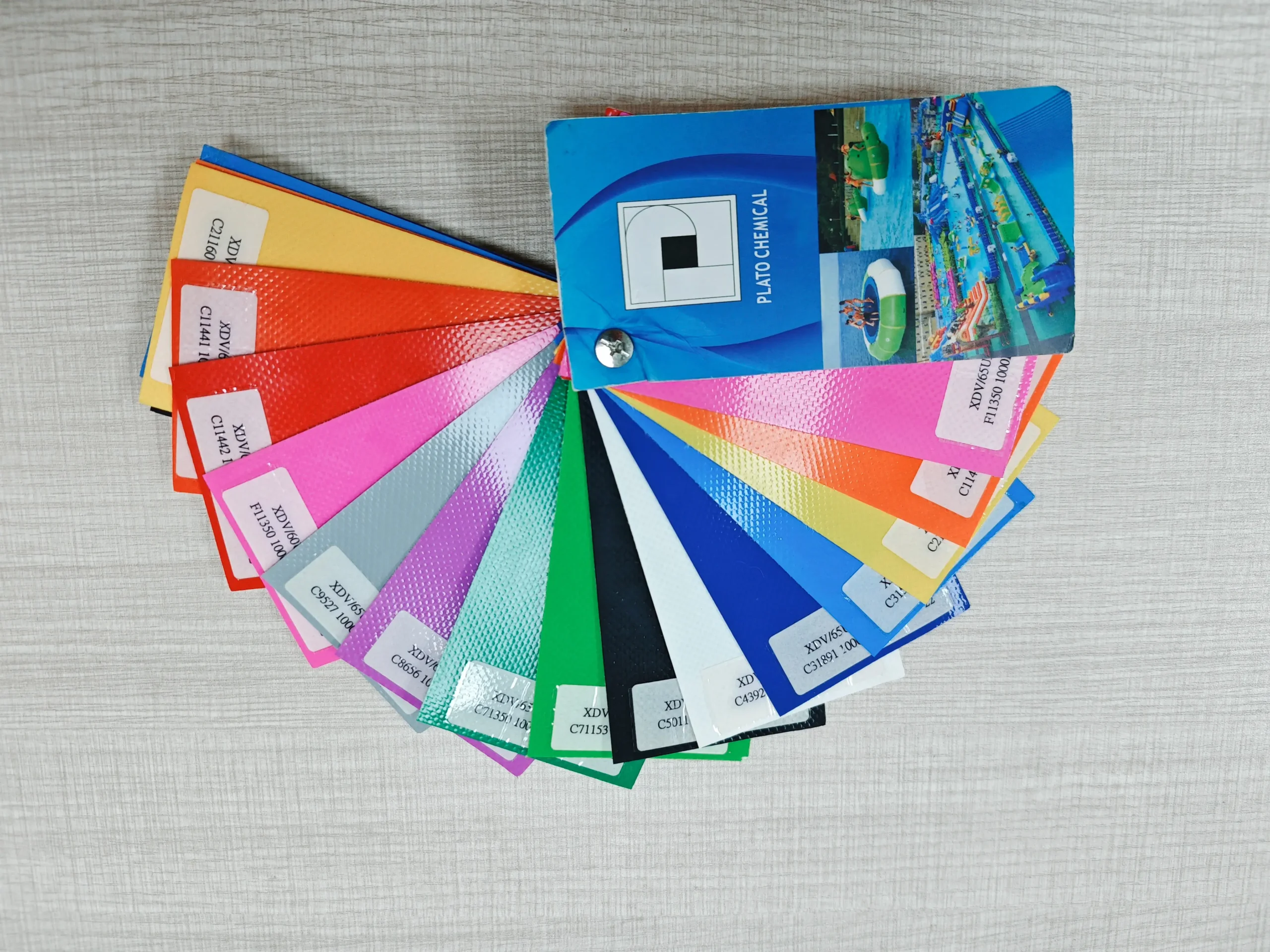
The absolute industry standard for commercial indoor bounce houses is 0.55mm 1300D PVC tarpaulin. This specific metric denotes the thickness (0.55 millimeters) and the thread density (1300 Denier). Denier refers to the fiber thickness and weight; a higher Denier count indicates a denser, more tightly woven base fabric that resists tearing and stretching under load. This material is inherently fire-retardant and lead-free, critical compliance factors for indoor venues that must adhere to strict municipal fire codes and insurance underwriting requirements. The high tensile strength of 1300D PVC ensures that the bouncer is puncture-resistant, maintaining structural integrity even under the energetic impact of continuous jumping. The specialized coating on this PVC prevents the growth of mildew and mold, a vital characteristic for units that might be stored in varying humidity levels between indoor deployments. The result is a fabric that not only withstands physical abuse but also maintains its vibrant, professional appearance over thousands of rental cycles.
Double Stitching and YKK Zippers
Material strength is nullified without precise, heavy-duty craftsmanship. Premium units utilize advanced double-stitching technology throughout the entire structure, with extra reinforcement—often quadruple or sextuple stitching—at high-stress corner points where seams bear the brunt of the structural load. The thread used must be commercially rated, typically a heavy-duty nylon or polyester blend that resists rotting and fraying. Also, the integration of high-strength YKK zippers for the deflation tubes ensures secure air retention during operation and rapid, labor-saving deflation during teardown. YKK zippers are the global standard for reliability; their precise engineering prevents the zipper teeth from separating under the internal pressure exerted by the continuous air supply from the blower motor. This combination of premium PVC and meticulous construction drastically minimizes long-term maintenance costs, reduces the frequency of patch repairs, and guarantees that your teardown crews can deflate and pack the unit efficiently, saving valuable labor hours on multi-unit deployments.
Product Showcase: Premium Indoor Inflatable Solutions
Selecting the correct model for your specific inventory needs is critical to maximizing your return on investment. Below, we showcase two industry-leading units engineered specifically for indoor commercial applications, featuring compact footprints and ceiling-clearance compliance. When researching suppliers, aligning with reputable manufacturers or vetted overseas factories with strict quality control is paramount. For operators looking to compare domestic inventory options, reviewing suppliers like Jungle Jumps can provide additional context on commercial specifications. Below are our premier models designed to integrate seamlessly into your existing rental fleet, delivering maximum indoor ROI through rigorous engineering and captivating design aesthetics.
Princess Inflatable Bounce House Indoor (CH-IB229)
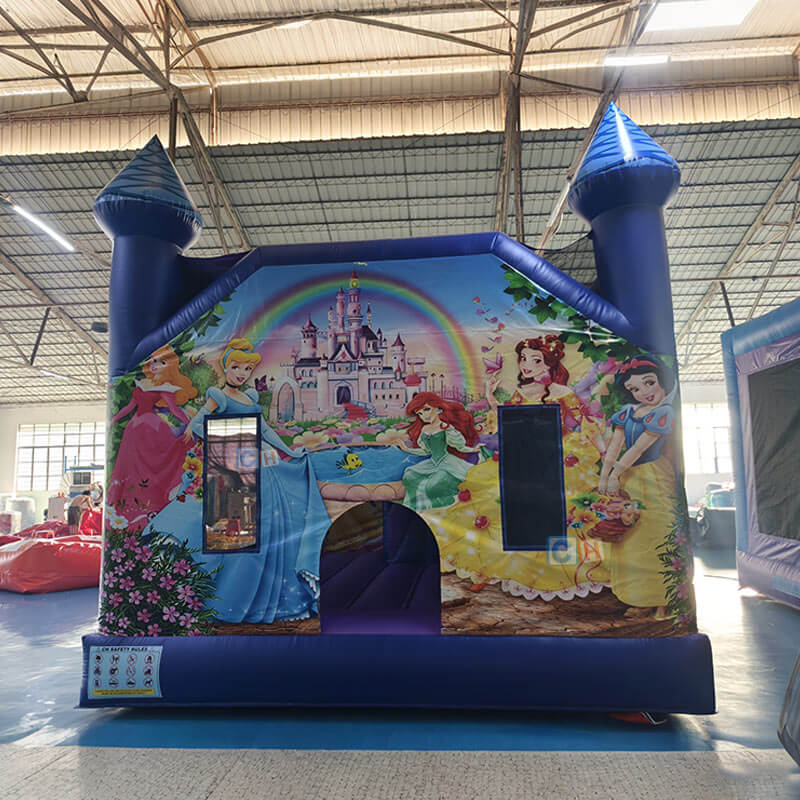
The Princess Inflatable bounce house indoor model (CH-IB229) is engineered to maximize fun in venues with ceiling height restrictions while offering a universally appealing aesthetic. This vibrant inflatable features a spacious jumping area that captivates children instantly while maintaining a perfectly symmetrical, compact footprint. Measuring exactly 4x4x4 meters (13.12x13.12x13.12 feet), it provides a high-density play environment without overwhelming standard commercial real estate dimensions. Perfectly sized for garages, school gyms, or community centers, it allows your rental clients to host events regardless of weather conditions. The vibrant princess theme appeals heavily to the birthday party demographic, ensuring this unit becomes a consistent revenue generator in your inventory, frequently booked for premium indoor celebrations.
| Brand Name | CH Inflatables |
| Model | CH-IB229 |
| Size | L4*W4*H4m/L13.12xW13.12xH13.12ft |
| Weight | Depends on the actual situation |
| Capacity | 5-10 peoples |
| Material | PVC tarpaulin |
| Accessories | Repair kits、Blower |
| Certification | CE-EN14960、ROHS、UL |
| Usage | Shopping Shopping Mall/property promotion events, park activities |
View Product Details & Pricing ➔
Indoor Inflatable Bounce House for Kids (CH-IB216)
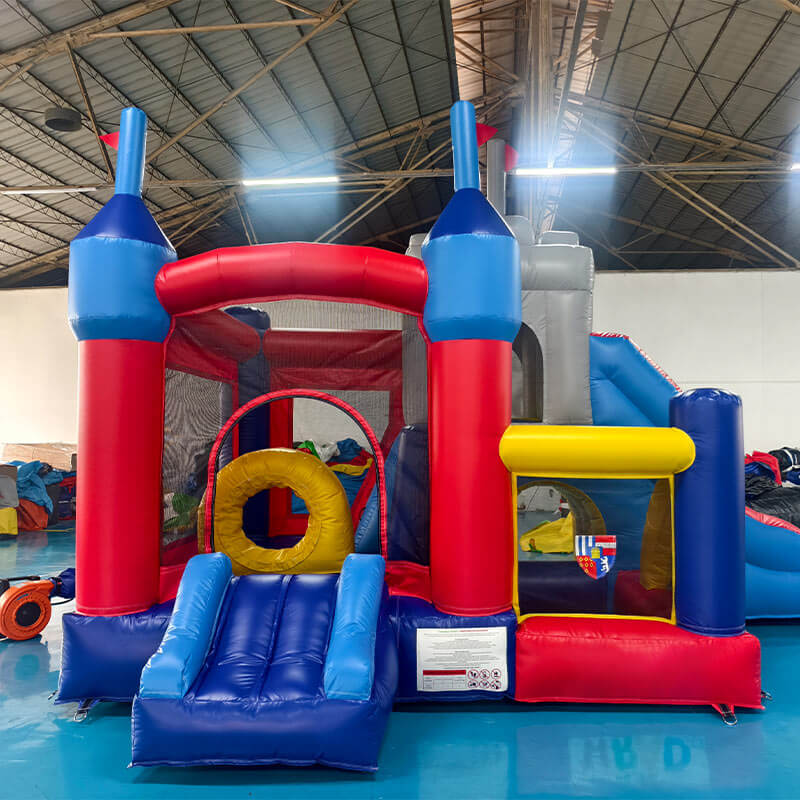
Expand your rental inventory with our vibrant Indoor Inflatable Bounce House for Kids (CH-IB216). Designed with a slightly elongated footprint of 5.5x4.07x4 meters (18.04x13.35x13.12 feet), this captivating unit is the ultimate solution for garages, community centers, and indoor play areas that require a longer, lane-style configuration. Engineered for longevity, this unit is crafted from 0.55mm 1300D PVC which holds full CE certification. We utilize a precise double stitching technique to reinforce every corner, ensuring it handles the rigorous demands of 5-10 children simultaneously. With high-strength YKK zippers, deflation is fast, and durability is guaranteed for years of heavy commercial use. It is a magnet for kids and a profit-maker for rental owners seeking a durable, high-visibility centerpiece for indoor mall activations and property promotional events.
| Brand Name | CH Inflatables |
| Model | CH-IB216 |
| Size | L5.5*W4.07*H4m/L18.04xW13.35xH13.12ft |
| Weight | Depends on the actual situation |
| Capacity | 5-10 peoples |
| Material | PVC tarpaulin |
| Accessories | Repair kits、Blower |
| Certification | CE-EN14960、ROHS、UL |
| Usage | Shopping Shopping Mall/property promotion events, park activities |
View Product Details & Pricing ➔
Space Optimization and Venue Integration
Integrating an indoor inflatable bounce house requires a fundamentally different logistical approach than outdoor setups. Operators must calculate not just the static footprint of the unit, but the dynamic clearance required for the blower motor, safety mats around the entrance and exit, and overhead clearance for the blower tube that extends upward from the roof of the unit. Commercial indoor spaces often feature drop-ceilings, HVAC ductwork, and pendant lighting that dictate strict maximum height profiles. Our CH-IB229 and CH-IB216 models feature a strict 4-meter (13.12 feet) height limit, making them exceptionally versatile for standard commercial drop-ceilings found in strip malls and municipal gyms. Operators must also account for the ingress and egress routes; standard commercial double doors are typically 1.8 meters wide, and the packed weight of a commercial bounce house requires the use of specialized wide-wheel dollies to prevent damaging the venue's flooring or doorframes during transport.
Indoor Anchoring Protocols
While wind isn't a factor indoors, lateral shifting caused by active jumping is a significant logistical challenge. The kinetic energy of multiple children bouncing asynchronously creates a subtle but persistent walking effect. Operators must utilize heavy-duty sandbag anchoring systems or tether directly to permanent floor fixtures using D-rings, where permitted by the venue. Proper anchoring ensures the inflatable maintains its structural integrity and doesn't creep across polished gymnasium floors, which could severely damage both the venue's expensive flooring and the inflatable's base seam structure. We recommend distributing the anchoring weight evenly across all provided D-rings, typically utilizing a minimum of 20 kilograms of ballast per anchor point, to ensure absolute stability during high-traffic commercial operations.
Safety Compliance and Risk Management
In the B2B rental industry, safety compliance isn't just a best practice; it is a legal mandate. Ensuring your indoor inflatable bounce house meets international safety standards protects your business from liability and secures contracts with corporate and municipal clients who require rigorous vetting. Commercial property managers will routinely request copies of your safety certifications and insurance binders before allowing your crew to set up on their premises. Failing to provide comprehensive documentation can result in lost contracts and blacklisting from corporate vendor rosters. Procuring equipment that inherently meets these stringent standards is a non-negotiable aspect of sustainable business growth in the commercial event sector.
Understanding CE, ROHS, and UL Certifications
Our units are backed by 17 years of manufacturing excellence, holding CE-EN14960, ROHS, and UL certifications. CE-EN14960 is the specific European standard governing the safety of inflatable play equipment, detailing rigorous requirements for entrapment hazards, structural integrity, and impact attenuation. This standard ensures that the mesh netting prevents finger entrapment, the sliding angles are safe, and the structural pillars can withstand specific impact loads. ROHS compliance ensures that the materials used in the construction of the inflatable are free from hazardous substances like lead or heavy metals, which is critical for child safety and indoor air quality. UL certification ensures that the electrical blower components meet strict US fire and electrical safety standards, mitigating the risk of electrical fires or motor malfunctions during extended indoor operations. Providing these certificates to venue managers streamlines the booking approval process and establishes immediate, undeniable trust.
Maintenance, Cleaning, and Lifespan Optimization
Although indoor inflatables are spared the severe abuse of mud, grass stains, and UV radiation, they still require a rigorous maintenance protocol to ensure a long, profitable service life. High-traffic indoor use means constant exposure to sweat, spilled drinks, and normal wear and tear from friction against indoor flooring. The accumulation of organic matter on the vinyl surface can degrade the fire-retardant coatings over time if not properly managed. The rubber soles of children's shoes can leave scuff marks that, if left unattended, can permanently embed into the microscopic pores of the PVC tarpaulin, dulling the vibrant colors of your investment and making the unit appear older and less sanitary to prospective clients.
Hygiene and Sanitation Protocols
Regular sanitation is paramount, especially in a post-pandemic commercial environment where parents and facility managers are highly conscious of surface transmission. Operators should utilize non-toxic, commercial-grade vinyl cleaners that don't degrade the PVC tarpaulin or the specialized fire-retardant coatings. Avoid using harsh solvents like acetone or bleach, as these will strip the protective layers and cause the material to become brittle. The methodology for cleaning these large-scale PVC structures shares similarities with maintaining heavy-duty aquatic inflatables, which require careful surface tension management to prevent mold. For comprehensive protocols on maintaining heavy-duty PVC structures, you can refer to our detailed guide on how to clean an inflatable floating water park. Implementing a strict wipe-down routine using microfiber mops and approved sanitizers between rentals will prevent the buildup of odor-causing bacteria and preserve the professional appearance of the unit.
Utilizing Repair Kits Effectively
Every commercial indoor inflatable bounce house ships with a specialized repair kit containing PVC patching material, adhesive, and spare thread. Operators must train their staff to immediately identify and patch minor seam separations or small punctures using PVC-specific adhesive and patching material before they expand into catastrophic structural failures. A puncture of less than one inch can be permanently bonded using the provided repair kit in under fifteen minutes, whereas a blown seam left unrepaired through multiple rental cycles will require professional factory-level refurbishment. Proactive, on-site maintenance extends the unit's lifecycle, maximizing the ROI on your initial capital expenditure and ensuring the unit remains out of the repair shop and in the field generating revenue.
Expanding Your Rental Portfolio Beyond Indoor Bounce Houses
Once you have established a profitable indoor bounce house division, the next logical step for a growing B2B rental business is diversifying into seasonal outdoor and aquatic assets. The same commercial demographic that rents indoor spaces for winter corporate events will look to you for summer aquatic festivals and outdoor corporate retreats. By leveraging the client relationships you have built during the indoor season, you can seamlessly up-sell your existing customer base on your expanded summer inventory. This cross-pollination of services drastically reduces your customer acquisition costs and solidifies your status as a comprehensive, full-service event provider.
Aquatic Inflatables as Summer Extensions
To capture the lucrative summer market, consider adding large-scale aquatic inflatables to your fleet. These units yield massive ROI during the summer months when community pools, lakeside resorts, and municipal parks are seeking high-throughput entertainment attractions. For example, investing in a giant inflatable floating aqua park allows your business to secure high-ticket contracts with summer camps and waterfront resorts. Alternatively, a giant inflatable swimming pool and slide is perfect for corporate family days, providing a safe, visually striking centerpiece for outdoor festivals. By offering comprehensive, year-round solutions—from winter indoor community center activations to lakeside summer festivals—you position your enterprise as a dominant, indispensable partner in your region's event planning industry.
Frequently Asked Questions (B2B Technical Deep-Dive)
Q1: Are commercial indoor inflatable bounce houses durable enough for high-traffic daily rentals?
Q2: I want to open an indoor playground; what should I look for in a bounce house supplier?
Q3: How do I calculate the Return on Investment (ROI) for a commercial indoor inflatable?
Q4: What specific safety measures must be enforced during indoor bounce house operations?
📚 References & Further Reading
- ✅ Industry Standard: Wikipedia - Inflatable Castle
- ✅ Related Guide: How to Clean an Inflatable Floating Water Park