
Start a Profitable Inflatable Castle Rental Business with Commercial Bouncers

InflatableCastle Rental Business Guide: Comprehensive Industrial Blueprint
Here's the deal: the event entertainment industry has witnessed a massive surge in demand for safe, interactive, and scalable attractions, making the inflatable castle rental business one of the most lucrative ventures out there for ambitious entrepreneurs. With high profit margins, relatively low overhead once the initial inventory is secured, and consistent demand from both private sectors (birthdays, weddings) and corporate sectors (festivals, property promotions), establishing a robust rental fleet offers an exceptional return on investment. But look, entering this market requires more than just purchasing a few residential-grade bouncy houses you found online. Long-term profitability hinges on acquiring commercial-grade architecture, understanding strict safety compliance, and executing flawless logistical operations down to the last stake.
This comprehensive industrial guide is engineered for B2B buyers, rental fleet managers, and event coordinators looking to establish or scale a profitable inflatable castle rental enterprise. We're going to dissect the exact technical specifications required for high-traffic commercial bouncers, explore the operational frameworks needed to minimize repair downtime, and provide a deep dive into specialty equipment like dual-function combo slides and seasonal holiday inflatables. By leveraging manufacturer-direct insights from CH Inflatables and 17 years of hard-earned industry expertise, this blueprint equips you with the technical knowledge to source durable, ASTM and CE-certified assets that will elevate your rental brand far above the local competition.
Table of Contents
- 👉 Market Analysis: The Economics of Inflatable Rentals
- 👉 Equipment Selection: Sourcing Commercial Bouncers
- 👉 Safety Protocols & Industry Compliance
- 👉 Operational Logistics: Setup, Transport, & Maintenance
- 👉 Scaling Your Fleet: Seasonal & Specialty Inflatables
- 👉 Featured Commercial Assets: Specs & Configurations
- 👉 Deep-Dive FAQ for Rental Operators
Market Analysis: The Economics of Inflatable Castle Rentals
The commercial event entertainment landscape has undergone a significant paradigm shift over the last decade. Look, for a B2B operator, understanding the economics of the inflatable castle rental market is the foundational step toward building a sustainable, high-margin enterprise. From an industrial engineering perspective, the business model is highly attractive due to its low variable costs and high asset utilization rates. Once the capital expenditure of acquiring the commercial-grade inflatables, blowers, and transport trailers is absorbed, the ongoing operational expenses consist primarily of labor for setup and teardown, fuel, commercial liability insurance, and periodic maintenance. This dynamic typically allows operators to achieve gross margins ranging from 70% to 85% per booking. You aren't paying for raw materials every time you rent a unit out; the asset does the work for you.
Average rental pricing models vary significantly based on regional demographics, venue type, and asset complexity. Standard backyard bounce houses might command an hourly or half-day rate of $150 to $250, but the true profitability lies in full-day commercial event rentals. For large corporate events, property promotions, or municipal park activities, dual-function combo slides can secure daily rates between $400 and $800. The break-even point for a standard commercial bouncer is often reached within 15 to 25 rentals. Assuming you execute proper maintenance, the lifecycle of a heavy-duty unit extends to 3-5 years of rigorous use. Operators who invest in premium, high-capacity models can accelerate this break-even timeline by commanding premium pricing tiers and locking in recurring municipal contracts.
Market drivers heavily influence these ROI metrics. There has been a noticeable increase in decentralized, experiential entertainment. Families are opting for personalized backyard weddings and micro-festivals rather than traditional, restricted venue-based events. Corporate entities are investing heavily in team-building events and property promotion activations that require large, interactive footprints to draw crowds. Municipalities are also expanding park activities, seeking safe, scalable attractions that can accommodate high daily traffic. By strategically positioning a rental fleet to serve these diverse verticals—rather than solely relying on weekend birthday parties—an operator can stabilize cash flow and achieve a higher weekly utilization rate, effectively mitigating the traditional seasonality of the inflatable rental industry.
Selecting Commercial-Grade Inflatable Bouncers
Let's move from the spreadsheet to the shop floor. Selecting your physical assets is the most critical engineering decision in an inflatable castle rental business. Not all inflatables are manufactured to the same standards, and utilizing residential-grade equipment for commercial B2B applications is a guaranteed pathway to equipment failure, liability exposure, and lost revenue. Sourcing commercial-grade bouncers requires a strict evaluation of material composition, structural engineering, and airflow mechanics. You have to know what you are buying before you wire the money.
Material & Durability Standards
The industry minimum for commercial-grade inflatables is 0.55mm (18oz) PVC tarpaulin. This specialized fabric is engineered to withstand rigorous stress, extreme temperature fluctuations, and constant abrasion from heavy foot traffic. Unlike woven nylon or oxford cloth used in cheap residential units, PVC tarpaulin offers superior tear resistance and tensile strength. It is also inherently fire-retardant and lead-free, which is non-negotiable for compliance with indoor venue regulations and child safety mandates. In the shop, we constantly see cheap nylon tear after one weekend of heavy use, whereas a quality 18oz PVC unit shrugs off friction and impact like it's nothing.
Structural integrity is equally dependent on the stitching architecture. At all major stress points—such as bounce surfaces, slide entry angles, and anchor attachments—manufacturers must employ double to quadruple stitching using heavy-duty nylon or polyester thread. A common failure point in substandard inflatables is seam tearing due to high kinetic impact. Commercial units mitigate this through reinforced corner stitching and the integration of automotive-grade webbing, which distributes dynamic loads across the structure, preventing localized tearing. Expanding your inventory goes beyond standard bounce houses; consider diversifying your commercial fleet with interactive water parks to capture the lucrative summer event market. When inspecting a new unit, check the bounce floor. If the floor isn't reinforced with a secondary layer of PVC and heavy webbing, don't buy it.
Blower Systems & Airflow Engineering
Continuous-air HW (High Wind) blowers are the industry standard for commercial inflatables. Unlike sealed inflatables (such as advertising arches), continuous-air systems constantly pump air into the structure while allowing a calculated amount of air to escape through seams and pressure relief valves. This design ensures that if a seam is punctured or a zipper is accidentally opened, the structure remains inflated and safe. The blower must be CE-certified and matched to the specific Cubic Feet per Minute (CFM) requirements of the castle's internal volume. An undersized blower will result in a soft, unsafe structure, while an oversized blower can cause excessive internal pressure, stressing the seams and leading to premature material fatigue. Always match the CFM output to the manufacturer's specifications.
Safety Protocols and Industry Compliance
In the B2B inflatable rental sector, safety is not just a moral obligation; it is a strict legal and insurance requirement. A deep understanding of physical safety standards and operational compliance is mandatory for an inflatable castle rental business to survive. Non-compliance can lead to catastrophic injuries, massive liability claims, and the immediate revocation of your operating licenses. You cannot cut corners here.
Certifications and Anchoring
Commercial inflatables must carry recognized international certifications, most notably CE-EN14960, which dictates stringent guidelines for material thickness, structural integrity, slide angles, and safe falling heights. ROHS (Restriction of Hazardous Substances) and UL (Underwriters Laboratories) certifications for electrical components (blowers) are essential for proving equipment safety to venue managers and insurance underwriters. If a venue manager asks for your compliance docs and you don't have them, you lose the booking. Adhering to global amusement ride safety standards and operator guidelines ensures that your fleet meets the rigorous demands of international safety inspectors.
From an engineering perspective, anchoring is the most critical physical safety mechanism. Stainless steel D-rings must be welded and integrated directly into the base of the structure, attached via reinforced automotive-grade webbing. These anchoring systems must withstand immense kinetic forces generated by both the users inside and environmental factors like sudden wind gusts. Operators must calculate the appropriate anchoring method—whether using heavy-duty steel stakes for grass applications or weighted sandbags/water ballasts for hard surfaces like asphalt or indoor convention center floors. Here is what you need to check in the shop before every single deployment:
✅ Verify all stainless steel D-rings are free of corrosion and firmly welded to the base webbing.
✅ Inspect the continuous-air blower for unusual vibrations, housing cracks, or electrical cord fraying.
✅ Confirm that all safety nets at critical heights are fully intact and show no signs of tearing.
⚙️ Calculate the exact anchor pull-out resistance based on soil type; loose topsoil requires longer stakes than packed clay.
⚙️ Test the pressure relief valves to ensure they aren't stuck open, which would cause structural sagging.
On top of that, modern commercial units incorporate safety nets at critical heights, non-slip climbing surfaces utilizing high-friction PVC strips, and padded fall zones at slide exits. Operators must also establish strict weight capacity limits and active supervision protocols, ensuring that the maximum user capacity (e.g., 8-10 people) is never exceeded during operation. A crowded bounce house is a liability nightmare.
Operational Logistics: Setup, Transport, & Maintenance
Acquiring the equipment is only half the battle; the physical business operation of an inflatable castle rental enterprise requires meticulous logistical planning. The efficiency of your setup, transport, and maintenance cycles directly impacts your bottom line. Slow turnaround times limit the number of bookings you can fulfill in a weekend, while poor maintenance drastically reduces the lifespan of your assets. Logistics is where you make or break your hourly rate.
Transport and Turnaround
Transporting commercial inflatables requires precise trailer space calculations. While the exact weight of a unit depends on its size and accessory inclusion, a standard commercial combo slide can weigh between 150 to 300 pounds. Crews must be trained in proper rolling and folding techniques to ensure the inflatable is compacted efficiently, expelling maximum air without placing undue stress on specific crease points that could lead to material fatigue. Utilizing appliance-moving dollies and specialized inflatable transport bags can significantly reduce the physical strain on staff and decrease setup times. Teach your crew the "burrito roll" method to squeeze out trapped air without bending the structural webbing.
Turnaround efficiency between events is heavily reliant on standardized deployment procedures. Crews should use mapped anchor points and pre-measured tethers. Operators must study European operational standards for mobile inflatable setups to adopt best practices for rapid, safe deployments across various terrains. A highly trained crew can deploy, secure, and test a standard combo unit in under 30 minutes, allowing for multiple daily rotations across different venues. If your team takes an hour to set up one unit, your labor costs are eating your profits.
Preventative Maintenance Cycles
Maximizing ROI requires a proactive, rather than reactive, maintenance schedule. After every rental, the inflatable must be thoroughly inspected for micro-abrasions, seam wear, and structural deformation. Any punctures must be immediately repaired using the provided repair kits, utilizing specialized PVC adhesives and patch materials to ensure airtight seals. Crucially, inflatables must be completely dry before being rolled and stored. Storing a damp PVC inflatable will lead to rapid mildew growth, which degrades the material fibers, causes permanent staining, and emits foul odors that will result in rejected deliveries at future events. Implementing commercial-grade wet/dry vacuums and forced-air drying fans in the warehouse is essential for long-term asset preservation. If you put away a wet unit on Friday, you'll be throwing it away by next season.
Scaling Your Fleet with Specialty Inflatables
To achieve continuous growth and maximize off-peak revenue, rental operators must scale their fleets with specialized units designed for niche markets. Relying solely on standard, brightly-colored children's bounce houses limits your booking potential to weekend birthday parties. By introducing specialty inflatables, operators can capture the adult corporate market, formal events, and seasonal indoor traffic. You need to diversify to survive the slow months.
Themed and Adult-Scale Rentals
Capturing the adult corporate and wedding market requires equipment that diverges from traditional juvenile aesthetics. For formal events, operators should invest in premium aesthetic structures like wedding bounce houses. These units utilize pristine white PVC materials that blend seamlessly into high-end wedding venues and corporate gala after-parties. Because adult inflatables must accommodate higher weight capacities and greater kinetic force per jump, the structural engineering—specifically the webbing and anchor point density—must be heavily reinforced compared to standard units. An adult jumping generates significantly more kinetic energy than a child; your floor and seams must be built to handle it.
On top of that, integrating highly marketable, character-driven attractions such as 19ft premium cartoon bunny castle inflatable slides can create buzzworthy focal points for large community festivals and corporate family days. These massive, visually striking structures command significantly higher rental fees and act as anchor attractions that allow operators to up-sell generator rentals, extended supervision packages, and event staffing. Expanding into seasonal holiday inflatables, as detailed in the featured products below, further protects your revenue streams during the winter months when outdoor rentals dry up.
Featured Commercial Assets: Specs & Configurations
To maximize ROI, rental businesses must prioritize dual-experience combo slides over standard bounce houses. Combo units command higher rental fees due to their extended play value, combining gravity-defying slides with spacious bounce zones. Below are two flagship models from CH Inflatables, engineered to withstand heavy daily traffic while offering versatile applications for diverse event types. These are the workhorses you want in your trailer.
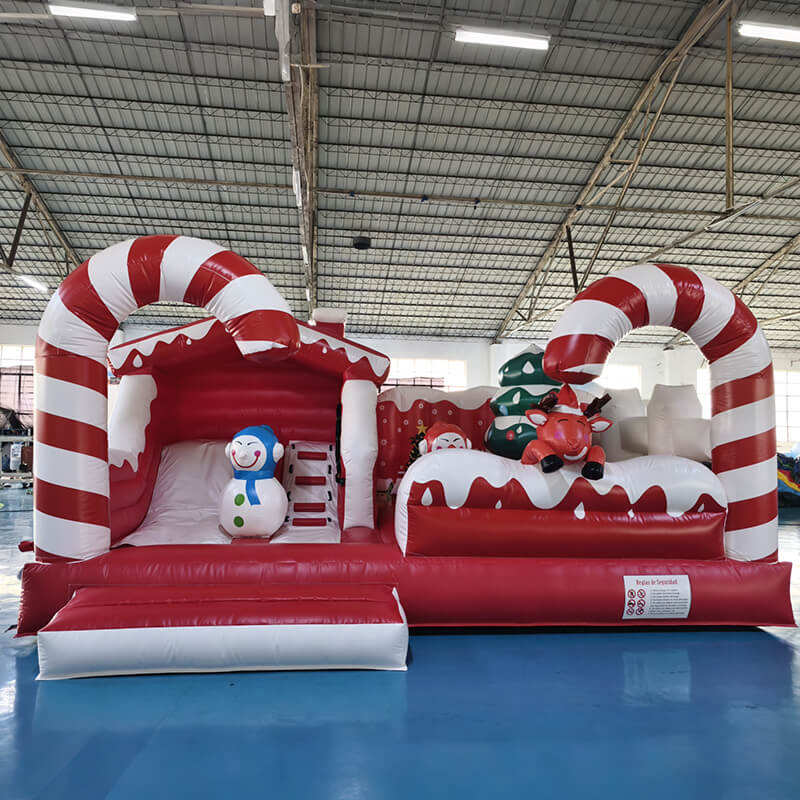
Christmas Inflatable Slide Combo Jumping Castle
Elevate your seasonal profitability with this dual-function play structure. Combining frosty-themed slopes with a spacious bounce zone, this unit guarantees crowd appeal. It features whimsical holiday motifs, ASTM-compliant emergency anchor points, and a continuous-air HW blower for simultaneous sliding and jumping action. It is the perfect revenue-generating powerhouse for winter festivals, indoor shopping mall promotions, and community holiday events.
| Brand Name | CH Inflatables |
| Model | CH-IB184 |
| Size | L6*W4*H2.85m/L19.68xW13.12xH9.35ft |
| Weight | Depends on the actual situation |
| Capacity | 8-10 peoples |
| Material | PVC tarpaulin |
| Accessories | Repair kits、Blower |
| Certification | CE-EN14960、ROHS、UL |
| Usage | Shopping Shopping Mall/property promotion events, park activities |
View Product Details & Pricing ➔
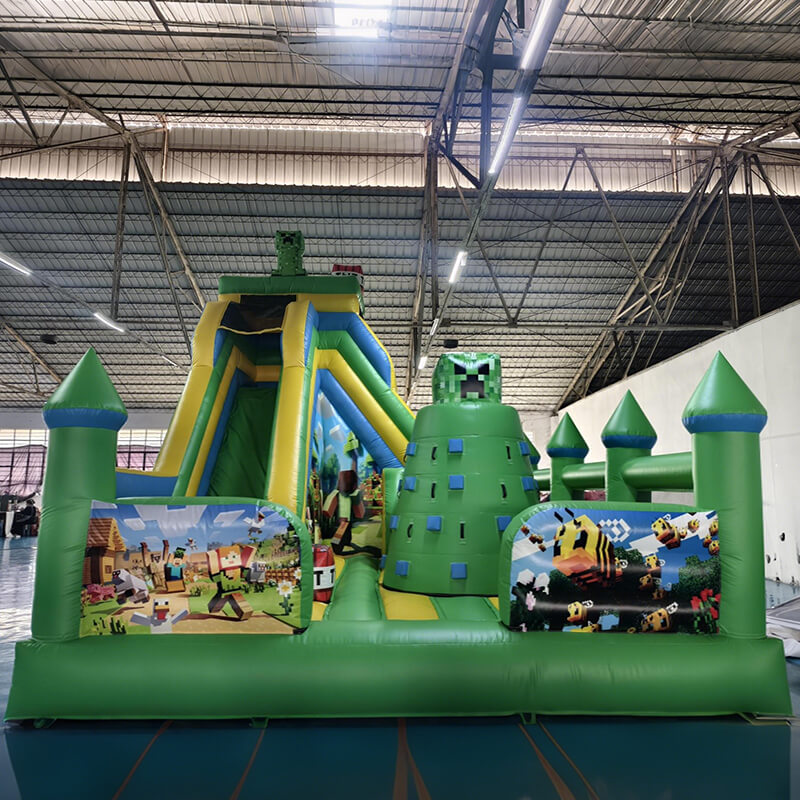
Commercial Inflatable Castle Combo Slide
Designed for high-traffic fairs, carnivals, and large-scale corporate events, this massive combo slide is a revenue powerhouse. Engineered with military-grade construction, it features reinforced corner stitching for ultimate puncture resistance and dual-layer stepping platforms to accommodate heavy foot traffic. With a large capacity, it ensures smooth flow and prevents bottlenecks, allowing operators to manage massive crowds efficiently during peak event hours. This is the kind of unit you park at the entrance of a festival to draw everyone in.
| Brand Name | CH Inflatables |
| Model | CH-IB207 |
| Size | L6*W5*H6m/L19.68xW16.4xH19.68ft |
| Weight | Depends on the actual situation |
| Capacity | 10-15 peoples |
| Material | PVC tarpaulin |
| Accessories | Repair kits、Blower |
| Certification | CE-EN14960、ROHS、UL |
| Usage | Shopping Shopping Mall/property promotion events, park activities |
View Product Details & Pricing ➔
Deep-Dive FAQ for Rental Operators
Is an inflatable castle rental business profitable, and what equipment should I buy?
Here's the deal: the inflatable castle rental business is highly profitable, but maintaining those profit margins relies heavily on minimizing repair downtime and maximizing the utilization rate of your fleet. When operators purchase cheap, residential-grade inflatables, they face frequent seam tearing, blower burnouts, and material degradation, leading to canceled bookings and lost revenue. To ensure long-term ROI, you must invest in commercial-grade equipment constructed from heavy-duty PVC tarpaulin. Look for units that carry CE-EN14960 certification, which dictates strict guidelines for material thickness, structural integrity, and safety distances. Equipment like CH Inflatables' reinforced combo slides is engineered specifically for heavy daily traffic. These units feature double-stitched stress points, industrial-strength webbing, and stainless steel D-rings that prevent structural deformation. By purchasing commercial-grade assets, you reduce maintenance costs, increase your rental price point due to superior safety profiles, and ultimately secure a much higher return on investment over the 3-5 year lifecycle of the product.
How can I keep my rental business profitable during the winter season?
Winter is traditionally a slow season for outdoor inflatable rental businesses due to cold weather and hazardous conditions, but operators can maintain steady cash flow by pivoting to indoor venue partnerships. Winter rentals require versatile, eye-catching units that fit within the ceiling height and floor space constraints of shopping malls, indoor property promotions, and corporate holiday parties. CH Inflatables offers the Christmas Inflatable Slide Combo Jumping Castle specifically designed for these indoor environments. Featuring a manageable footprint (L19.68xW13.12xH9.35ft) and festive holiday motifs, this unit allows rental businesses to tap into seasonal retail traffic and community winter festivals. Because these indoor events are sheltered from weather disruptions, you can operate on a reliable, fixed schedule. On top of that, utilizing CE-certified continuous-air blowers ensures safe, quiet operation indoors without generating excessive noise that would violate indoor venue regulations. Marketing these specialty inflatables to mall managers and event coordinators as early as September can secure your winter profitability.
Can I rent out inflatables to adults for weddings or corporate events?
Absolutely. Adult bouncy castle rentals are currently one of the fastest-growing trends in the event entertainment sector, driven by corporate team-building events, adult birthday parties, and non-traditional weddings. However, renting inflatables to adults requires significantly more structural engineering than standard children's bouncers. Adult inflatables must accommodate higher weight capacities and greater kinetic force per jump. We offer larger capacity models, such as the Commercial Inflatable Castle Combo Slide (Model CH-IB207), which safely holds 10-15 people. This unit is engineered with industrial-strength automotive-grade webbing that prevents structural stretching, heavy-gauge stainless steel D-rings that withstand massive anchoring tension, and non-slip climbing surfaces to prevent adult-sized slip-and-fall accidents. The PVC tarpaulin material is thick enough to prevent bottoming out when heavier users land forcefully. To successfully capture the adult market, rental operators must ensure their fleet is explicitly rated for adult weight limits, and they should consider offering aesthetically customized units (like white wedding bouncers) to appeal to formal event planners.
📚 References & Further Reading
- Industry Standard: CAAPA 中国游艺机游乐园协会
- European Operational Guide: Rainbow Inflatables UK
- Internal Product Reference: Christmas Inflatable Slide Combo Jumping Castle
- Internal Product Reference: Commercial Inflatable Castle Combo Slide
- Fleet Diversification: Octopus Themed Inflatable Water Park
- Specialty Event Asset: White Inflatable Wedding Bounce for Party
- Large-Scale Slide Asset: 19ft Premium Cartoon Bunny Castle Inflatable Slide