
5 Hidden Secrets: Mastery of Inflatable Castle Airflow

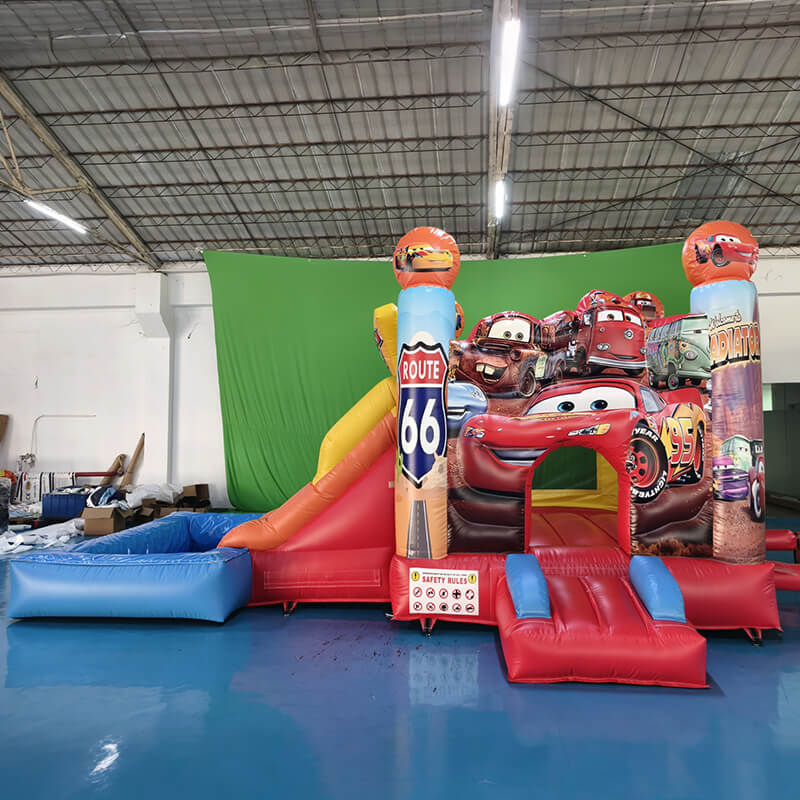
5 hidden secrets: Mastery of inflatable castle airflow
For global inflatable rental business owners, the gap between a profitable weekend and a total liability nightmare often comes down to one invisible factor. That factor is understanding Inflatable Castle Airflow Secrets.
Look, whether you are running a massive commercial inflatable slide or a classic commercial bounce house, managing internal air pressure isn't just a "good idea"—it's non-negotiable. Over my 17 years in the B2B manufacturing and export game, I’ve seen dozens of operators go broke because they didn't grasp how air moves through PVC structures.
In this guide, CH Inflatable opens up the engineering "black box." We want to show you exactly how top-tier manufacturing keeps your assets firm, safe, and energy-efficient. From the heat of Saudi Arabia to the freezing winds of Canada, mastering Inflatable Castle Airflow Secrets ensures your fleet actually lasts.
1. The physics of pressure stability in commercial inflatables
Newcomers usually think a bounce house should be airtight, like a truck tire. Honestly? That is a dangerous mistake.
Commercial units rely on "Controlled Leakage." If a unit were perfectly sealed, the impact of ten teenagers jumping at once would cause the PVC to burst like a balloon. Pressure Stability is actually the art of balancing air coming in with air escaping through the seams.
We use premium 0.55mm 1300D PVC for our units because it provides the right structural tension for this balance. Here's a quick comparison of why material choice matters for airflow:
| Material Type | Airflow Demand | Best Use Case |
|---|---|---|
| 0.55mm 1300D PVC | Standard / Moderate | Standard Bounce Houses |
| 0.9mm 1300D PVC | High / Constant | Water Parks & Giant Slides |
| Oxford Cloth | Very High (Porous) | Residential / Home Use Only |
What's the kicker? A "soft spot" near the stairs of a giant slide usually means uneven airflow. In markets like the USA or Germany, these soft spots are a safety red flag. By mastering Inflatable Castle Airflow Secrets, we map out exhaust points so the PVC doesn't over-expand in the sun or sag under a load.
2. HW blower efficiency: The heart of your setup
You can have the best-stitched slide in the world, but if the air source is weak, you're dead in the water. That is why we standardize everything with HW blowers.
When we talk about HW Blower Efficiency, we are talking about industrial-grade reliability. These aren't cheap fans. They have a "Static Pressure Peak"—that's the blower’s muscle to push heavy 0.9mm PVC upright in minutes and keep it there.
To keep your equipment running at peak performance, check out our Inflatable Jumping Castle with Double Slide to see how we pair specific blower outputs with structure size.
Bottom line is, maintenance matters. If you're in a dusty area like Peru or the Middle East, clean your intake filters. A clogged blower kills Inflatable Castle Airflow Secrets and burns out your motor. Also, always use heavy-duty cords; thin ones drop voltage and kill your HW Blower Efficiency.
To better understand Inflatable Castle Airflow Secrets, this video tutorial is highly recommended:
3. Seam precision and reinforced seam integrity
I’ve seen it a thousand times: a unit looks great but leaks like a sieve. Mastering Inflatable Castle Airflow Secrets means looking at the needle holes. Double stitching is just the start.
We focus on Reinforced Seam Integrity. If the sewing needle is too big, you lose too much air. Too small? The fabric tears. It's a science. We reinforce every high-stress joint to ensure the air mapping behaves exactly as our engineers planned.
Then there’s the deflation logic. We use genuine YKK zippers. Why? Because they don't deform after a hundred "crimping cycles." These zippers work with internal baffles—hidden walls that manage Air Distribution Logic—to prevent the castle from pancaking if a kid accidentally opens an air release.
4. Advanced engineering: Air distribution logic
When you build a 10-in-1 combo, air has to travel through multiple chambers. Without smart Air Distribution Logic, the far corners will stay dangerously soft.
We use 3D modeling to place internal baffles so the top platform of a giant slide stays rigid while the landing zone stays bouncy. It's all about eliminating "dead zones."
Wind is another beast. A strong gust compresses the unit and messes with your Inflatable Castle Airflow Secrets. To fight this, we use automotive-grade seatbelt webbing for our anchors and stainless steel D-buckles. This keeps the unit stable so the internal pressure stays consistent even when Mother Nature is acting up.
5. Material science and climate performance
The weight of your material changes how air behaves. For a standard bouncer, 0.55mm PVC is perfect for a quick "rebound." But for water parks, you need 0.9mm. This heavier skin requires more aggressive HW Blower Efficiency to keep the form rigid.
In cold spots like Russia or Canada, cheap PVC gets brittle. It develops micro-cracks that destroy your Inflatable Castle Airflow Secrets. We use "Cold-crack resistant" PVC so you can work year-round without the structure shattering like glass.
If you're comparing us to retail brands like the JOYMOR Inflatable Bounce Castle, you'll see the difference immediately. They are fine for a backyard, but for B2B commercial work, you need the fatigue tolerance we build in.
6. Troubleshooting pressure drops and performance lag
If your unit takes forever to inflate, it’s usually not a hole—it’s "Snail Blower Stress." This happens when humidity degrades the blower's copper wiring. It spins, but it doesn't push.
Another thing is "Guerilla Leaks." These are tiny abrasions that drain your Pressure Stability over a long day. Keeping the PVC clean prevents "clogged pores" in the stitching, which can actually mess with the designed venting rate.
To stay sharp, I always tell my clients to read up on external safety standards. Check out this guide on What Is an Inflatable Castle: Features, Safety Tips, and Fun Practices to level up your operations.
Frequently asked questions (FAQ)
How does specialized airflow design prevent pressure drops?
By using internal baffles and precision seam spacing, air is diverted to high-impact zones first. Even with heavy kids jumping, the Pressure Stability stays intact across the whole structure.
Why do HW blowers offer superior safety?
They are built with thermal overload protection. Basically, they provide the HW Blower Efficiency needed to keep a slide fully pressurized even when it's maxed out on weight, following EN14960 protocols.
Does temperature affect inflatable castle airflow?
Big time. Heat expands air. Our Inflatable Castle Airflow Secrets involve "controlled leakage" so that excess pressure vents safely through the seams instead of blowing out the PVC during a hot afternoon.
Conclusion: Secure your rental success with CH Inflatable
Long story short, mastering Inflatable Castle Airflow Secrets is the only way to cut down wear and tear while keeping things safe. It turns a risky side-hustle into a predictable, high-profit B2B business.
At CH Inflatable, we mix 17 years of experience with Reinforced Seam Integrity and Air Distribution Logic. We don't cut corners. We use the good stuff: YKK zippers, seatbelt webbing, and HW blowers.
Ready to upgrade your fleet with gear that actually works?
Inquire now and see the difference our Inflatable Jumping Castle with Double Slide can make for your ROI!