5 Mastery Hacks for Inflatable Slide UV Resistance

5 mastery hacks for inflatable slide UV resistance
The sun is both your biggest moneymaker and your silent inventory killer. While blue skies fill your booking calendar, that relentless solar radiation is quietly eating away at your PVC. If you aren't thinking about inflatable slide UV resistance, you’re essentially watching your ROI evaporate in the heat.
Look, after 17 years in the manufacturing trenches at CH Inflatable, I’ve seen it all. I’ve seen vibrant slides turn into brittle, chalky nightmares in a single season because the owner went cheap on the material. Trust me, "cheap" gets very expensive when a seam fails during a Saturday rental.
Here’s the kicker: maintaining your fleet isn't just about cleaning; it's about chemistry and physics. This guide reveals the professional secrets we use to build units that actually survive the sun. Let’s dive into how you can shield your investment.
1. Prioritize aerospace-grade materials: The 0.55mm 1300D PVC advantage
The real fight for inflatable slide UV resistance happens at the molecular level. Most consumer-grade vinyl is junk that can't handle a week in the Texas sun. To stay in business, you need high-density shields.
We use 0.55mm 1300D PVC as our baseline. Why? Because the "Denier" (that’s the 1300D part) represents the weave density. A tighter weave means UV photons have a harder time penetrating the material and breaking down the plasticizers that keep your slide flexible.
From my experience shipping to scorching climates in Spain and the Middle East, lower denier counts just melt. Using premium thickness is the only way to guarantee anti-aging vinyl performance and prevent that dreaded "High-pressure fatigue."
What's more, your gear needs to be legal. Ensure your material has UL/SGS certification. It’s the backbone of global compliance, ensuring your investment meets CE EN14960 standards in Europe and North America without outgassing hazardous chemicals.
2. Engineering for solar heat-sealing stability
Ever notice your slide looks "pregnant" or bulgy on a 100-degree day? That’s thermal expansion. To combat this, we’ve mastered solar heat heat-sealing stability through high-frequency welding.
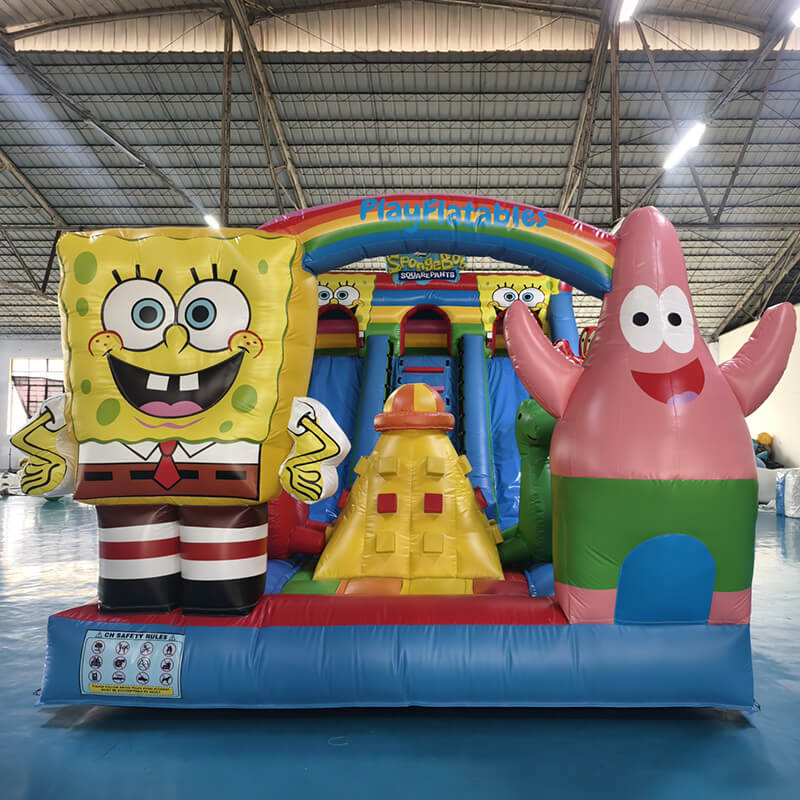
In high-friction zones, basic stitching is a disaster waiting to happen. We combine aggressive double-line stitching with heat-sealing. This prevents "seam-stretch" when the PVC expands. If you want a unit that stays rock-solid, check out our inflatable cartoon dry slide built specifically for high-temp stability.

Internal structural stress is the real killer. If the internal baffling fails, your slide is toast. We’ve upgraded all internal "skeletons" with UV-stable reinforcement webbing. It’s the same breaking strength as an automotive seatbelt. Even when the sun spikes, the internal tension stays perfect.
| Feature | Commercial Grade (CH Inflatable) | Residential/Cheap Grade |
|---|---|---|
| Material Density | 1300D (Heavy Duty) | 500D - 800D (Lightweight) |
| Seam Technology | Heat-sealed + Double Stitching | Single Stitching Only |
| UV Protection | Integrated UV-Inhibitors | Surface Coating (Wear-off) |
| Anchor Points | Stainless Steel 304 | Zinc-plated Iron |
3. Hardware upgrades: Don't forget the D-rings
To be honest, most people ignore the hardware until it snaps. Sunlight combined with humidity creates a corrosive cocktail. Standard iron D-rings will rust and leave nasty orange stains on your vinyl, killing your inflatable slide UV resistance efforts.
We only use upgraded stainless steel D-buckles. They don't oxidize. They don't bleed. They just work. If your anchors snap on a windy day because the sun made them brittle, that's a liability nightmare you don't want.
The same goes for zippers. Intense UV rays warp cheap plastic, making deflation zippers stick. We strictly use YKK zippers. They handle the heat without deforming. Plus, our CE-certified HW blowers have high "Tolerance precision" to keep running in extreme ambient heat safely.
4. The "Block & Protect" maintenance routine
Think of your slide like human skin—it needs SPF. I tell my B2B clients to apply UV-inhibitor sprays monthly. This creates a sacrificial barrier that boosts your anti-aging vinyl performance and keeps your colors from fading into a sad, bleached-out mess.
You can see the difference when looking at residential bounce house structural designs. They often lack the awnings and heavy protection layers found in pro-builds, leaving them wide open to radiation.
Bottom line is: location matters. If you can set up in the shade of a building during the 2 PM peak, do it. Reducing surface temps by 20% can add years to the life of your PVC joints. A cooler slide is safer for the kids and better for your wallet.
5. Professional inspection and storage protocols
Train your crew to spot "Chalking"—that white powdery residue. If you see it, the UV damage has started. Perform a "pinch test"; if the vinyl feels crunchy instead of supple, you’ve got a problem. Catching this early is how you avoid blowouts.
For high-exposure setups, we use 0.9mm 1300D PVC, especially in our inflatable water park slide units. This thickness is your best defense against inflatable slide UV resistance issues in aquatic environments.
Lastly, don't store your slides near warehouse windows. Ambient UV degradation is real. Use UV-opaque transport bags to keep your units in total darkness. Unlike residential waterslide offerings, commercial gear requires climate-controlled storage to maintain structural integrity over the winter.
To better understand inflatable slide UV resistance, this video tutorial is highly recommended:
That video shows what happens when cheap units hit real-world stress. "Sun-bleaching" isn't just an aesthetic issue; it’s the physical death of the fabric. Investing in premium manufacturing from the start is simply cheaper than buying new units every two years.
Frequently Asked Questions (FAQ)
How does UV exposure affect commercial inflatable lifespan?
UV rays break the chemical bonds in PVC, causing fading and loss of elasticity. Without specialized inflatable slide UV resistance, a unit can lose 50% of its lifespan in just a couple of seasons.
What is the best material to prevent sun damage on water slides?
Heavy-duty 0.9mm 1300D PVC is the gold standard. It’s thick enough to block photon penetration while maintaining the anti-aging vinyl performance required for high-traffic water parks.
Can UV-resistant coatings extend the life of rental units?
Yes. Think of it as a sacrificial layer. It absorbs radiation so your vinyl doesn't have to, protecting the vibrant pigments and UV-stable reinforcement webbing inside the slide.
Conclusion
Long story short: Mastering inflatable slide UV resistance is what separates the pros from the amateurs. By demanding 0.55mm 1300D PVC and insisting on solar heat heat-sealing stability, you’re locking in your profits for years to come.
Don't let the sun burn your ROI. Lean on our 17-year manufacturing expertise to build a fleet that keeps its color and its shape. Ready to upgrade to commercial-grade, sun-defying technology? Let's get to work.
Shop our UV-resistant commercial water slides here!