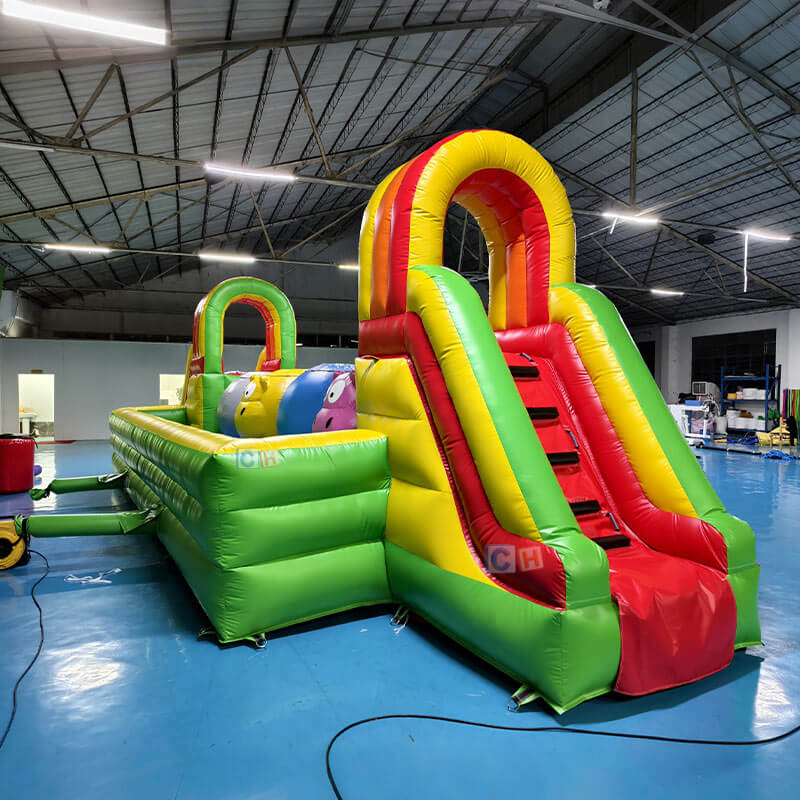
Slash Maintenance: 5 Superior Inflatable Castle Seam Hacks

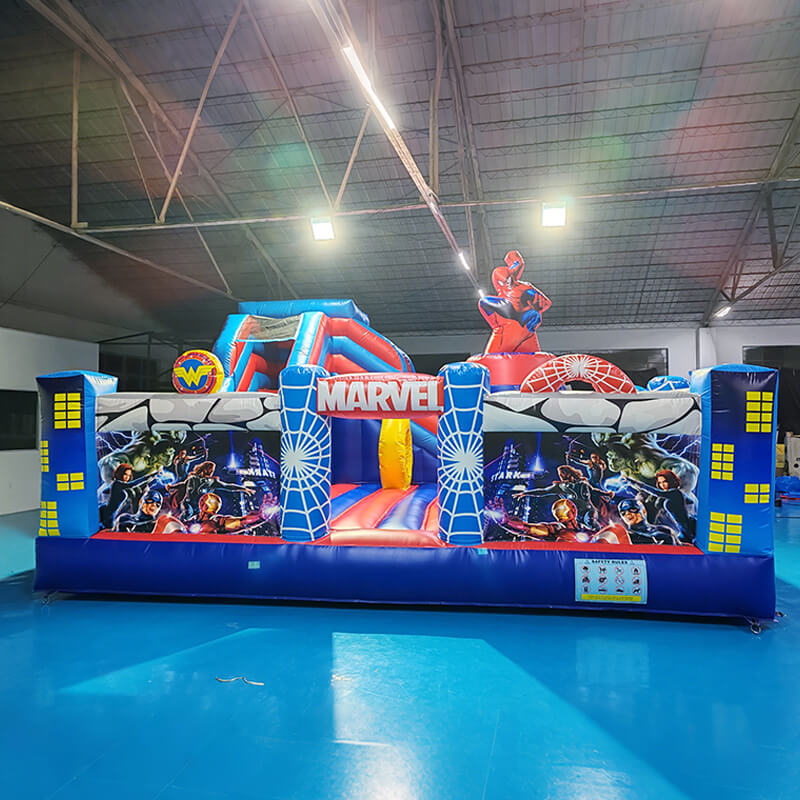
Slash maintenance: 5 superior inflatable castle seam hacks
Stop paying for site repairs that eat your profits. If you want to master inflatable castle seam maintenance like a pro, you need to understand the guts of 1300D PVC and why double-stitching is your best friend. Contact CH Inflatable today for the rugged gear your business deserves.
The success of a rental business comes down to one thing: can your gear take a beating? For wholesalers and event pros from the USA to Germany or Spain, equipment failure isn't just a nuisance—it’s a disaster.
A split seam during a peak-season Saturday is more than a repair bill. It's a massive liability, a safety nightmare, and a day of lost revenue you’ll never get back. Trust me, I know.
In my 17 years of manufacturing, I’ve watched operators go broke because they skipped basic inflatable castle seam maintenance. This guide shares the secrets of high-end construction that the cheap manufacturers won't tell you.
Bottom line is this: by understanding build quality, you can slash your upkeep costs by nearly 40%. Whether you’re in the freezing parts of Canada or the scorching heat of the Arab regions, proper inflatable castle seam maintenance keeps your fleet in the green.
1. The foundation of longevity: 0.55mm 1300D PVC durability
Look, not all "commercial" vinyl is the same. I get asked all the time why some bounce houses die in a season while others last a decade. The secret is the 0.55mm PVC durability paired with a 1300D inner mesh.
Many factories claim they use commercial materials just to cut corners. But without that 1300D density, the internal mesh delaminates under pressure. Constant jumping creates "thread-pull" that rips the structure apart from the inside out.
At CH Inflatable, we stick to UL and SGS compliant materials that meet CE EN14960 standards. This means your inflatable castle seam maintenance is easier because the foundation actually holds up under extreme dynamic loads.
There is a direct link between fabric tension and seam stress. When kids and adults jump at the same time, the air pressure spikes. High-density 1300D PVC acts as a solid anchor, absorbing that shock so the threads don't snap.
If you're running Inflatable bouncy slide for kids units, you want that extra thickness to prevent structural tearing during high-velocity landings.
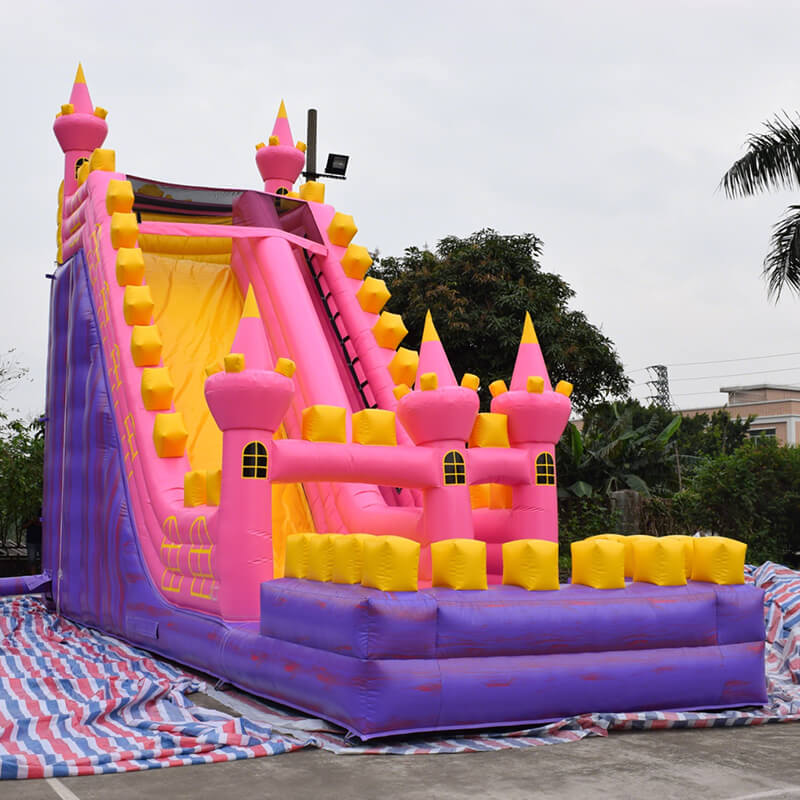
2. Mastering the double-thread sewing technique
If you’re checking your fleet, the stitching is your first line of defense. Single stitching is a joke in the commercial world. The double-thread sewing technique is vital because it spreads the pressure across two lines instead of one.
Ever heard of "seam weeping"? It’s that tiny bit of air escaping the needle holes. You actually need it to prevent the unit from popping like a balloon on impact. The double-thread sewing technique regulates this perfectly.
Part of your inflatable castle seam maintenance routine should be checking this weeping rate. If the bounce house feels like a marshmallow even with a good blower, your seams are likely shot. Precision stitching keeps that pressure exactly where it needs to be.
Here's the kicker: even the best thread fails if the corners aren't right. That’s why reinforced corner stitching is non-negotiable. Every pillar base and exit ramp needs extra webbing and overlap to handle lateral hits.
| Feature | Standard Grade | Commercial Pro Grade (CH) |
|---|---|---|
| Material Density | 1000D PVC | 1300D PVC (Heavy Duty) |
| Stitching Method | Single or Basic Double | Reinforced Double-Thread Technique |
| Corner Support | Standard overlap | Multi-layer reinforced corner stitching |
| Hardware Material | Plated Iron | Marine-grade Stainless Steel |
3. Hardware maintenance: Industrial YKK zippers and D-buckles
When people talk about inflatable castle seam maintenance, they always forget the hardware. Deflation zippers are the most common fail point I see in the field. Using industrial YKK zippers is the only way to prevent track deformation.
Cheap zippers burst or lose teeth when the internal air pressure hits them. YKK zippers are built to grip under tension. To keep them working, always close the velcro flap tight before you hit the power switch.
What's more, you need to check your anchor points. Iron D-buckles rust out in places like Poland or Latvia within months. A rusty buckle eats into the webbing, which eventually rips the seam right off the base.
We use stainless steel D-buckles that don't care about rain or humidity. This is especially important for a large Commercial bounce house obstacle course, where the anchor force is massive during windy days.
4. Visual inspection protocols for rental fleets
Real inflatable castle seam maintenance is proactive. Don't wait for a blowout. Your crew should do a "scuff test" every time they pack up. Check for thinning vinyl where the unit folds—that's where the trouble starts.
Inflation is the best time for a check-up. Spray a little soapy water on the main joints. If you see fast-growing bubbles, you’ve got a micro-leak. Catching it now costs ten bucks; catching it after it rips on-site costs you a client.
We’ve also pushed our webbing to automotive seatbelt standards. Standard nylon mesh frays when it rubs against concrete. Our automotive-grade webbing stays smooth, meaning your inflatable castle seam maintenance won't involve replacing torn D-ring loops every month.
5. Operational safety: HW blower and air pressure management
Here's a secret: over-inflation is just as bad as under-inflation. Managing that pressure is a huge part of inflatable castle seam maintenance. Using an HW blower safety system ensures the CFM (Cubic Feet per Minute) is consistent.
If the blower is too aggressive, it stretches the thread holes. Consistent airflow is the "secret sauce" to making a 1300D PVC unit last ten years instead of five. It keeps the unit firm without stressing the 0.55mm PVC beyond its limits.
Sometimes accidents happen despite the best care. If a seam fails completely, you need a pro. Experts like Stitches for Bounces - Inflatable Repair or Premier Inflate: Repairs for Bouncy Castles & Inflatables can do heavy retrofits if you bought a cheap unit elsewhere.
To better understand inflatable castle seam maintenance, this video tutorial on vinyl surgery is highly recommended:
Frequently asked questions (FAQ)
How often should I inspect seams on a commercial bounce house?
If you're out every weekend, do a quick check during every cleaning. A deep dive—looking specifically at the reinforced corner stitching—should happen once a month. No exceptions.
What is the best way to clean 1300D PVC seams?
Use a soft brush and a pH-neutral soap. Skip the harsh chemicals; they eat the UV coating and degrade the double-thread sewing technique. Also, make sure it’s bone dry before you roll it up to avoid mold.
Can I repair a seam leak on-site during an event?
You can use tear-aid tape for a tiny pinhole to finished the day, but a real seam failure means the unit is done. If the inflatable castle seam maintenance was ignored and it pops, swap it for a backup immediately for safety.
Conclusion: Investing in quality over repair
Long story short, inflatable castle seam maintenance starts the day you buy your equipment. Choose 1300D PVC, YKK zippers, and double stitching from the get-go, and you'll spend your time counting money instead of patching holes.
At CH Inflatable, we have 17 years of export street-cred. Our CE EN14960 standards mean your gear is engineered to survive the rental grind. From custom adult courses to massive water parks, we build stuff that outlasts the competition.
Ready to beef up your rental fleet with real industrial durability?
Contact CH Inflatable today for a wholesale B2B quote. Let’s build you a fleet that actually stays in the air!