
7 Secrets to Safely Fix Inflatable Pool Obstacle Course

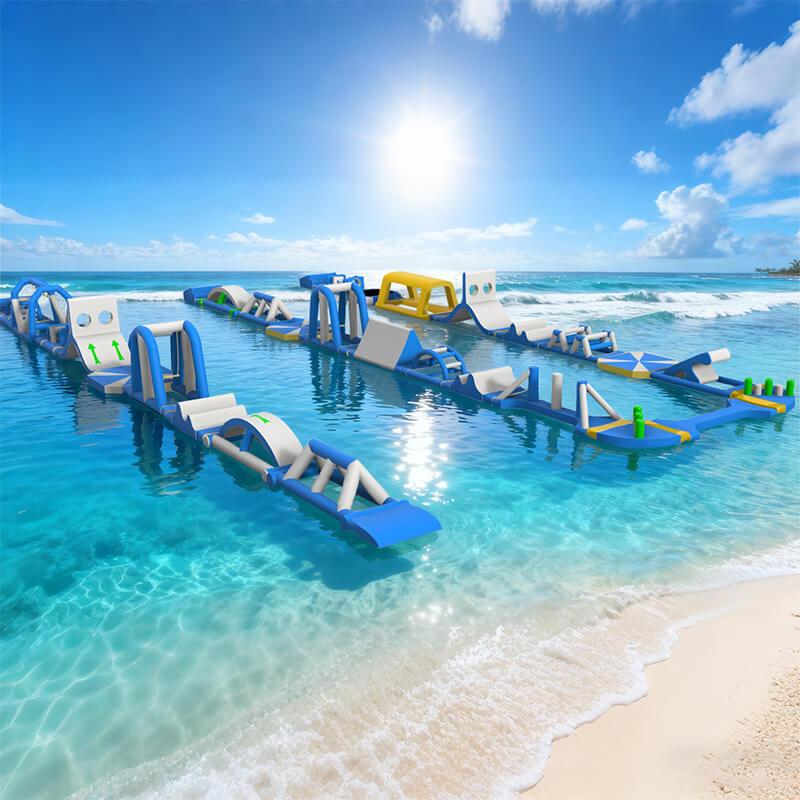
7 secrets to safely fix your inflatable pool obstacle course
Running a successful aquatic rental business or event venue isn’t just about the high-energy fun. Let’s be real: it’s about making sure your gear doesn't fail when the pool is full of kids. An inflatable pool obstacle course is a massive investment, and it takes a beating from UV rays, chlorine, and constant friction.
I’ve spent 17 years in the manufacturing and export trenches at CH Inflatable. I’ve seen it all—from cheap seams splitting mid-event to "rust-bleeding" D-rings ruining a brand-new unit. If you want to keep your inflatable pool obstacle course safe and profitable, you need to stop treating maintenance like an afterthought.
Here’s the straight talk on how industry veterans keep their inflatables in the water and out of the trash heap. Trust me, knowing these secrets is the difference between a high-margin summer and a liability nightmare.
1. Mastering 0.9mm PVC marine-grade material repairs
When you’re running a water park, precision is your best friend. For a dry bouncy castle, 0.55mm PVC is fine. But water change the physics. That’s why we use 0.9mm 1300D PVC for every inflatable pool obstacle course we build. It’s the "Gold Standard" because it handles high-pressure fatigue without flinching.
Fixing a tear on 0.9mm PVC isn't like patching a bike tire. You need the "heat-puddle" method. First, strip the oily UV protectants with MEK (Methyl Ethyl Ketone). Then, use a heat gun to literally melt a new patch into the existing skin. It’s not just a patch; it’s a molecular bond.
Check out our heavy-duty structural details here: Inflatable Pool Obstacle Course.
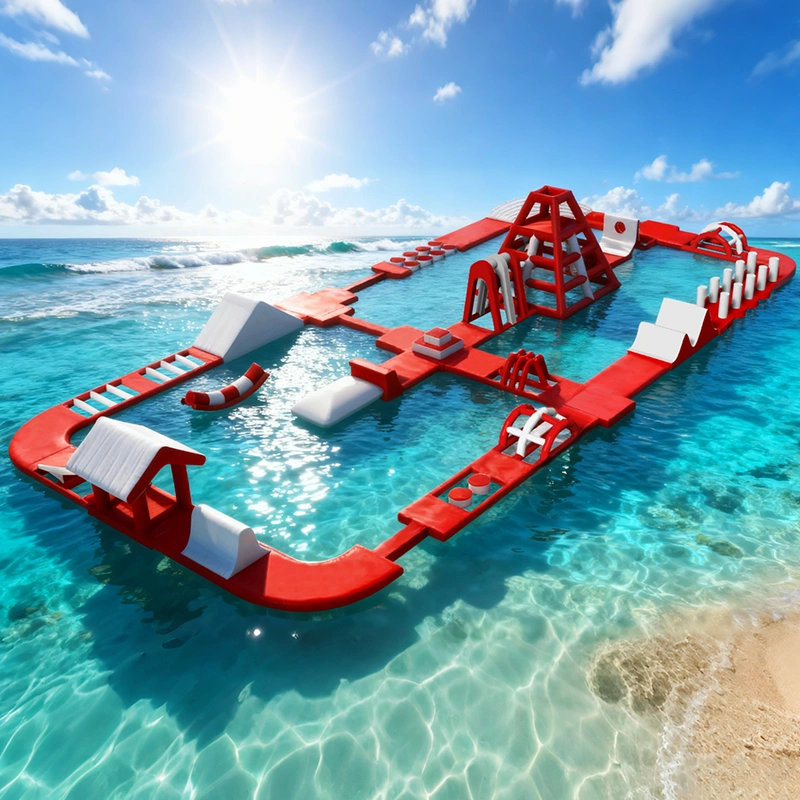
2. Strengthening structural integrity with high-tensile webbing
Look, standard nylon straps snap. In a pool, you have kids jumping, climbing, and sliding simultaneously. That puts insane kinetic loads on connection points. We use seatbelt-grade high-tensile webbing to fight this. We call it "Stress Point Scabbing"—layering extra webbing at every anchor D-ring.
Most blowouts happen at the seams. That’s why we demand double wire stitching on every panel. If you want to see how the pros in the US manage these layouts, take a look at these commercial inflatable obstacle courses to compare the structural depth.
3. Comparison of commercial-grade components
To help you understand why these materials matter for your inflatable pool obstacle course, I’ve broken down the specs below:
| Feature | Standard Grade | CH Inflatable Pro Grade |
|---|---|---|
| Material Thickness | 0.55mm PVC | 0.9mm PVC |
| Zipper Brand | Generic Plastic | YKK Zipper Durability |
| Anchor Rings | Iron/Galvanized | Stainless Steel D-buckle |
| Webbing Type | Nylon Blend | High-tensile Webbing |
4. Ensuring airtight security with YKK zipper maintenance
Cheap zippers fuse shut in chlorinated water. It’s a fact. We use YKK brand zippers because YKK zipper durability is the only thing that stands up to the pressure of a massive inflatable pool obstacle course. If the zipper fails, the internal air bladders are toast.
Pro tip: Lubricate those tracks with pure beeswax every month. It keeps the teeth from warping. These zippers also act as emergency deflation ports. If a storm rolls in, you need to get that air out fast. A jammed zipper in a storm is a disaster waiting to happen.
5. Optimizing blower performance and safety standards
The blower is the heart of the setup. If it shorts out near water, you’re in trouble. We supply HW brand blowers because they meet strict HW blower certification (UL/CE). Don't use unbranded replicas—it's not worth the fire risk or the "Pressure Sag."
"Pressure Sag" happens when cold pool water cools the air inside the unit, making it soft. You need a blower with consistent power delivery to maintain structural rigidity. Keep the blower unit elevated and far away from the splash zone. Safety 101, but you’d be surprised how many people forget.
6. Why stainless steel D-buckle systems save your fabric
I hate "rust-bleeding." It’s when cheap iron D-rings rust and leave orange stains all over your expensive PVC. It looks terrible and ruins your professional image. We only use the stainless steel D-buckle. It’s 100% waterproof and corrosion-resistant.
Proper anchoring is what keeps your inflatable pool obstacle course from flipping. Use bungee tethers with your stainless steel D-buckle to absorb the shock of users jumping. This stops the anchor points from ripping right out of the PVC hull during peak hours.
7. Visual inspection and the "sneeze test"
Whether you're in the USA, France, or Colombia, you need to hit CE EN14960 standards. I tell my clients: never skip a daily "Squeeze Test." If the inflatable pool obstacle course feels soft, you have an entrapment hazard. Daily checklists aren't just paperwork; they're your insurance policy.
When you're packing up, use the "Fold and Roll" technique. But before that, you have to "Burp the Unit." That’s industry slang for walking over the folded PVC to force every last bit of air out. If you leave moisture or air inside, you’re inviting black mold to move in.
For more on hygiene and scale, check out these swimming pool obstacle course setups to see how they handle biofilm removal.
To better understand how an inflatable pool obstacle course works in action, this video tutorial is highly recommended:
Long story short: your maintenance defines your profit
Bottom line is this: a well-maintained inflatable pool obstacle course can last for years of high-traffic use. It’s all about the details—the YKK zipper durability, the 0.9mm PVC welding, and that stainless steel D-buckle quality. Don't cut corners on safety components.
Ready to upgrade your aquatic park with a partner who actually knows the tech?
Contact CH Inflatable today. We specialize in custom, CE-certified water inflatables that are built to survive the real world. Let’s get you a wholesale quote that makes sense for your business.
Request your exclusive Inflatable Pool Obstacle Course quote now!
Frequently Asked Questions
How do I fix a seam leak on an inflatable pool obstacle course?
Clean it with MEK first. For 0.9mm PVC, you really need a professional heat-welding tool. If you're using glue, make sure it's marine-grade PVC adhesive and give it at least a 2-inch overlap beyond the leak line.
What’s the best way to clean 0.9mm PVC?
Rinse it with fresh water immediately after use to get the chlorine off. Use a pH-neutral cleaner for the tough spots. Most importantly, make sure it is 100% dry before you roll it up, or you'll be dealing with mold within a week.