7 Tactical Steps: Master Inflatable Water Theme Park Cleaning

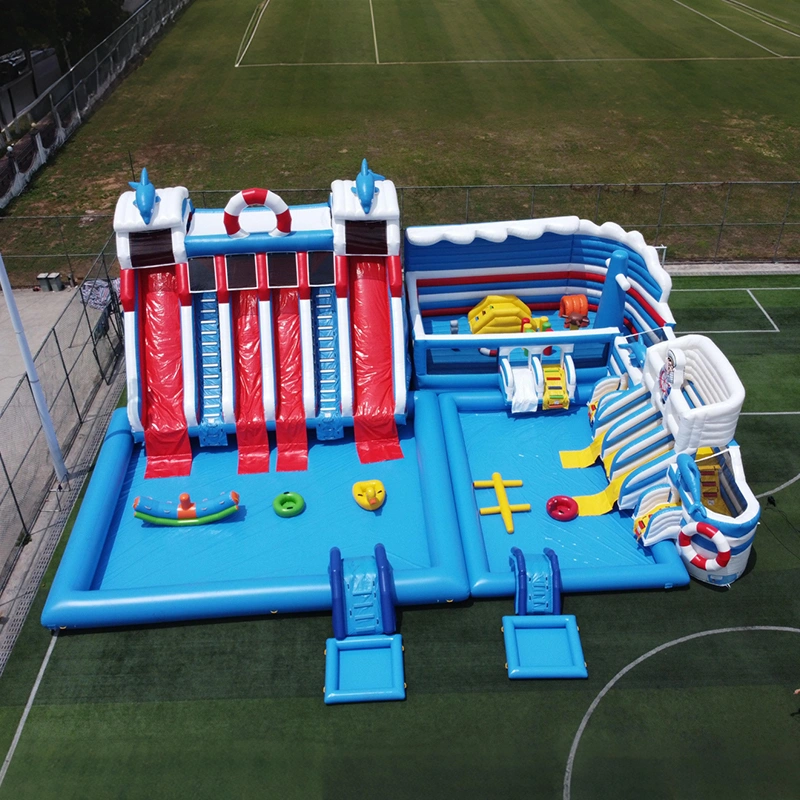
7 tactical steps: Master inflatable water theme park cleaning
Slash maintenance costs with our real-world 7-step guide. Learn to safeguard 0.9mm PVC using elite technical standards. Boost your ROI now!
Introduction
Look, keeping a tight Inflatable water theme Park Cleaning schedule isn't just about making things look pretty. It's about protecting your cold, hard cash.
As a veteran in the B2B inflatable industry for 17+ years at CH Inflatable, I’ve seen it all. I've worked with rental giants from Florida to Spain and Lithuania.
To be honest, biofilm and algae are the silent killers of premium 0.9mm 1300D PVC. If you ignore the grime, you're basically watching your equipment rot.
When operators skip high-level technical cleaning, they end up with material degradation and massive safety liabilities. Proper Inflatable water theme Park Cleaning stops that nightmare cold.
Following this guide means your floating obstacle courses stay in "showroom" condition. It’s the easiest way to maximize equipment lifespan and skyrocket your rental ROI.
Whether you're battling the sun in the Arab regions or the humidity in the USA, these steps are your survival manual.
Step 1: Pre-cleaning assessment and biofilm identification
Before you even touch a hose or a chemical agent, you’ve got to do a walkthrough. Run your bare hand along the 0.9mm PVC right at the waterline.
Does it feel "slimy" or slippery? That's your red flag. Early detection is the secret sauce for effective Biofilm prevention before bacteria bonds to the fabric.
In nearly two decades of manufacturing, I’ve seen parks ruined because owners ignored this "slimy" stage. A proactive Inflatable Water Theme Park Cleaning routine stops the damage early.
Next up: Debris removal. Never spray water on an inflatable covered in sand or grit. Use soft-bristle, marine-grade brushes to sweep away the solids first.
This dry-brushing phase is vital. It prevents you from accidentally grinding sand into the PVC coating like sandpaper during the wet wash.
[Industry Slang]: "Hot Spots" – These are the areas where friction and moisture go to die—usually near double-stitched seams and high-traffic entry platforms.
Step 2: Choosing the right chemical agents for 1300D PVC
Here’s the kicker: most people think any soap works. Using household bleach on 1300D PVC is a massive commercial suicide attempt.
Bleach kills the plasticizers that keep your gear flexible. Instead, you need pH-neutral, biodegradable enzyme cleaners that actually respect the material.
At CH Inflatable, our materials hold strict UL/SGS certificates. To stay compliant with CE EN14960, your chemicals must be as safe as the inflatable itself.
For those of you in saltwater bays or chlorinated lakes, Marine grade vinyl care isn't a luxury—it’s mandatory. These solutions protect the UV inhibitors in our PVC.
Without specific Inflatable Water Theme Park Cleaning chemicals, you’ll deal with "chalking." That's when your PVC leaves a white powdery residue on your hands. That means it's dying.
To keep things organized, here is a quick guide on what to use—and what to avoid—during your 1300D PVC sanitization process:
| Material / Issue | Recommended Agent | Strictly Avoid |
|---|---|---|
| 0.9mm 1300D PVC | pH-Neutral Enzyme Cleaner | Bleach & Ammonia |
| Stainless D-Buckles | Fresh Water + Citric Acid | Hydrochloric Acid |
| YKK Zippers | Silicone Lubricant | Petroleum-based Grease |
| Algae Stains | Soft Marine Brush + Vinegar | Steel Wool / Scrapers |
Step 3: Tactical scrubbing and algae removal tactics
When you start scrubbing the waterline, don't just hack away at it. Use a calculated, circular motion. This is the pro way to handle Algae removal tactics.
Circular scrubbing breaks down algae roots without destroying the top PVC layer. It’s the only way to keep the gear's weight profile from blowing out of proportion.
Leftover algae adds massive weight and drag. Consistent Inflatable Water Theme Park Cleaning keeps the buoyancy of your investment perfectly balanced and easy to handle.
Don't forget the corners. At CH Inflatable, we double-stitch everything for safety, but those seams can trap moisture and organic gunk like a sponge.
Flush these areas with fresh, high-pressure water. If you don't, toxic black mold will grow inside the seams, and that's a health risk no event organizer wants to deal with.
To better understand Inflatable Water Theme Park Cleaning, this video tutorial is highly recommended:
https://www.youtube.com/watch?v=go7-GomxWDI
Step 4: Maintenance of critical hardware (YKK & D-buckles)
In B2B rentals, cheap zippers are the first thing to break. That’s why we only use genuine, high-strength YKK zippers. They’re built like tanks.
But even tanks need oil. Routine YKK zipper maintenance is a core part of Inflatable Water Theme Park Cleaning. Flush out the salt and sand immediately.
Once dry, hit the teeth with a silicone-based marine lubricant. This keeps them sliding smooth even when the park is packed with heavy patrons.
Then check your buckles. We use 316 stainless steel D-buckles. They are rust-proof, but they still need a fresh water rinse to stop mineral buildup.
If minerals build up, they act like sandpaper against the 0.9mm PVC during a storm. One small snag can lead to a 5-foot tear if you aren't careful.
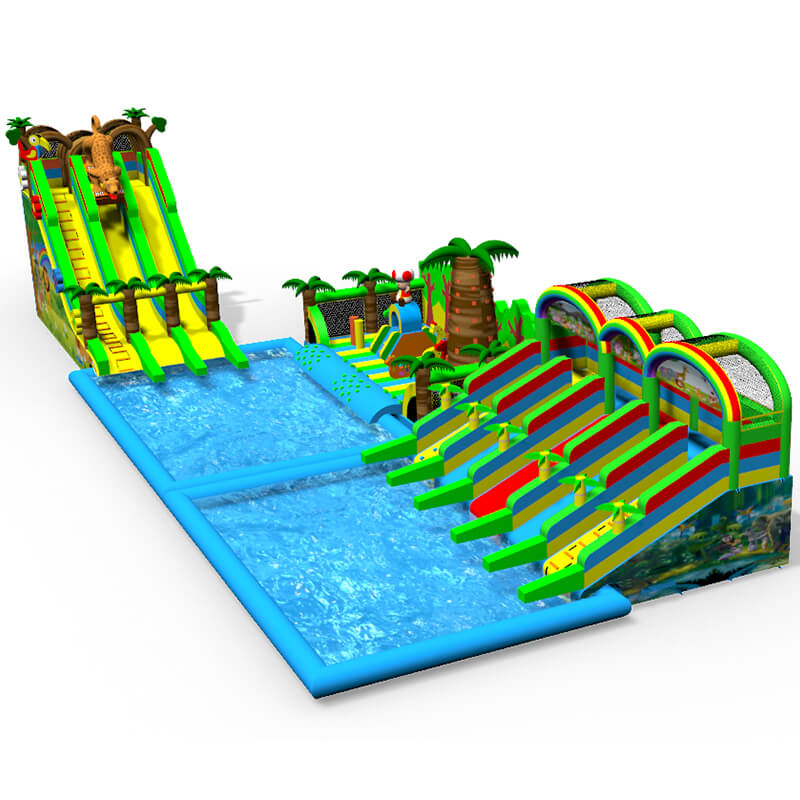
Check out our Commercial Mobile Water Theme Park to see how our elite 1300D engineering makes this maintenance a breeze.
Step 5: The drying phase and moisture control
The bottom line is: moisture is the enemy. Never, ever deflate your park for storage if it's still damp. It's the fastest way to grow a mold colony.
The final stage of Inflatable Water Theme Park Cleaning is the wipe-down. Use microfiber towels on every inch of the automotive-grade webbing and Velcro points.
[Expert Opinion]: "I’ve told clients in Poland and France a thousand times: damp webbing will cause black mold to spread through the whole unit in 48 hours. Don't risk it."
External drying isn't enough. You need to purge the inside. Plug in your CE-certified HW blowers and let them run for 30 minutes while the unit is out of the water.
This "internal purging" forces humid air and condensation out of the baffles. If you skip this, the inside will rot while the outside looks perfect.
Step 6: Professional inspection and safety certification
While the park is clean and dry, do your safety audit. Dirt hides punctures. Clean 0.9mm 1300D PVC reveals every tiny pinhole or loose stitch.
Rigorous Inflatable Water Theme Park Cleaning makes it easy to stay compliant with CE EN14960 protocols. Flawless gear wins the high-paying corporate contracts in Canada or Peru.
If you find a tear, don't use cheap tape. Use 0.9mm replacement patches with industrial MEK-based adhesives. Anything else is just a temporary band-aid.
Want to stop worrying about constant repairs? Upgrade your fleet with zero-maintenance, high-durability materials designed for the long haul.
Step 7: Off-season storage and ROI protection
How you fold the park is just as important as how you wash it. Avoid sharp, hard creases. Roll the 0.9mm PVC loosely to prevent "white stress marks."
Stress marks are permanent damage. They weaken the structure under high-pressure fatigue. Be gentle with your investment and it’ll be gentle with your wallet.
[Industry Slang]: "Taco Folding" – Pro rental teams fold the sides toward the center. This protects the top graphics from getting scratched in the warehouse.
Lastly, keep it in a cool, climate-controlled warehouse. Don't leave a $50k investment in a barn where rodents can nest. That’s just common sense.
For extra tips, check out how to clean floating equipment or learn more about complex waterfront inflatable services for your next installation.
Frequently asked questions (FAQ)
How do I prevent algae growth on commercial lake inflatables?
Regular wet-wiping with a white vinegar solution works wonders. Also, using marine enzymes creates a slippery barrier that stops organic roots from sticking to the 1300D PVC.
What is the safest way to dry a floating obstacle course before storage?
Keep it inflated! Use your HW blowers to maintain pressure while you wipe it down with microfibers. Make sure the D-buckles and YKK zippers are bone dry before you fold them.
Can I use a standard pressure washer for inflatable aqua park cleaning?
Yes, but keep it under 1500 PSI. Use a 40-degree wide-angle tip and stay at least 18 inches away from the seams. Never blast the digital printing directly or you'll peel it right off.
Conclusion
Long story short, Inflatable Water Theme Park Cleaning is a mix of high-quality materials and a military-grade schedule. If you use the right gear, half the battle is won.
When you start with 0.9mm 1300D PVC and YKK hardware, you're already ahead of the game. Protecting your gear from UV chalking and salt corrosion will add years to its life.
[Expert Opinion]: "Maintenance is where you make your money. A 17-year-old CH Inflatable unit that's been cared for will always beat a brand-new, poorly kept unit in safety and looks."
Ready to stop wasting time on repairs and start making real profit? It's time to upgrade to the world's most durable, CE-certified inflatables.
Contact CH Inflatable today for custom, heavy-duty B2B water park solutions!
Figure 2: Inflatable water theme Park Cleaning - Featured Product Detail
[Industry Slang]: "Bumper-to-Bumper" – This means a total inspection. We check everything from the first jump module to the final slide exit. No inch left unchecked.