7 Tactical Steps: Master Inflatable Obstacle Course Cleaning

7 tactical steps: Master inflatable obstacle course cleaning
Stop mold from ruining your rental fleet! Discover 7 pro steps for Inflatable Obstacle Course Cleaning to ensure hygiene and long-term durability. Book your custom unit today.
Introduction
Look, running a high-ROI rental fleet is about more than just chasing bookings. It’s about grit and rigorous maintenance. Over my 17 years in the manufacturing and export game, I’ve seen dozens of businesses go belly up just because they treated their units like disposable toys.
The bottom line is that Inflatable Obstacle Course Cleaning is the single most important factor for protecting your investment. We’re talking about 0.55mm 1300D PVC assets here—high-end gear that deserves respect. If you don't clean right, you're basically throwing money into a moldy pit.
In this guide, CH Inflatable shares the exact blueprint used by top-tier pros from the USA to the UAE. These aren't suggestions; they're the rules of the road for keeping your assets factory-fresh.
1. Pre-cleaning inspection: Identifying high-wear zones
Before you even touch a hose, you’ve got to eyeball the unit. Skipping this visual check is a rookie mistake that costs a fortune. You need to hunt for structural "stress points" where the nasty stuff hides.
As a manufacturer, we push strict 0.55mm PVC Sanitation protocols. Check the vinyl for micro-tears. To be honest, these tiny abrasions are like luxury apartments for bacteria and moisture. Catch them early or pay the price later.
Don't forget the hardware. Proper Stainless D-Buckle Care is non-negotiable for keeping kids safe. Make sure those metal anchor points aren't holding onto grit or sand that acts like sandpaper against your webbing.
| Cleaning Phase | Focus Area | Common Risk |
|---|---|---|
| Dry Phase | Crevices & Seams | Abrasive sand wear |
| Wet Phase | Climb walls & Slides | Sunscreen/Oil buildup |
| Detail Phase | YKK Zipper tracks | Mechanical jamming |
2. Debris removal: The dry-clean phase
Here’s the kicker: never throw water on dry debris. All you’re doing is making mud that’s ten times harder to scrub out. Grab a commercial-grade vacuum and go to town on the grass, sand, and old candy wrappers.
Pay close attention to the tight spots around slide transitions. In the rental trade, we call this "The Crack Hunt." It’s the deep dive into those seams where vertical walls meet the bouncing floor.
https://www.youtube.com/watch?v=k2Z1lHw54dE
I tell my B2B clients in Spain and Poland that these hidden spots are ground zero for mold. If you skip the vacuum here, Inflatable Obstacle Course Cleaning becomes a wasted effort. Check the safety frames for sharp objects like hairpins that love to wedge themselves into our heavy-duty webbing.
3. The deep wash: Choosing the right solution
Stop using bleach. Just stop. It’s corrosive and kills the lifespan of your vinyl. Stick to a pH-neutral, commercial vinyl cleaner. It gets the job done without eating through the material integrity.
For water-based units, you need a mild anti-fungal routine to stop algae before it starts. You can see how we build these high-resilience units here: Inflatable Obstacle Course on Water.
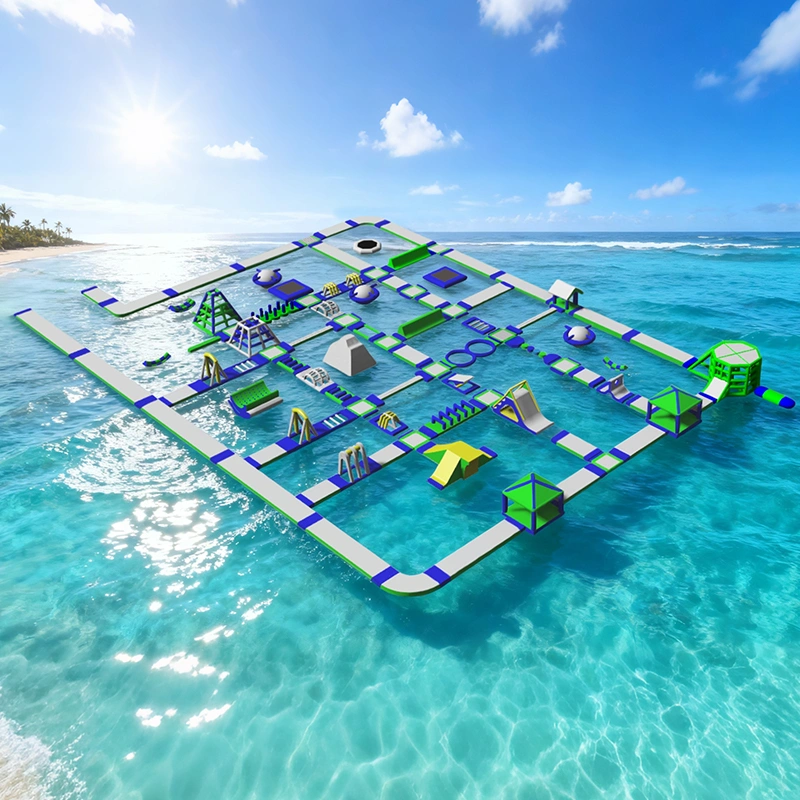
Focus your energy on high-traffic areas like climb walls. Kids leave behind a cocktail of oils and sunscreen that gets slippery and gross. Since we use reinforced corners and double-line stitching, your crew can scrub hard without worrying about the seams popping.
4. Detail work: Zippers and fasteners
The deflation system is the heart of your operation. Proper YKK Zippers Maintenance means your team isn't struggling on-site. Use a soft-bristle brush to clear sand out of the teeth so they slide like butter every time.
I’ve been in this industry for 17 years, and I’ll tell you straight: cheap zippers are the #1 cause of field failures. Investing in authentic YKK parts is what separates a world-class unit from a cheap knockoff. It’s a small detail with a massive impact.
Check those air tubes while you’re at it. If moisture is trapped inside the wind tubes, your blower is going to struggle. Keep them straight and dry to avoid high-pressure fatigue on the surrounding 0.55mm vinyl.
5. Professional drying techniques
Drying is where most people fail. You have to keep the unit fully inflated. Use your CE/UL equipment and follow HW Blower Safety steps to move air through every internal baffle. If it's not inflated, it’s not drying.
What's more, never roll up a damp inflatable. I don't care if it's the most expensive 0.9mm PVC on the market; if you seal in moisture, you’re creating a bio-film. That smell is the scent of your profits rotting away.
If you're dealing with a massive unit after a weekend of rain, double your drying time. It might feel like a hassle, but it’s better than explaining to a client why their "clean" rental smells like a swamp.
6. Sanitation and disinfection
If you're operating in France or the UK, you know the laws are getting tougher. You’ve got to follow CE EN14960 guidelines to stay compliant. Use a specialized, non-slippery disinfectant that’s safe for kids but tough on germs.
Your crew needs to perform "The Hot Spot Wipe-Down." This means zeroing in on handles, netting, and D-buckles—everywhere a sweaty hand touches. It’s about building a reputation for being the cleanest operator in town.
You can see how we design these hot spots for easy access on our Bouncy Castle Inflatable Slide. We make them easy to reach so your team actually does the work.
7. Storage prep: Rolling for protection
The way you fold a unit determines if it lasts 3 years or 10. Always fold the deflated vinyl so the zipper tracks stay flat. This protects your YKK Zippers Maintenance work and prevents those ugly "white stress marks" on the PVC.
A tight, professional roll isn't just about saving space in the warehouse. It eliminates internal friction during transport. If the unit is loose, the vinyl fibers grind against each other every time the truck hits a bump in the road.
Before bagging it, do one last check of the Stainless D-Buckle Care points. Consistent, systematic Inflatable Obstacle Course Cleaning is the only way to ensure you never pull out a moldy surprise at a high-paying Saturday gig.
Expert insights & global standards
Whether you're in the USA or expanding into the UAE, staying insured means staying compliant. Following UL/SGS certificate material standards isn't just a safety thing—it's a legal shield for your business.
- External Resource: View regional standards at Bouncing Buddies.
- External Resource: See high-traffic maintenance in action at We Rent Fun.
Frequently asked questions
How often should I perform a deep Inflatable Obstacle Course Cleaning?
Spot clean after every rental, no excuses. But a full-blown deep clean with anti-microbial treatment should happen every 3-4 weeks—or immediately if it gets rained on. Inflatable Obstacle Course Cleaning frequency is your best insurance policy.
What is the best cleaning solution for 1300D PVC vinyl?
Stick to warm water and a specialized non-corrosive cleaner like Simple Green. You can use "Magic Erasers" for scuffs, but keep them away from custom graphics or you'll scrub the ink right off.
Does CH Inflatable support custom B2B wholesale orders?
Absolutely. We’ve been exporting to Canada, Germany, and beyond for 17 years. Our gear is engineered to make Inflatable Obstacle Course Cleaning fast and painless so you can get back to making money.
Conclusion
Long story short, mastering Inflatable Obstacle Course Cleaning is the difference between a pro and an amateur. By obsessing over YKK Zippers Maintenance, 0.55mm PVC Sanitation, and HW Blower Safety, you’re securing your cash flow for years to come.
At CH Inflatable, we’ve got your back. We offer full B2B customization and double-stitched durability that stands up to the real world. Stop settling for low-tier gear that's impossible to keep clean.
[Contact CH Inflatable Today for Wholesale Custom Orders]
Image by: CRISTIAN CAMILO ESTRADA
https://www.pexels.com/@cristian-camilo-estrada-2152272341