
Inflatable Slide Maintenance Guide: 6 Tips

Inflatable Slide Maintenance Guide: Complete Tips to Extend Lifespan & Keep Safe
Why Proper Inflatable Slide Maintenance Matters
Inflatable slides—whether for home backyard use, small commercial rental, or outdoor family events—are made of durable PVC vinyl, but they require consistent, proper care to stay in good condition. Skipping basic maintenance steps often leads to mold growth, material cracking, surface tears, and shortened lifespan, not to mention safety risks for kids and other users. Following a structured maintenance routine focused on cleaning, thorough drying, and proper storage is the most effective way to protect your investment, keep the slide hygienic, and ensure safe use every time. This guide follows professional outdoor play equipment care standards, with practical, easy-to-follow steps for both daily use and long-term storage.
Core Maintenance Rule: Never rush the drying process—moisture trapped inside the slide is the top cause of mold, mildew, and PVC material degradation. Every maintenance step revolves around keeping the slide clean, dry, and protected from damage.
Daily & After-Use Maintenance: Quick Routine for Longevity
Consistent after-use care is the foundation of inflatable slide maintenance, and it only takes a few minutes each time. This routine prevents dirt buildup, stops mold from forming, and avoids unnecessary wear on the vinyl surface, making it perfect for home users and frequent small-scale use.
1. Proper Surface Cleaning (Before Deflating)
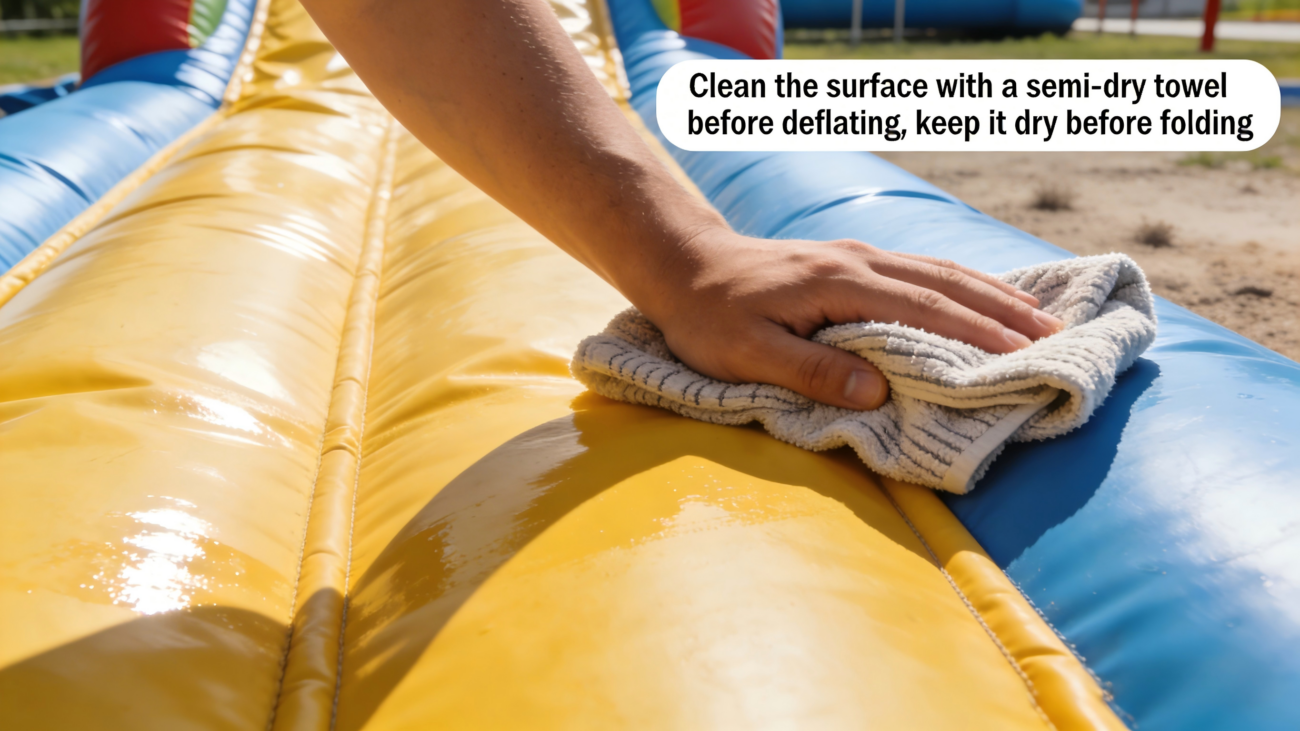
Always clean the slide before deflating it—a fully inflated slide keeps the surface taut and flat, so you can reach every corner without missing hidden dirt. Use a soft, lint-free microfiber towel dampened with clean water (a semi-dry towel is ideal) to wipe down the entire surface, including slide lanes, steps, handrails, and bottom edges. Focus on removing dust, sand, food crumbs, grass clippings, and light stains left from use.
Avoid heavy scrubbing, harsh soaps, or abrasive cleaners at this stage—daily light wiping is enough to keep the surface clean, and harsh products can break down the PVC’s protective coating over time. For light sticky spots, a small amount of mild, neutral dish soap mixed with water works, but always wipe away soap residue completely with a clean damp towel.
2. Thorough Drying: No Moisture Left Behind
This is the most critical step in daily maintenance. After wiping clean, leave the slide fully inflated and place it in a shady, well-ventilated area to air dry completely. Do NOT deflate or fold the slide if the surface or inner layers feel damp, even slightly damp. Trapped moisture will quickly breed mold and mildew, which stains the vinyl, creates unpleasant odors, and weakens the material over time.
If the slide feels damp inside (common on humid days or after light rain), keep the blower running for 10-15 minutes to circulate air and dry inner crevices—this extra step eliminates hidden moisture that a surface wipe can’t reach.
3. Immediate Storage Prep
Once the slide is 100% dry (both outer surface and inner air pockets), slowly deflate it following the manufacturer’s instructions. Fold it neatly and store it right away in a cool, clean, and dry space—avoid leaving it deflated on damp ground or in direct sunlight for extended periods. Proper immediate storage prevents accidental damage and keeps dirt from settling back onto the clean surface.
Long-Term Storage Maintenance: For Seasonal or Extended Non-Use
If you won’t be using the inflatable slide for weeks or months (such as winter storage, off-season for commercial rentals), extra care is required to prevent mold, insect damage, and material aging. Follow these professional long-term storage steps to keep the slide in perfect condition.
1. Pre-Storage Deep Care & Full Drying
Before packing it away long-term, repeat the full cleaning process: wipe the entire surface, treat any light stains with mild neutral cleaner, and dry the slide twice as long as you would for daily use. Double-check inner layers, seams, and corner crevices for hidden moisture—use the blower to fully air out the inside until it’s completely dry to the touch. Even a small amount of dampness will ruin the slide during long-term storage.
2. Regular Storage Checks
Don’t store and forget it! Set a schedule to check on the slide every 2-3 weeks. Inspect for signs of dampness, mold, mildew, or insect/mouse infestation. If you notice any dampness, take it out, reinflate it, and dry it fully again before repacking. Occasional gentle wiping during checks also keeps dust from building up and maintains the vinyl’s flexibility.
3. Blower/Inflator Maintenance (Key Accessory Care)
The blower is the core accessory of the inflatable slide, and its maintenance is just as important as the slide itself. Always store the blower in a dry, ventilated area—never store it in a damp basement, garage, or with the slide if the storage space is humid. Keep the blower away from water, dust, and sharp objects, and check the power cord and air outlet for blockages before each use to avoid motor damage. Never run the blower if it’s damp or wet.
Critical Usage & Safety Precautions to Prevent Damage
Maintenance isn’t just about cleaning and storage—safe daily use directly prevents avoidable tears and wear, protecting the slide and keeping users safe. These non-negotiable rules are essential for all inflatable slide users.
- Avoid Sharp Objects at All Times: Keep the slide far away from branches, wires, rocks, metal tools, jewelry, and any sharp or rough items that can puncture or scratch the PVC vinyl. Even small scratches can turn into big tears over time, and punctures are hard to repair permanently. Make sure users remove sharp accessories before playing.
- Follow Weight & User Limits: Never overload the slide—strictly follow the manufacturer’s stated weight capacity and number of users at one time. Overloading strains the seams and vinyl, leading to stretching, tearing, and structural damage, and also creates fall risks for users.
- No Prolonged Direct Sun Exposure: While the slide needs ventilation to dry, avoid leaving it inflated in direct, intense sunlight for hours on end. UV rays break down PVC material, causing it to become brittle, fade in color, and crack prematurely. Always dry it in shade and cover or store it when not in use.
Final Takeaways
Proper inflatable slide maintenance is simple and consistent: clean before deflating, dry completely, store in a cool dry place, and protect from sharp damage and UV rays. These small, regular steps take minimal time but drastically extend the lifespan of your inflatable slide, keep it hygienic for kids and guests, and reduce the need for costly repairs or replacements.
By following this professional, experience-backed guide, you’ll ensure your inflatable slide stays safe, functional, and in great condition for years of use—whether it’s a backyard toy for your family or a small commercial rental item. Trustworthy, practical care is the key to getting the most out of your inflatable play equipment.