
4 Steps to Cleaning Inflatable Slides

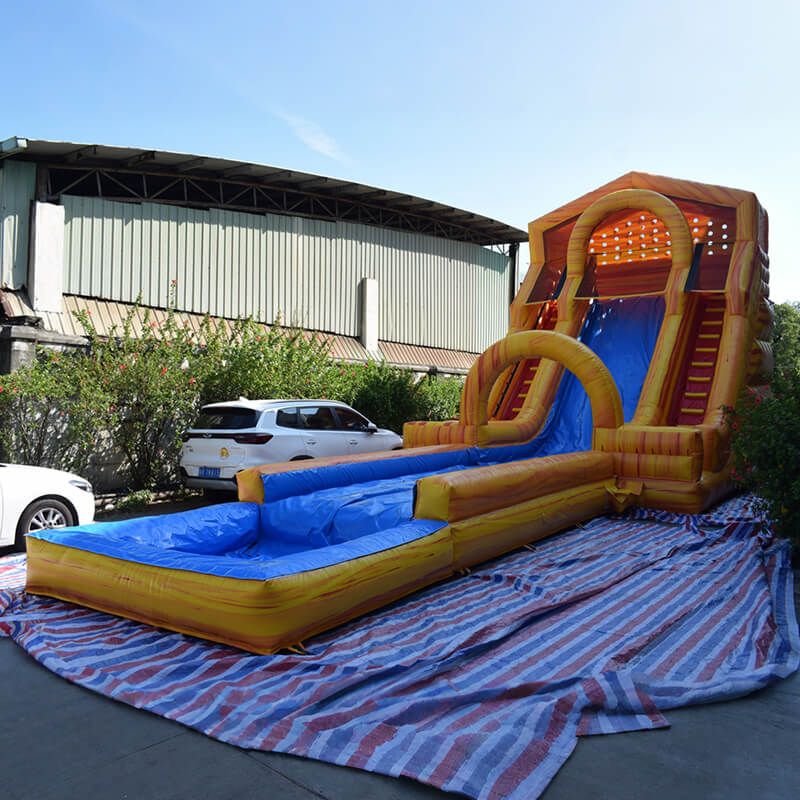
Complete Cleaning Guide for Inflatable Slides: Correct Steps, Mold Removal Techniques, and Storage Precautions (Even Beginners Can Learn)
Those who own inflatable slides, run small playgrounds, or organize outdoor activities for families have likely encountered this problem: after a few uses, the slide surface is covered in sand, snack stains, and mold easily grows in the corners. A quick wipe risks damaging the coating, and damp storage will only lead to mold and ruin. Actually, cleaning inflatable slides isn't complicated. By mastering the correct inflatable cleaning method and following the steps, you can thoroughly remove dirt while protecting the slide material and extending its lifespan.
This article will explain the complete cleaning method for inflatable slides in detail, following the most practical and safe process. It covers preparation, daily cleaning, mold removal, stubborn stain removal, as well as drying and storage, and avoiding common pitfalls. The entire process follows professional playground equipment maintenance logic, making it easy for beginners to follow and preventing damage to the slide due to operational errors.
Core Cleaning Principle: Inflatable slides must be cleaned while fully inflated. This is the most crucial first step! After inflation, the slide surface is flat and taut, with all corners and wrinkles unfolded. This not only cleans away debris hidden in the crevices but also prevents scratches on the coating when folded, while preventing moisture from seeping in and causing it to dry.
I. Preparation Before Cleaning: These Steps Will Prevent Scratches
Cleaning preparation may seem simple, but it directly affects the slide's lifespan. Many people overlook this step, directly wiping with hard tools, which scratches the surface coating and makes it easier for dirt to accumulate, leading to aging and damage later. During preparation, be sure to do the following three things:
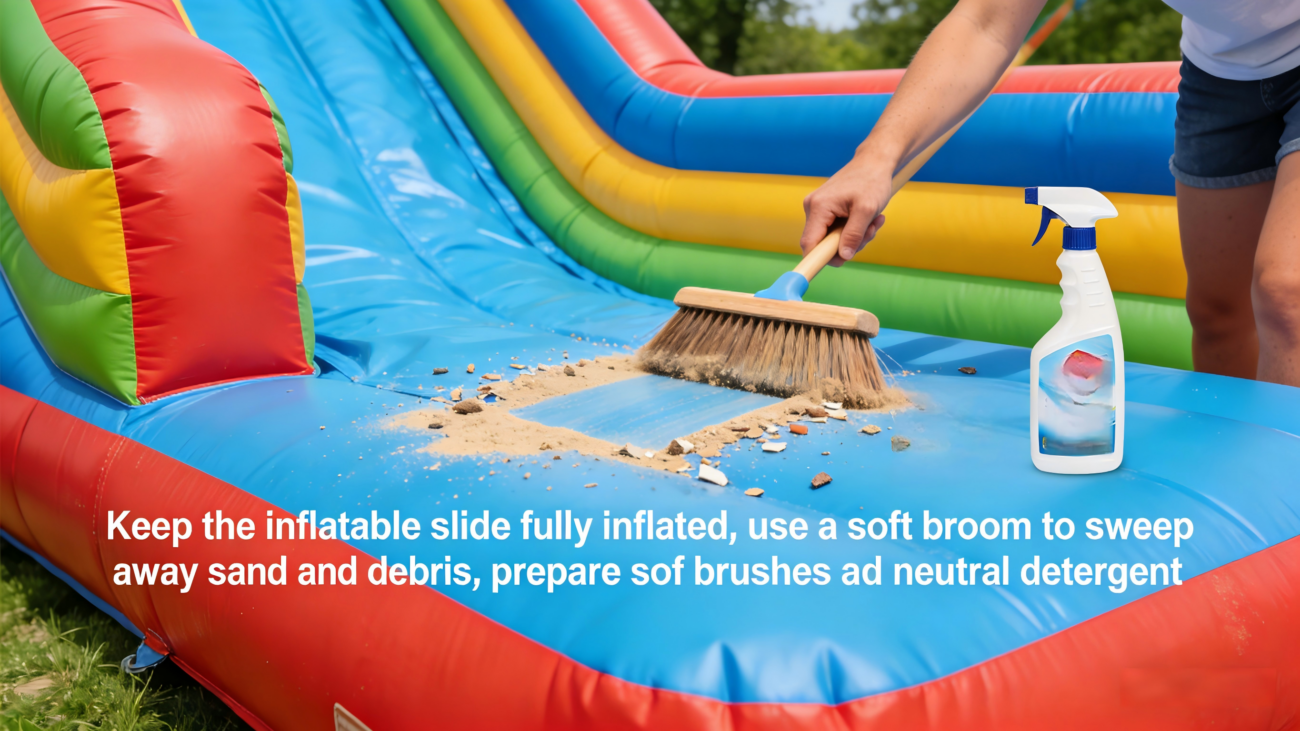
- Maintain Full Inflation: Connect the ventilation fan to ensure the slide is fully inflated, with no collapsed or wrinkled areas, especially in areas prone to dirt accumulation such as the slide track, handrails, and bottom corners. After inflation, fully unfold the slide for thorough cleaning and facilitates subsequent inspection for damage or leaks.
- Thoroughly remove dust and debris: First, gently sweep the slide surface with a soft-bristled broom to remove loose soil, sand, leaves, snack crumbs, small pebbles, etc. Pay special attention to cleaning the slide, steps, and corners and crevices, as these areas are most prone to sand and dirt accumulation. Direct wiping will abrade sand particles into the coating, causing minor scratches.
- Prepare gentle cleaning tools: Use a soft-bristled brush, a pure cotton cloth, or a sponge. Never use steel wool, hard-bristled brushes, or abrasive cleaning brushes. Inspect the surface of the tools beforehand to ensure there are no sharp edges or hard protrusions to avoid scratching the slide's PVC waterproof coating. Prioritize dish soap, neutral soapy water, or a special plastic cleaner. Avoid strong acids, alkalis, bleach, and undiluted disinfectants to prevent corrosion of the coating and fading or aging.
II. Stain Removal by Type: Handling Everyday Stains, Mildew, and Stubborn Oil Stains
Different stains require different cleaning methods. Blindly using strong detergents can damage the slide. Targeted treatment based on stain type ensures thorough cleaning while protecting the material. The specific steps are divided into three categories:
- Cleaning Everyday Common Stains
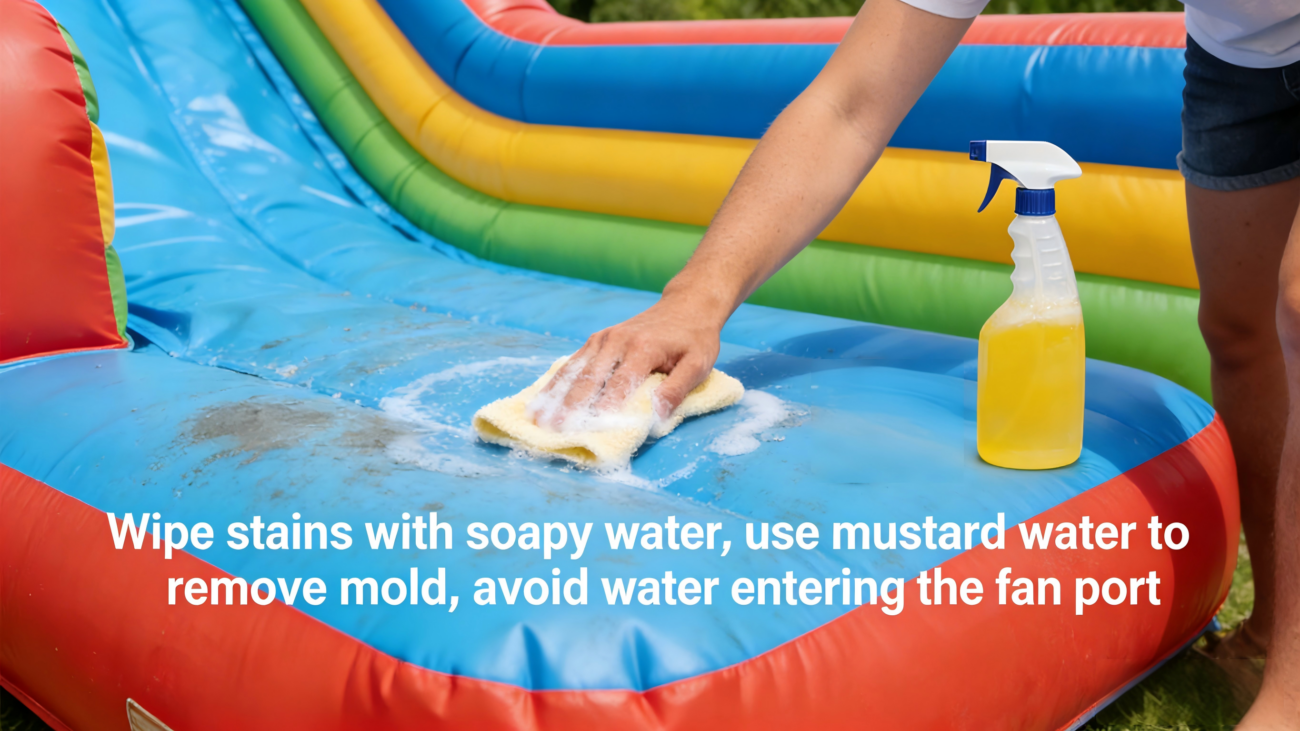
For regular dirt such as footprints, light sweat stains, and snack stains left after playing, the simplest method is: Wet a soft-bristled brush or cloth with clean water, wring out excess water, then apply a small amount of diluted neutral detergent. Gently wipe the stained area, following the texture of the coating. Do not rub vigorously or repeatedly. After wiping, wipe again with a clean, damp cloth to ensure no detergent residue remains.
- Specific Treatment Method for Mold Stains/Spots (Sterilizes and Prevents Mold Without Damaging Materials)
In humid weather or when slides aren't completely dry before storage, black or brown mold spots easily develop. Ordinary dish soap can't remove them, and they tend to accumulate. Here's a safe and effective mustard water method for removing mold. It gently sterilizes, doesn't damage the coating, and is safer than bleach:
First, mix 4-5 cm of mustard paste with 200 ml of water to make mustard water. Wipe away any surface dirt with dish soap. Then, use a cloth to apply the diluted mustard water gently to the mold spots. Let it sit for 3-5 minutes to allow it to sterilize. Afterward, wipe it clean with water. The mold spots will be removed, and it also provides short-term mold prevention. Do not apply the undiluted solution directly to avoid irritating the material with excessive local concentration.
- Removing Stubborn Oil Stains/Heavy Stains
If the slide gets oily or stubborn sticky stains, do not use strong degreasers. Prepare warm soapy water (water temperature not exceeding 40℃ to avoid damaging the coating adhesive). Use a soft-bristled brush dipped in the warm soapy water to gently scrub the oily area. Repeat several times until the stain is removed. Then rinse thoroughly with clean water to remove any residue.
Key Avoidance Tips: When cleaning, be sure to avoid the fan and power interface areas. Do not allow water to flow directly into the slide to prevent damage to the fan and potential safety hazards. After wiping with any cleaning agent, rinse thoroughly with clean water to prevent residue from making the slide surface sticky and attracting dust, which will be more difficult to clean later.
III. Thorough Drying and Proper Storage: Preventing Mold and Extending Slide Lifespan
Cleaning is not the end; drying and storage are the most easily overlooked steps. Deflating and folding the slide while it's damp is a major cause of mold, unpleasant odors, and glue aging. Please strictly follow these steps:
- Complete Natural Air Drying, Never Store Damp: After cleaning, place the slide in a cool, well-ventilated place to air dry the surface and interior moisture naturally. Do not deflate it during this process. If it rains, the air humidity is high, or the slide is damp inside, be sure to connect a fan and use it continuously to blow air until all internal moisture is completely dried. Only proceed to the next step after the slide feels completely dry to the touch.
- Pre-Storage Inspection and Simple Disinfection: Before long-term storage, carefully inspect the slide surface for moisture, damage, leaks, and scratches. Once confirmed intact, spray a thin layer of a special plastic anti-mold agent (avoiding the fan area) to further prevent mold growth.
- Proper Folding and Storage: Turn off the fan and slowly deflate the slide only after it is completely dry. Do not pull on the slide forcefully. When folding, follow the rule of black side outwards, rolling it slowly to reduce wrinkles and creases. Store in a well-ventilated, dry, and cool storage room, away from damp floors and corners. Protect the slide from rodents and insects that could damage the material.
IV. Important Precautions: These 4 Things Must Not Be Done
To ensure your inflatable slide lasts a long time, remember these taboos and avoid these mistakes to significantly extend its lifespan:
- Do Not Use Hard Cleaning Tools: Never use steel wool, hard-bristled brushes, steel wool, or abrasive cleaning blocks. These tools will directly damage the waterproof PVC coating on the slide's surface. Once the coating is damaged, the slide will easily leak air, get wet, and mold, and it will be irreparable.
- Avoid prolonged exposure to direct sunlight: While inflatable slides need ventilation, they should never be left in direct sunlight for extended periods. High temperatures will cause the slide material to age, the glue to crack, the color to fade, and it to become brittle and easily broken. Simply air dry in a cool, well-ventilated place.
- Never machine wash: Inflatable slides are large and have specialized fan and electrical components. Putting them directly into a washing machine will not only damage the slide but also the fan, creating a safety hazard. They must be cleaned manually.
- Avoid using strong acid or alkaline cleaners: Avoid bleach, undiluted bleach, and strong kitchen descaling agents. These cleaners are highly corrosive and will damage the slide material, causing it to harden, crack, and fade.
Conclusion
The core of cleaning inflatable slides lies in inflating them for cleaning, gentle stain removal, thorough drying, and proper storage. While the steps may seem tedious, each operation only takes about ten minutes. Proper daily cleaning and maintenance not only keeps the slide clean and hygienic, giving children peace of mind while playing, but also effectively prevents mold and damage, saving on frequent replacement costs.
Whether it's a home-use children's inflatable slide or a small commercial inflatable playground device, following this cleaning method will keep it in good working order. Don't panic if you encounter mold or stubborn stains; simply follow the steps to easily solve the problem.