
5 Critical Rules for Inflatable Bounce House Underlayment

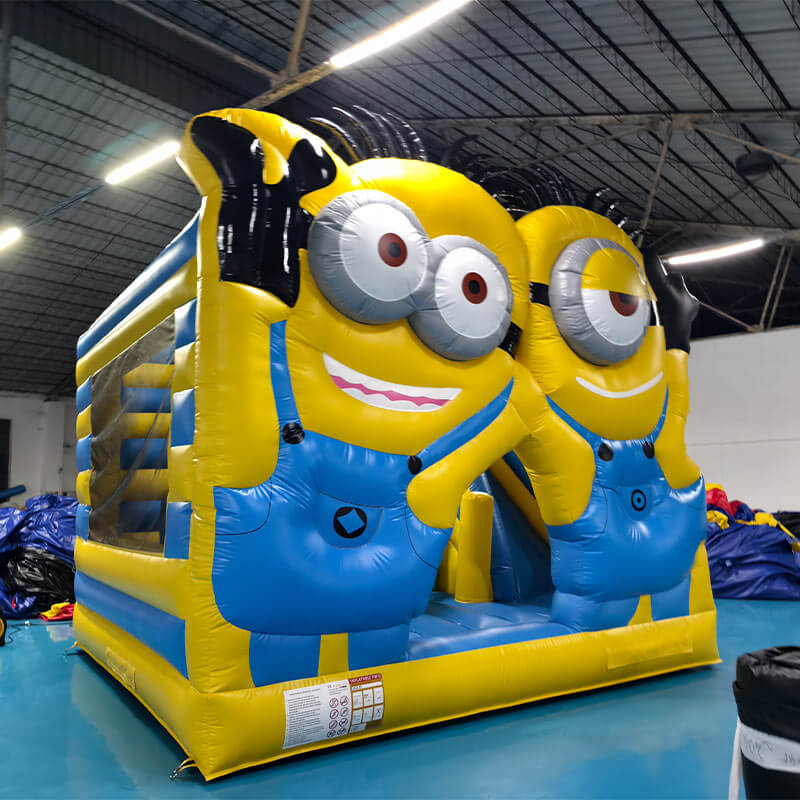
5 critical rules for inflatable bounce house underlayment
Protect your assets, plain and simple. Discover 5 critical rules for Inflatable Bounce House Underlayment.
Prevent nasty PVC abrasion and boost longevity. Read now!
Introduction
Picture this scenario. It is Monday morning. You are flipping over a unit after a weekend rental at a local festival.
Your stomach drops. The bottom of your expensive investment is scuffed, worn thin, or worse—punctured by rocks you didn't see.
That is every rental business owner's worst nightmare. But here is the kicker: it is entirely preventable.
The solution isn't just buying better repair kits. It is about implementing a strict protocol for using a proper Inflatable Bounce House Underlayment.
Think of this humble sheet not merely as an accessory. Treat it as an insurance policy for your entire inventory of bounce houses and water slides.
At CH Inflatable, we have spent 17 years manufacturing commercial-grade units. We use high-grade 0.55mm 1300D PVC for our bouncers and even tougher 0.9mm PVC for our water parks.
Yet, we tell all our clients the same thing. Even the toughest material has an enemy, and that enemy is the ground.
Whether you are setting up in the US, Germany, or the Middle East, the ground surface is abrasive.
Following these 5 critical rules will extend the life of your equipment. It reduces repair costs and significantly improves the professional look of your setup.
Rule 1: Prioritize material quality for your protective tarpaulin base
Why standard "blue tarps" fail
If you are buying your ground sheets from a local dollar store or hardware depot, stop immediately.
Those woven polyethylene "blue tarps" are designed for covering woodpiles, not for protecting commercial inflatables.
In my experience, these cheap tarps wrinkle instantly. They tear under the weight of a 300lb bounce house, offering zero effective ground sheet protection.
When a child jumps, the inflatable shifts. A thin tarp bunches up, exposing the bottom of the unit to the ground. That defeats the entire purpose.
The gold standard: PVC vinyl underlayment
In our 17 years of manufacturing, we've seen that matching the underlayment material to the inflatable's base material helps.
Using PVC reduces friction coefficients significantly compared to rough poly tarps.
Ideally, your protective tarpaulin base should be made of 18oz vinyl scraps or heavy-duty specialized tarp material. This creates a slick surface between the ground and the unit.
When you use heavy-duty PVC—similar to the material used in CH Inflatable products—you create a barrier that moves with the unit rather than abrading against it.
For a deeper understanding of the chemistry behind these materials, you can Learn more about industrial PVC materials to see why composition matters.
| Feature | Generic Blue Poly Tarp | Commercial PVC Underlayment |
|---|---|---|
| Durability | Tears easily, lasts 1-3 uses | Heavy-duty, lasts years |
| Friction | Rough surface, increases drag | Slick surface, slides with unit |
| Waterproof | Loses coating quickly | 100% Waterproof & Mold Resistant |
| Protection Level | Low (Thin layer) | High (Thick barrier) |
Rule 2: Mastering setup surface friction and PVC abrasion resistance
Concrete vs. grass: the friction factor
Not all install sites are created equal. An indoor gym floor is forgiving; a concrete parking lot is brutal.
When a 500lb unit is placed on concrete or asphalt, the micro-movements caused by children jumping act like sandpaper on the unit's base.
This is where Inflatable Bounce House Underlayment becomes non-negotiable. You have to account for PVC abrasion resistance.
Without a thick barrier, the concrete will win. I have seen units wear through the bottom stitching in a single season because the operator ignored this rule.
Minimizing heat transfer and moisture
It is not just about friction. Heat and water are silent killers.
- Asphalt: On a hot summer day, asphalt can reach temperatures that soften PVC. A thick underlayment acts as a thermal break.
- Grass: Grass holds moisture. Without a proper sheet, water wicks into the stitching, leading to mold inside the baffles.
This makes ground sheet protection critical for heavier units that exert more pressure on the ground.
For example, commercial units like the Dinosaur Theme Bounce House are heavy and create significant ground pressure, requiring a flawless friction barrier.
Rule 3: The "footprint" strategy – sizing your ground sheet protection
The 3-foot rule
Size matters here. A common rookie mistake is using an underlayment that is the exact same size as the bounce house.
This is insufficient. In the industry, we call this the "Footprint."
The golden rule is that the Inflatable Bounce House Underlayment should extend at least 2 to 3 feet (approx. 1 meter) beyond the inflatable unit on all sides.
Why? Because inflatables flex. Walls push out. If your tarp is exactly 15x15 for a 15x15 bouncer, the edges will expose themselves.
Your unit will rub against the grass or dirt every time a kid bounces against the wall.
Entry and exit protection
You also need to cover the "Strike Zone." This is the area where children take off their shoes and enter the unit.
This area experiences high traffic. If kids challenge the grass or dirt right before stepping on, they drag abrasive debris into the castle.
We recommend sourcing custom-sized tarps or combining multiple sheets to ensure the entrance is covered for at least 6 feet out.
If you need to find raw materials for this, you can look into Sourcing heavy-duty tarp materials to build your own custom footprints.
Rule 4: Proper anchoring and safety protocols
Securing the underlayment
Never assume the weight of the bounce house will hold the underlayment in place. It won't.
Wind can lift the edges of the tarp, or the shifting of the unit can cause the tarp to bunch up underneath.
A bunched-up tarp creates an uneven jumping surface. That is a massive safety hazard.
You should stake down the Inflatable Bounce House Underlayment separately from the inflatable.
Pull it taut and secure the corners with flat-head stakes that won't puncture the inflatable if it shifts over them.
Managing trip hazards
Safety is paramount. A loose tarp is a trip hazard for parents and supervisors walking around the unit.
At CH Inflatable, we equip our units with upgraded stainless steel D-buckles. These are rust-proof and durable. However, they are metal.
Ensuring your underlayment is flat and taut prevents these D-buckles from getting caught in loose folds of the tarp.
If they catch, it could cause tearing. Proper tension on your ground sheet ensures the entire setup works as a cohesive system.
Rule 5: Hygiene and equipment longevity
Preventing cross-contamination
Think about your warehouse workflow. Do you really want to spend hours scrubbing mud and grass stains off the bottom of your inflatables?
A high-quality Inflatable Bounce House Underlayment acts as a hygiene shield. It keeps the bottom of the inflatable "rental-ready" clean.
When you pack up, you fold the dirty side of the tarp in on itself. The bottom of your expensive unit remains pristine.
This saves you countless hours of washing time back at the warehouse.
Enhancing visual appeal for clients
Perception is everything in the event business.
A clean, professional ground sheet looks far better to parents and event organizers than a unit sitting directly on dirt or patchy grass.
It shows you care about your equipment and their safety. This is especially true for high-end, visually striking units.
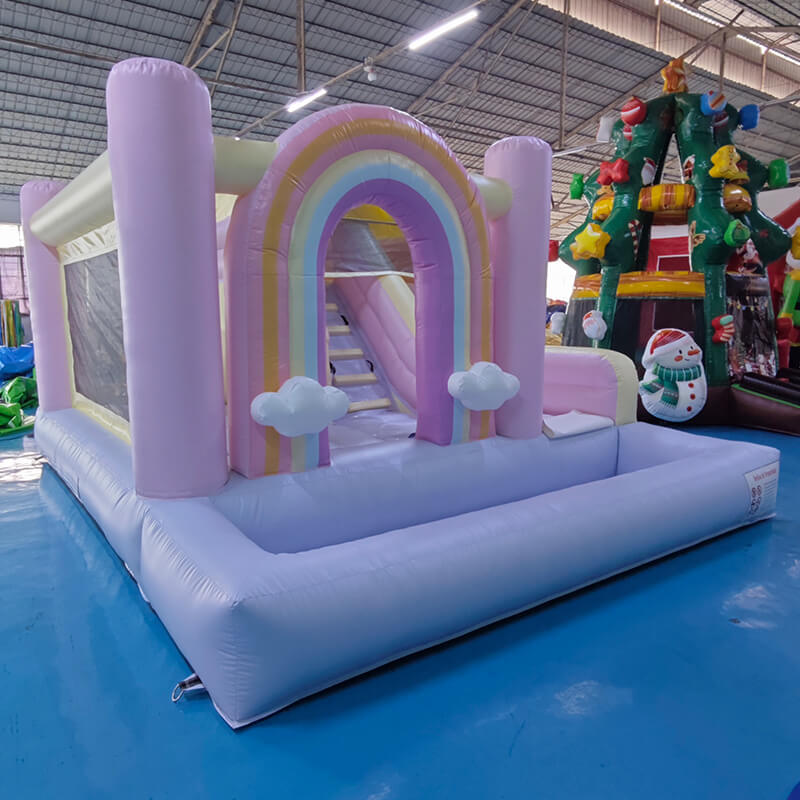
High-end units like the Macaron-colored Inflatable Jumping Castle with Slide require pristine setups to maintain their aesthetic appeal and command higher rental prices.
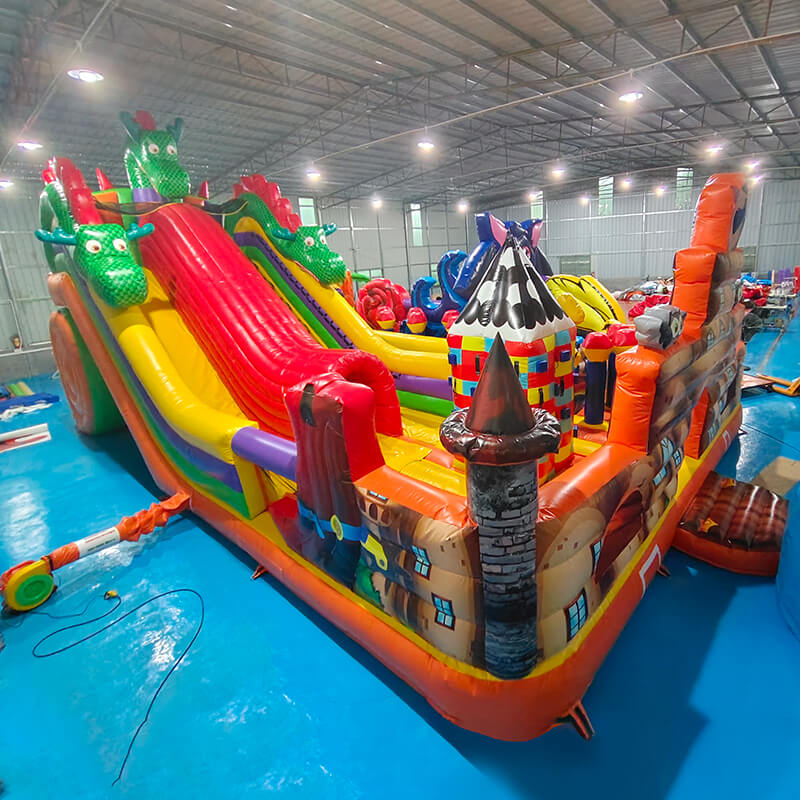
Video guide: mistakes to avoid when buying and setting up
To better understand Inflatable Bounce House Underlayment and general setup mistakes that can ruin your gear, this video tutorial is highly recommended:
https://www.youtube.com/watch?v=F5tok4Vy67E
Why CH Inflatable units are worth protecting
Superior craftsmanship requires superior care
Why do we emphasize ground sheet protection so much?
Because we build our units to last, and we want you to get the maximum ROI.
CH Inflatable units are constructed with:
- 0.55mm 1300D PVC for land units and bounce houses.
- 0.9mm 1300D PVC for water slides and parks.
- Double stitching throughout, with quadruple stitching at stress points.
- Reinforced corners and webbing upgraded to automotive seatbelt quality.
We offer a "Turn-key Setup" mentality. When you buy from us, you are buying a commercial asset.
Built for the rental business
Our products feature YKK zippers (high strength, hard to deform) and come with HW CE-certified blowers.
While CH Inflatable products are built tough, pairing them with the right setup surface friction strategies ensures they last over 5+ years of intense commercial use.
As we often say in the factory: "We build our inflatables with reinforced bottoms, but the underlayment is the sacrificial layer that protects your ROI."
Frequently Asked Questions (FAQ)
What is the best material for a bounce house underlayment?
Ideally, you should use 18oz vinyl (PVC) scraps or heavy-duty poly tarps (often silver or black). Avoid the thin, blue DIY store tarps as they rip easily and offer poor Inflatable Bounce House Underlayment protection.
How much larger should the ground sheet be than the inflatable unit?
It should extend at least 2 to 3 feet (approx. 1 meter) on all sides. It is critical to specifically cover the entrance/exit area where shoes are stored to prevent dirt ingress.
Can I use carpet as an underlayment?
This is not recommended for outdoor use. Carpet absorbs water from the grass and becomes incredibly heavy and prone to mold. It creates a "Load-in/Load-out" nightmare if it rains. Carpet is best reserved for indoor gym floors only to protect the varnish.
Bottom line
Long story short, protecting your fleet comes down to five rules. You need heavy-duty material, managed surface friction, and a proper "footprint" size.
You also need to anchor correctly and maintain hygiene.
Implementing a strict Inflatable Bounce House Underlayment protocol is the hallmark of a professional rental company.
It protects your inventory—like the premium units from CH Inflatable—and ensures client satisfaction. Don't let abrasion eat away your profits.
Ready to upgrade your rental fleet with durable, commercial-grade inflatables? Browse our latest collections of Bounce Houses and Water Slides at CH Inflatable today and ask about our customization options!