
Eliminate Inflatable Slide Water Pooling: 5 Expert Fixes

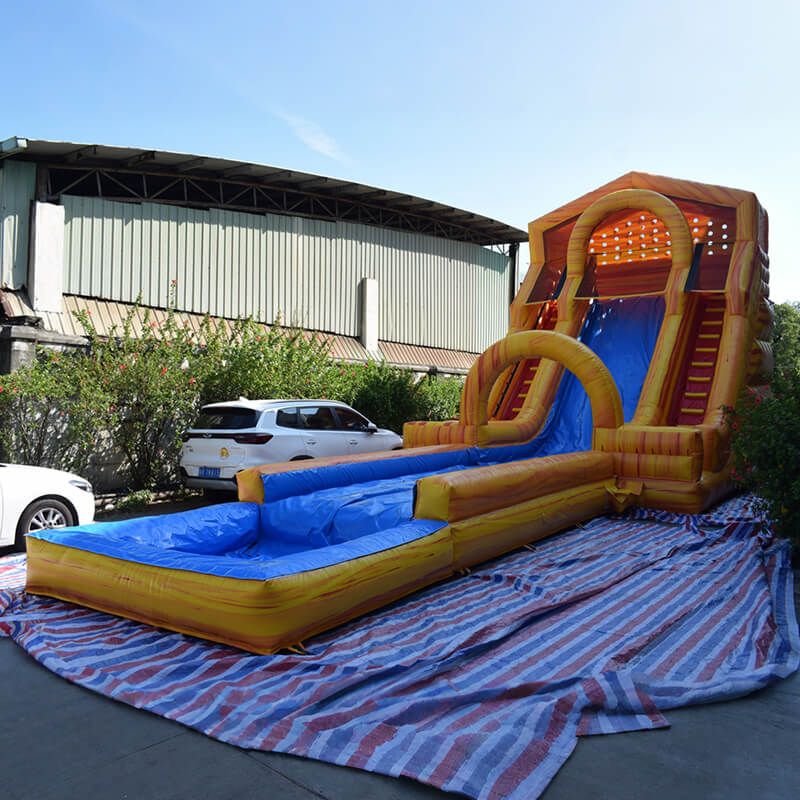
Eliminate Inflatable Slide Water Pooling: 5 expert fixes
Stop damage now. Discover 5 expert tactics to eliminate Inflatable Slide Water Pooling. Protect your PVC assets and ensure safe rentals. Read more!
Introduction
Imagine the scenario: It is Monday morning. You stick the key in the ignition and drive your truck to a client's backyard for a pickup.
The party is over, but to be honest, your nightmare is just beginning. You find your unit sagging, heavy, and holding gallons of stagnant rainwater in the landing zone.
This isn't just a hassle; it is a straight-up profit killer. Inflatable Slide Water Pooling is the silent destroyer of B2B rental inventories across the USA, Europe, and generally the whole world.
When water sits on vinyl for too long, it creates immense stress on the seams. We call it "The Sag."
Inflatable Slide Water Pooling accelerates hydrolysis, promotes nasty mold growth, and can result in safety hazards that violate strict standards like EN14960.
As a manufacturer at CH Inflatable with 17 years in the game, I have seen thousands of units return for repairs that could have been totally avoided.
We know that solving this issue starts with design—using 0.55mm 1300D PVC—but it also takes some operational grit.
Whether you are running a rental business in Germany, France, or California, here are the 5 expert fixes to keep your slides dry, durable, and making money.
The root causes of water accumulation
Before we fix the problem, we have to look at the anatomy of a disaster. Why does water gather in specific spots?
Why anatomy matters: internal baffle structure
The skeleton of any inflatable is its internal baffle structure. These are the fabric walls inside that actually give the slide its shape.
In cheaper units, or gear that has been abused, these baffles stretch unevenly. When that internal structure weakens, the external surface dips.
This creates a "bowl" effect. Instead of shedding water, the vinyl sags, practically inviting Inflatable Slide Water Pooling to happen.
Over time, if you do not focus on preventing sagging vinyl, the weight of the water will permanently deform the PVC.
We usually see this happen specifically in the landing areas or right in the middle of the climbing lane.
The role of stitching and seams
Water is opportunistic. It will find the path of least resistance every single time.
If your slide lacks reinforced seams, water seeps through the needle holes. Once inside the unit, it gets trapped between the layers.
We call this "Ghosting" in the industry. It's a pain to dry out.
"Ghosting" often leads to "Gator Skin," where the PVC coating begins to bubble and peel away from the mesh due to internal moisture.
At CH Inflatable, we combat this with double stitching and reinforced corner technology.
However, even the best stitching needs help from proper air pressure to prevent Inflatable Slide Water Pooling.
Fix #1: Optimizing structural tension via blowers
The number one reason for water accumulation? Insufficient air pressure. If the slide is soft, it inevitably cups water.
Selecting the right blower power
To eliminate Inflatable Slide Water Pooling, your unit must be "rock hard" to the touch.
Think about it: A firm surface is convex; it naturally pushes water off to the sides. A soft surface is concave; it acts like a bucket.
Many rental operators try to save a few bucks by using underpowered blowers or old fans that have lost torque. This is a massive mistake.
We strictly supply HW brand blowers (CE certified) with our units. These provide the consistent, high-static pressure required to keep the vinyl taut against rain.
Managing air loss and zippers
Even the best blower cannot compensate for massive air leaks.
You need to regularly check your zipper deflation flaps. If the velcro covering the zipper is worn, air escapes rapidly.
At CH Inflatable, we use YKK zippers across our product lines. These are high-strength and resist deformation, ensuring the air stays inside where it belongs.
Proper PVC vinyl tensioning is simply impossible if your outlets are leaking like a sieve.
For a broader understanding of industry standards regarding air pressure and bounce, you can reference general safety protocols here: Commercial Water Slides | Magic Jump.
Fix #2: Mastering drainage flap positioning
Design plays a huge role here. If the manufacturer didn't plan for water, you are fighting a losing battle against gravity.
Strategic outlet placement
A professional commercial slide is designed so that gravity does the work for you.
We engineer our slides with specific drainage flap positioning. These outlets are placed at the lowest points of the base but protected by verify flaps to prevent air loss.
When Inflatable Slide Water Pooling occurs, it is often because these flaps are blocked or buried in mud.
Ensure your setup crew creates a clear path for water to exit the base of the unit.
Field adjustments for uneven ground
Here is an expert opinion from my 17 years in manufacturing: 90% of pooling complaints are actually due to uneven setup surfaces, not the slide itself.
If you set up a slide on a slight back-slope, water will naturally pool at the bottom of the slide lane rather than draining out the end.
- Always bring a level to the site.
- Shim the front of the slide if necessary to ensure a positive slope.
- Ensure the landing zone is slightly lower than the slide body.
If the ground is uneven, Inflatable Slide Water Pooling is guaranteed, regardless of the brand you buy.
Fix #3: Utilizing advanced material technologies
Look, not all vinyl is created equal. The stiffness of the material dictates how much it will sag under the weight of rain.
The 0.55mm vs. 0.9mm PVC difference
In the rental industry, material choice is critical.
For standard dry/wet slides, we use 0.55mm 1300D PVC. This offers the perfect balance—it is light enough to transport but rigid enough to hold its shape.
For sealed water parks or permanent installations, we upgrade to 0.9mm PVC.
If you use consumer-grade nylon (often found in big box stores), Inflatable Slide Water Pooling is unavoidable because the fabric stretches when wet.
We have applied this robust material technology to our popular marine-themed units.
Shark inflatable bounce house with slide
This specific unit utilizes the reinforced baffles we discussed earlier, ensuring that even during a heavy downpour, the roof structure pushes water away rather than collecting it.
To help you compare, here is a breakdown of why material thickness matters for Inflatable Slide Water Pooling:
| Feature | Consumer Grade (Nylon) | Commercial Grade (0.55mm PVC) |
|---|---|---|
| Water Resistance | Absorbs water, gets heavy | Hydrophobic coating, sheds water |
| Sag Potential | High (High Pooling Risk) | Low (Rigid Structure) |
| Tension Retention | Loses air rapidly | Maintains PVC vinyl tensioning |
| Longevity | 1-2 seasons | 5+ years with care |
Water repellency and D-buckles
Anchor points are common weak spots. When a strap pulls hard on the vinyl, it can create a small depression where water gathers.
We upgraded our units to use stainless steel D-buckles.
Why? Because rusty buckles stain the vinyl and weaken the fabric over time.
Furthermore, our upgraded automotive-grade webbing distributes tension evenly.
This prevents those small "pools" from forming around anchor points, effectively reducing localized Inflatable Slide Water Pooling.
Fix #4: Visualizing the perfect setup (video guide)
Sometimes, seeing is believing.
Learning from giant structures
Giant inflatable structures face the biggest challenge. The larger the surface area, the more likely Inflatable Slide Water Pooling becomes.
Large scale slides require precise pressure management. If you are dealing with a 24ft+ unit, standing water removal must be proactive.
To better understand how massive units maintain pressure and prevent Inflatable Slide Water Pooling, this video tutorial is highly recommended:
Notice how rigid the structure remains? That is the goal.
If you are comparing commercial units to residential ones, the material difference is vast. You can see the difference in consumer-grade options here: Water Slides: Inflatable Water Slides, Splash Pads, & More.
Fix #5: Post-event maintenance and modularity
How you treat the slide after the rental largely determines if it will pool water next time.
Drying techniques to prevent material stretching
Do not leave a wet unit rolled up. Just don't do it.
Inflatable Slide Water Pooling often happens inside the storage bag if the unit is put away wet.
The weight of the trapped water stretches the vinyl. When you inflate it next time, that stretched area becomes a permanent low spot where rain will gather.
Proper drying protects the internal baffle structure from warping.
Upgrade to detachable sheets
Smart operators request modular units.
We recommend using "Slip Sheets" (or Wear Layers) attached via Velcro.
If Inflatable Slide Water Pooling occurs on the sliding lane, you can simply detach the slip sheet and dump the water.
This beats trying to tip over a 500lb inflatable by yourself.
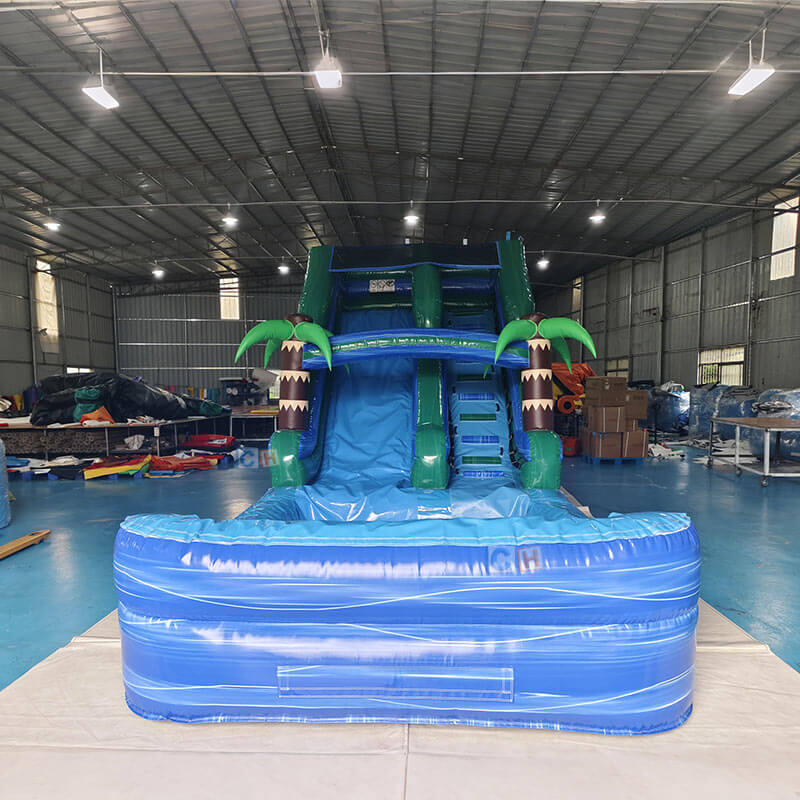
This is a feature seen in our large-scale tropical units.
Expert Opinion: "Never roll a unit wet. It's not just about mold; the weight of trapped water can warp the internal baffles permanently during storage."
Frequently asked questions (FAQ)
Why does water pool on the landing zone of my commercial slide?
This is the most common form of Inflatable Slide Water Pooling. It is usually caused by three factors.
First, slope angle. The ground might be tilting backward, preventing drainage. Second, low pressure. Your blower might be underpowered, causing the landing pad to sag. Third, blocked drains or poor drainage flap positioning.
Can chronic Inflatable Slide Water Pooling damage the 0.55mm PVC material?
Yes, absolutely. While our 0.55mm 1300D PVC is industrial grade, standing water is an enemy.
Chronic Inflatable Slide Water Pooling causes hydrolysis, a chemical breakdown of the PVC coating. It also promotes mold, which eats away at the stitching thread.
How does blower pressure affect water accumulation on slides?
Think of a balloon. A fully inflated balloon is round and water rolls off. A half-inflated balloon is soft and holds water.
High internal pressure creates a convex surface. This is your best defense against Inflatable Slide Water Pooling.
Conclusion
Long story short, eliminating Inflatable Slide Water Pooling is not just about bringing a shop vac to a job site.
It is about a holistic approach to your rental business. It starts with buying quality (0.55mm PVC, reinforced corners).
It continues with smart setup (level ground, drainage flap positioning). And it ends with rigorous maintenance, specifically PVC vinyl tensioning and drying.
If you are tired of dealing with sagging, low-quality structures that ruin your ROI, it is time to upgrade.
Inflatable Slide Water Pooling is a preventable problem if you have the right partner.
Tired of sagging, low-quality slides that ruin your rentals? Contact CH Inflatable today for a free quote on our custom, high-tensile 18oz PVC commercial water slides. We ship globally to the USA, Europe, and beyond.
24ft coconut trees large inflatable water slide
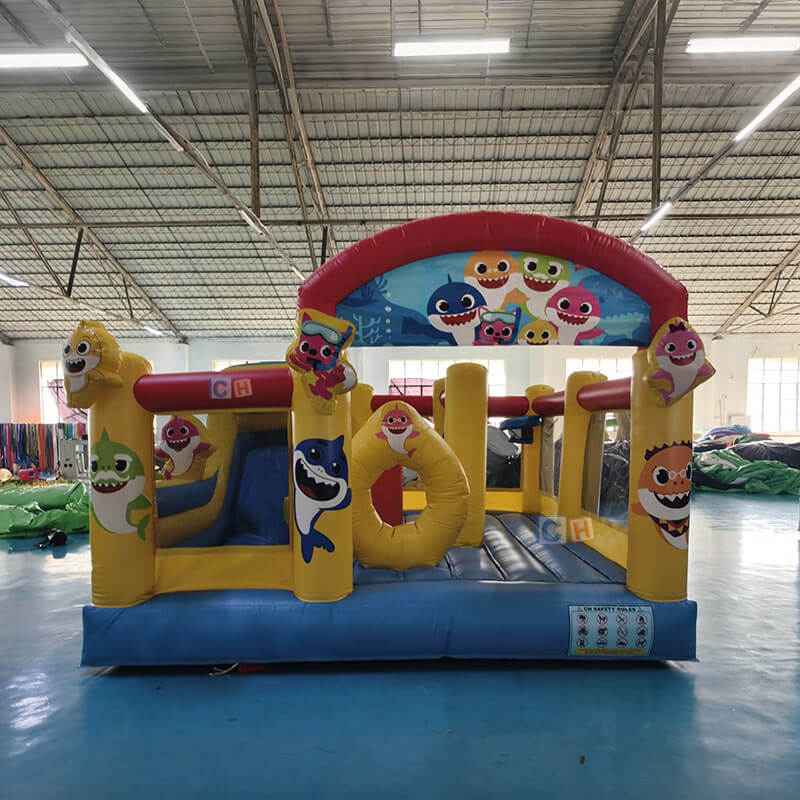
Image by: Juan Salamanca
https://www.pexels.com/@jsalamanca