
Solve Inflatable Slide Airflow Issues: 3 Critical Fixes

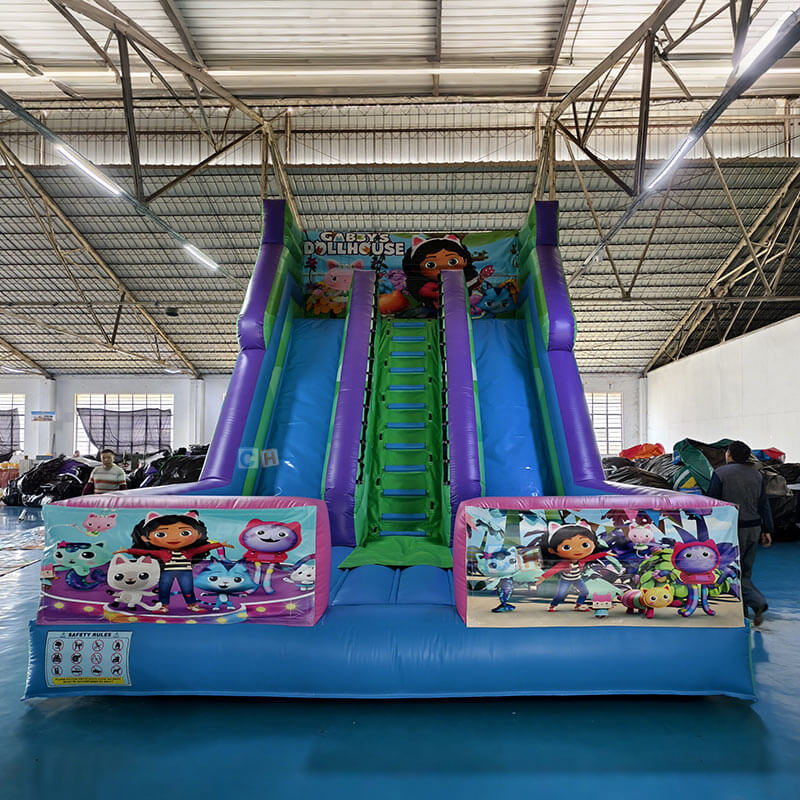
Solve inflatable slide airflow issues: 3 critical fixes
Weak bounce creates big problems. It risks safety and kills your reputation. Identify and fix Inflatable Slide Airflow Issues with our expert steps below. Let's restore maximum pressure today.
Introduction
Picture this: It’s a peak Saturday rental. You dropped off your unit, drove away, and 30 minutes later, the client calls screaming. The slide is sagging, and kids are sinking into the vinyl. A soft slide isn’t just a customer service headache; it is a massive safety liability and a guaranteed refund trigger.
In this business, pressure is profit. If your unit lacks turgidity, you risk injuries. Dealing with Inflatable Slide Airflow Issues is the number one technical challenge for rental operators, whether you are in the USA, Europe, or the Middle East.
At CH Inflatable, we have spent over 17 years manufacturing commercial-grade inflatables. We don't just stitch fabric; we engineer air systems. From the factory floor where we handle 0.55mm and 0.9mm 1300D PVC, to the deployment sites of our global clients, we understand the physics of bounce.
This guide isn't basic troubleshooting. It is a deep dive into the three pillars of pressure mastery: HW Blower Capability, structural integrity, and material permeation. Let’s restore your bounce.
Diagnosing "soft bounce": the science of static pressure loss
Before you grab a patch kit, you simply have to understand why the slide is failing. Moving beyond basic observation to a technical analysis establishes your authority as a professional operator.
Understanding air balance in commercial inflatables
A commercial inflatable is what engineers call a "constant air system." Unlike a sealed pool float, a bounce house is designed to leak air intentionally through the seams to prevent exploding under impact.
However, the input (blower CFM) needs to exceed the escape rate constantly. When Inflatable Slide Airflow Issues occur, it is usually a case of Static Pressure Loss.
- Positive Pressure: The air pushing out against the vinyl.
- The "Squishy" Effect: When pressure drops, the unit loses structural rigidity.
- "Taco-ing": This is industry slang. It happens when the walls of a slide fold inward because the columns lack the pressure to stand vertical.
If your slide is "Taco-ing," you have a severe imbalance. You need to determine if you are losing air too fast, or simply not putting enough in to combat typical Inflatable Slide Airflow Issues.
Material check: 1300D PVC permeability vs. aging fabric
The fabric itself plays a massive role. At CH Inflatable, we use strictly 0.55mm 1300D PVC for dry slides and 0.9mm for water units.
Cheap inflatables often use lower thread counts. Over time, or with poor manufacturing, you face 1300D PVC Permeability issues.
- Micro-Leakage: Cheap coatings crack after 2-3 years of sun exposure.
- The Porous Effect: The fabric becomes like a sieve. No amount of blower power can fix a slide that is leaking through the weave.
- Test: Wet the surface of the vinyl (not the seams). If you see thousands of tiny micro-bubbles, the fabric coating has failed.
I have seen rental owners buy cheap units that look great on day one, but by month six, they face insurmountable Inflatable Slide Airflow Issues because the material itself leaks air faster than a 2HP blower can replace it.
Fix 1: optimising your air supply system
The blower is the engine of your inflatable. If the engine is underpowered or starved of fuel (electricity), the vehicle won't run. It's that simple.
Evaluating HW blower capability for slide dimensions
Look, not all blowers are created equal. This is why CH Inflatable standardizes on HW Blower Capability, utilizing CE-certified units that are the gold standard for safety and output.
Many Inflatable Slide Airflow Issues stem from a simple mismatch:
- Slide Volume: A 20ft slide requires significantly more static pressure than a 13ft bounce house.
- Back Pressure: Tall slides need blowers that can push air against gravity and the weight of the vinyl.
You must match the horsepower to the cubic volume. Standard bounces typically need 1.0HP to 1.5HP, while large water slides demand 2.0HP or multiple units. If you are unsure if your blower setup is the culprit, check this guide on 5 Common Problems with Inflatable Water Slides (+ Fixes). It highlights how often the blower configuration is overlooked.
Deflation prevention and electrical consistency
Here creates the problem: A 2HP blower running at 80% efficiency is useless. I often see "phantom" Inflatable Slide Airflow Issues caused by bad electricity.
- Voltage Drop: Using a 100ft extension cord that is too thin (high gauge) kills the voltage. The blower motor spins slower, creating less CFM.
- Intake Blockage: A plastic bag sucked into the intake mesh reduces airflow by 90% instantly.
For a deeper dive on keeping your unit fully inflated during use, this resource on Preventing Deflation: How to keep your bounce house jumper fully inflated during use is invaluable. Always run dedicated circuits for large slides.
Fix 2: solving vinyl seam leakage and integrity breaches
If your blower is strong, the air is escaping somewhere it shouldn't. Manufacturing quality is the deciding factor here.
Identifying critical vinyl seam leakage
All slides leak at the seams—that is how they breathe. However, excessive Vinyl Seam Leakage is a killer for your bounce.
- The Bubble Test: Mix dish soap and water in a spray bottle. Spray the seams while the unit is inflated.
- Acceptable: Small, slow-growing bubbles.
- Critical: Large bubbles forming instantly or a hissing sound.
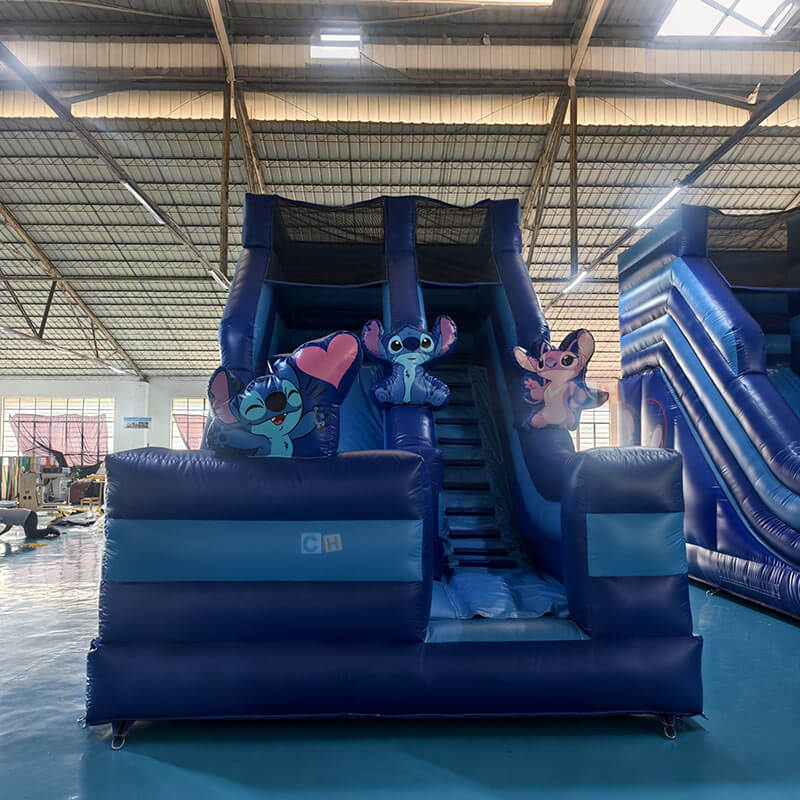
This comes down to stitch quality. At CH Inflatable, we utilize double stitching generally and quadruple stitching at high-stress points. If you are currently inspecting a stitch large inflatable slide, carefully check the seam where the slide lane meets the floor. This is a high-impact zone where threads snap, causing massive pressure drops.
Locating hidden air escape points
Sometimes the leak isn't a hole; it's a door left open. You must systematically check all Air Escape Points.
The biggest culprits are Zippers and Velcro Deflation Flaps. Cheap zippers separate under pressure, which is why we use YKK exclusively. If the Velcro holding the zipper cover wears out, air pushes the cover open, creating a massive leak.
| Problem Area | Impact on Airflow | Reflects Inflatable Slide Airflow Issues? |
|---|---|---|
| Separated Zippers | High (Rapid loss) | Yes, critical failure point |
| Worn Velcro Flaps | Medium (Steady leak) | Yes, common in old units |
| Internal Baffles | Variable (Bulging) | Yes, structural volume increases |
| Mesh Windows | Low (Debris block) | Indirectly affects intake |
Restoring the integrity of these points often solves 50% of your Inflatable Slide Airflow Issues immediately.
Fix 3: managing environmental and usage factors
External factors can kill pressure even in a perfect unit. You have to be smarter than the weather.
The impact of heat and moisture on air density
Physics dictates that air density changes with temperature. On cold mornings, air is denser but occupies less volume, so you may see sagging. On hot days, air expands, which helps.
However, for water slides using 0.9mm material, the water cools the vinyl rapidly. A slide that felt hard in the sun might get soft once the hose starts running. You must anticipate this and potentially use a stronger blower for wet usage to fight these Inflatable Slide Airflow Issues.
Maintenance to prevent airflow obstructions and baffle damage
Internal airflow is just as distinct as the external supply. The structure relies on air moving freely between chambers.
If the internal walls (baffles) tear, the slide bulges like a hernia. This increases the total volume the blower has to fill. To ensure your cleaning routine doesn't accidentally damage the coating or mesh, causing more Inflatable Slide Airflow Issues, check this out.
To better understand Inflatable Slide Airflow Issues, this video tutorial is highly recommended:
When to repair vs. replace: a business high-wire act
As a rental owner, you must know when to stop fighting the leaks.
ROI on patching vs. investing in new inventory
There is a "Point of No Return" with Inflatable Slide Airflow Issues. Commercial PVC typically has a prime life of 5 years. Beyond this, UV damage makes the fabric porous.
If you have more than 5 patches on a major stress point, the structural integrity is compromised. Continuing to rent a unit that requires duct tape to hold pressure is asking for trouble.
The advantage of modular and reinforced designs
Modern designs mitigate these issues. CH Inflatable integrates stainless steel D-buckles and reinforced corners to extend lifespan.
Investing in modular systems helps too. For example, when managing airflow in Inflatable Water Parks on Land, we use segmented designs. If one section has a leak, it doesn't deflate the entire park. This redundancy is critical for large-scale operations.
Frequently asked questions (FAQ)
Why does my commercial inflatable slide feel soft during use?
A soft slide usually indicates Inflatable Slide Airflow Issues caused by three things: insufficient blower power (verify your HP), open deflation zippers (check your Air Escape Points), or excessive Vinyl Seam Leakage. Always check your electrical voltage drop first!
How do I calculate the correct blower output for large slides?
Never guess; check the safety label. Generally, you need 1.5HP per 25-30 feet of seam length. However, you must verify HW Blower Capability and ensure the blower is CE certified. For slides over 18ft tall, a 2.0HP blower is often the minimum.
Can worn zippers cause significant pressure loss?
Absolutely. Zippers are primary Air Escape Points. If the teeth do not lock tight, you can lose up to 20% of your internal pressure. Always ensure the Velcro flap remains sealed.
Bottom line
Solving Inflatable Slide Airflow Issues isn't magic; it is a systematic process. By optimizing your blower setup with proper HW Blower Capability, sealing critical Vinyl Seam Leakage, and managing environmental factors, you can restore maximum pressure.
Remember, a "soft" slide is a dangerous slide. Don't risk your business reputation on aging, leaking equipment.
At CH Inflatable, we build with the rental business in mind. With 17 years of experience, our products are designed to hold pressure and profit year after year. Ready to upgrade your inventory? Check out CH Inflatable’s range of high-pressure, commercial-grade slides today!
Image by: Roderick Salatan
https://www.pexels.com/@rico